


Preventing Electrical Fires Before They Start
Electrical thermal imaging inspections in Auckland help detect hidden overheating faults before they become dangerous. Using professional infrared thermography, we identify electrical hotspots that can lead to equipment failure, switchboard damage, or electrical fires.
Whether you own a residential property, commercial building, or industrial facility in Auckland, thermal imaging provides a proactive layer of electrical safety.
What Is Electric Thermal Imaging?
Thermal imaging (also known as infrared thermography) is the process of using a specialised infrared camera to inspect electrical equipment and detect abnormal heat patterns.
The camera produces a visual temperature map of surfaces, allowing us to identify hotspots - areas within an electrical installation that may be deteriorating, overloaded, or approaching a failure point.
In many cases, these hotspots develop long before visible damage occurs. Left unchecked, they can lead to melted insulation, equipment failure, or electrical fires.
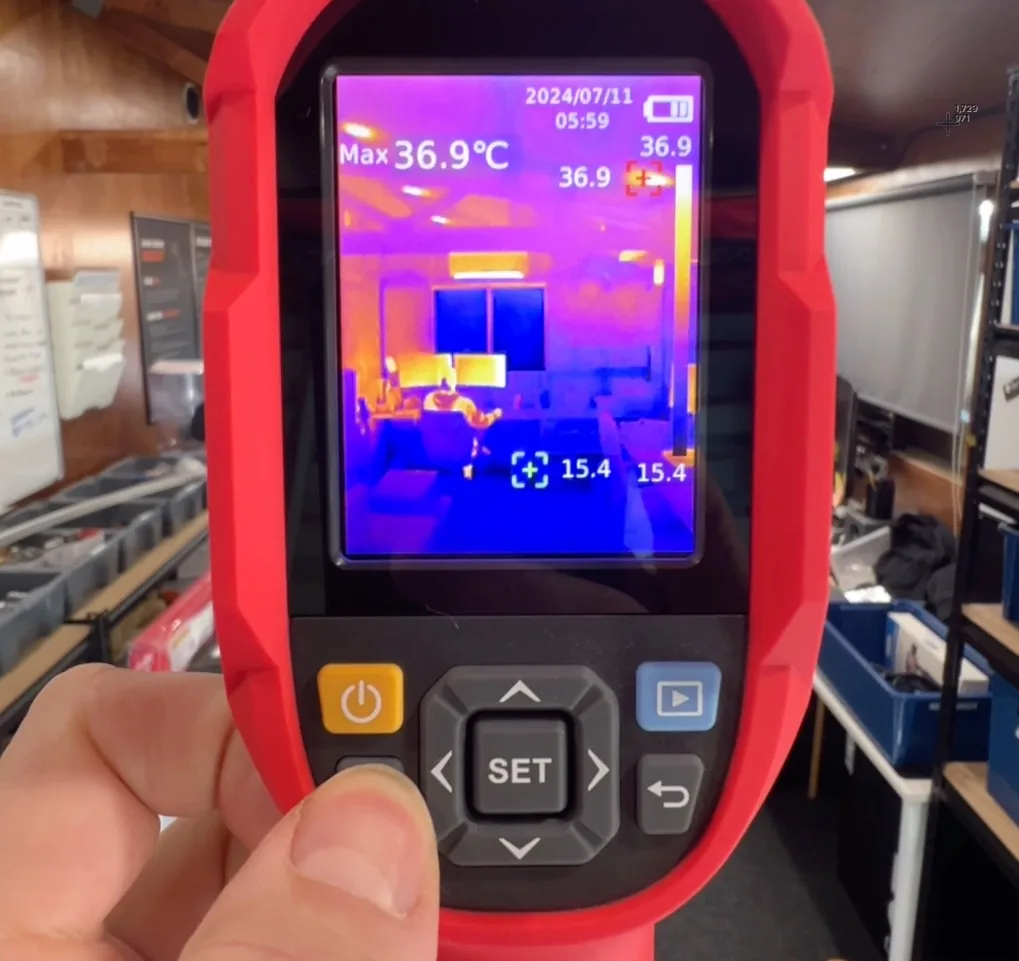
During a thermal image inspection in Auckland, we assess:
- Main switchboards
- Sub-boards
- Circuit protection devices
- Sub circuits and cabling
- Control gear and connected equipment
Using high resolution camera displays colour gradients -typically yellow and white indicating the hottest areas - while simultaneously providing precise temperature readings.
These results are compared against established normal operating temperature ranges.
Any readings outside acceptable limits are flagged for investigation.
If we detect:
- Abnormal temperature rise
- Stable but out-of-range temperature
- Localised overheating
The affected component is assessed immediately and either repaired, replaced, or safely isolated.
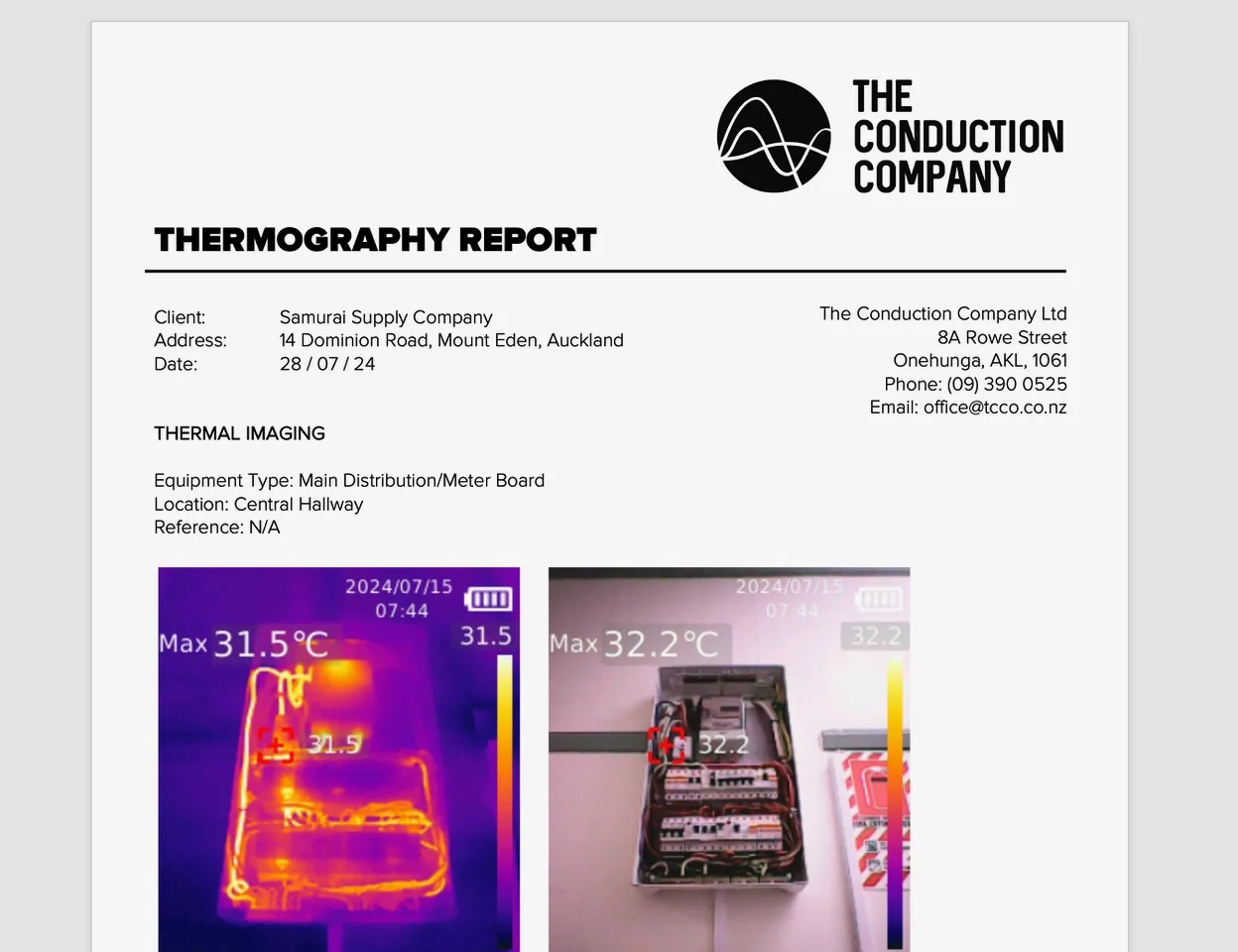
All findings are documented in a detailed thermal imaging report which can be used for insurance compliance, maintenance planning, and risk management.
Reports are archived and referenced during future inspections, allowing us to monitor trends over time and determine whether temperatures are increasing or remaining stable.
For homes, The Conduction Company offers electrical thermal imaging for Auckland houses.
Why Is Thermal Imaging Important for Electrical Safety in older Auckland properties?
Electrical protection technology has advanced significantly over the decades.
Modern installations benefit from improved:
- Circuit protection devices
- Safer cabling materials
- Enhanced fire-prevention design
However, many Auckland properties installed before the 1970s often contain:
- Outdated porcelain rewireable ceramic fuses
- Ageing rubber-insulated cabling
- Less sophisticated protective systems
These systems are now considered unsafe by modern standards.
As installations age, the risk of overheating and fire increases.
We have personally repaired damage from house fires caused by deteriorated rubber cabling combined with ceramic fuse protection and the risks in these properties are very real.
Thermal imaging inspections allow us to detect these risks early before failure occurs.
Thermal Imaging vs Standard Electrical Inspection
A standard electrical inspection relies on:
- Visual examination
- Electrical testing instruments
However, it cannot reliably detect hidden heat buildup inside live switchboards.
Without an infrared camera, an inspector has no accurate way of identifying hidden hotspots.
Excessive heat is not visible to the naked eye, and manual touch testing is both unsafe and inaccurate.
Infrared Thermal Imaging allows us to:
- Detect overheating components
- Measure actual operating temperatures
- Identify imminent fire risks
- Make informed repair decisions
It adds a critical layer of preventative protection.
How Accurate Is Electrical Thermal Imaging?
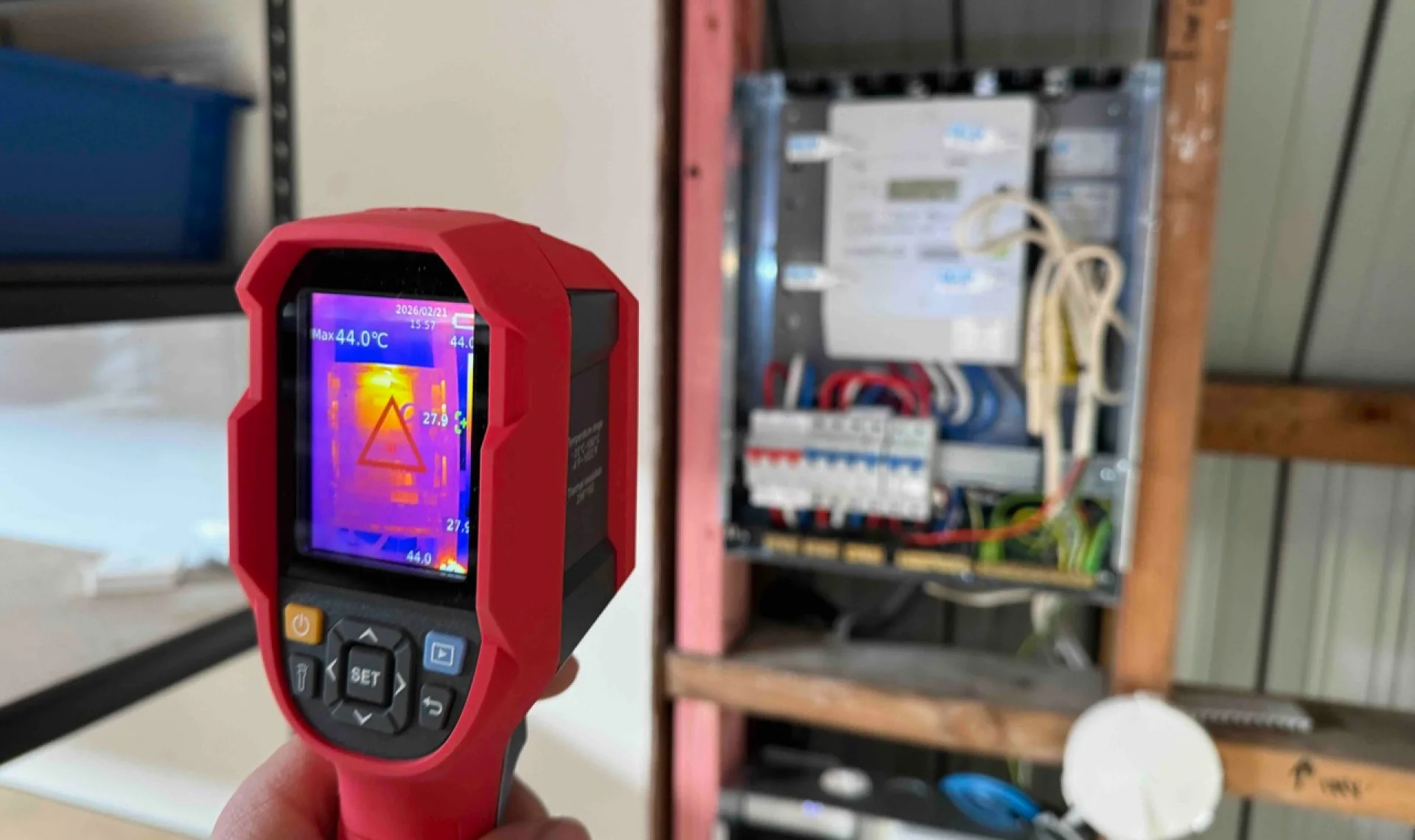
Accuracy depends largely on the quality of the equipment used.
- Lower-grade cameras can have temperature variances of ±5°C or more.
- Professional-grade equipment operates within very tight tolerances.
At The Conduction Company, our thermography cameras are regularly calibrated and cross-checked against independent temperature measurement tools to ensure readings remain highly accurate.
Precision matters when assessing potential fire risks.
Does Power Need to Be Turned Off?
No.
In fact, inspections are most effective when systems are operating under normal load.
Electrical overheating occurs when current flows through connections and devices. For this reason, we conduct inspections during typical operating hours, when appliances and equipment are in use.
Thermal imaging is completely non-contact and does not interrupt operations.
What Equipment Is Used?
Professional electrical thermography requires:
- A high-quality infrared imaging camera
- A laser-guided proximity temperature sensor for verification
- In some cases, contact thermometers for reflective surfaces
The combination ensures accurate readings across different materials and surface types.
What Electrical Faults Can Thermal Imaging Detect?
Thermal imaging can identify:
- Loose electrical connections
- Overloaded circuits
- Overheated cabling
- Failing protective devices
- Imbalanced electrical loads
- Overheating control equipment
- Faulty connected appliances
These issues often develop silently - without tripping breakers or producing visible warning signs.
Can Thermal Imaging Prevent Electrical Fires?
Yes - and we have seen it firsthand.
During a recent inspection, we identified a junction box operating at abnormally high temperatures.
Upon opening the enclosure, we found a conductor with completely melted insulation and copper cores glowing red hot.
Without intervention, that fault would likely have resulted in a fire within hours.
Thermal imaging is one of the most effective preventative tools available for identifying immediate and near-term fire risks.
What Temperatures Indicate a Problem?
Most electrical equipment operates safely within the 10-40°C range.
Certain devices may operate slightly higher depending on manufacturer specifications, but general electrical components should not exceed 50°C unless specifically designed for high-temperature environments(such as sauna isolators or oven controllers).
As a precaution:
- Readings approaching 40°C (or above) are flagged
- Any abnormal temperature differential is investigated
- Manufacturer specifications are always referenced
Temperature rise relative to surrounding components is often more important than absolute temperature alone.
EXAMPLE
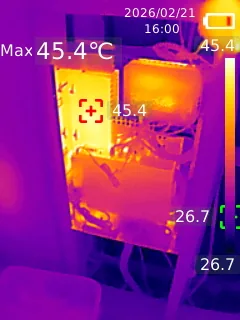
The above image shows an internet router inside a data cupboard, operating at 45°C.
This was flagged during the inspection. The manufacturer specifications regarding operating temperature range where checked and it was found to beatthe high end of the specified range.
Router relocation was suggested and implemented resulting in much lower heat output recordings (and less internal circuitry degradation from running hot)
How Much Does a Thermal Imaging Inspection Cost?
We quote on facts, not guesses
Before we give you a price, we carry out a proper assessment of your property and the installation that needs inspecting. That way you know exactly what you are buying and the total cost, with no surprises. Clear expectations from the outset, start to finish.
Pricing depends on installation size and complexity. The estimates below are for a standard thermal imaging inspection, shown including GST. The Conduction Company confirms final pricing after a property assessment.
The Conduction Company's own prices for a thermal imaging inspection in Auckland, including GST:
- Small residential property: from $260 including GST ($219.90 plus GST)
- Large commercial or industrial site: $920 including GST ($800 plus GST) and upwards
The primary factors influencing cost are:
- Number of switchboards
- Size of installation
- Time required for inspection
- Reporting requirements
For commercial clients, inspections are often bundled into annual servicing programmes to reduce overall costs.
When Is the Best Time to Schedule Thermal Imaging?
During peak usage.
Inspections are most effective when electrical systems are under normal operational load, as this is when overheating faults are most likely to appear.
Do Insurers Require Thermal Imaging Reports?
Some insurers particularly for commercial and industrial buildings increasingly request periodic thermal imaging reports as part of risk management.
This is especially common in:
- Older buildings
- Industrial facilities
- High-load commercial premises
Having documented thermal inspection reports can assist with compliance and insurance requirements.
Who Is Qualified to Perform Electrical Thermal Imaging?
At The Conduction Company, thermal imaging is carried out by EWRB registered electricians.
Electrical registration ensures legal authority and practical expertise when working around live switchboards.
A thermal camera shows where the heat is. Knowing why a connection is running hot, and fixing it, takes an electrician.
Some thermal imaging is done by people without an electrical background. They can find a hotspot, but they may lack the practical experience to accurately diagnose electrical faults or carry out on-site repairs.
For safety and compliance, choose a registered electrician who can both find the fault and fix it.
How Often Should Thermal Imaging Be Carried Out?
For commercial installations:
- Annually is recommended.
Thermal inspections are often completed alongside other annual servicing, including air conditioning maintenance and electrical safety checks.
For residential properties:
- Every five years at minimum.
- Immediately if the home was built pre-1970 and has not had recent electrical upgrades.
Older properties carry significantly higher risk due to ageing protection systems and deteriorating cabling.
Book a Thermal Imaging Inspection in Auckland
If you own a residential, commercial, or industrial property in Auckland, proactive electrical thermal imaging can significantly reduce fire risk and unexpected electrical failures.
Contact us today to schedule a professional thermal imaging inspection and receive a detailed compliance-ready report.

