


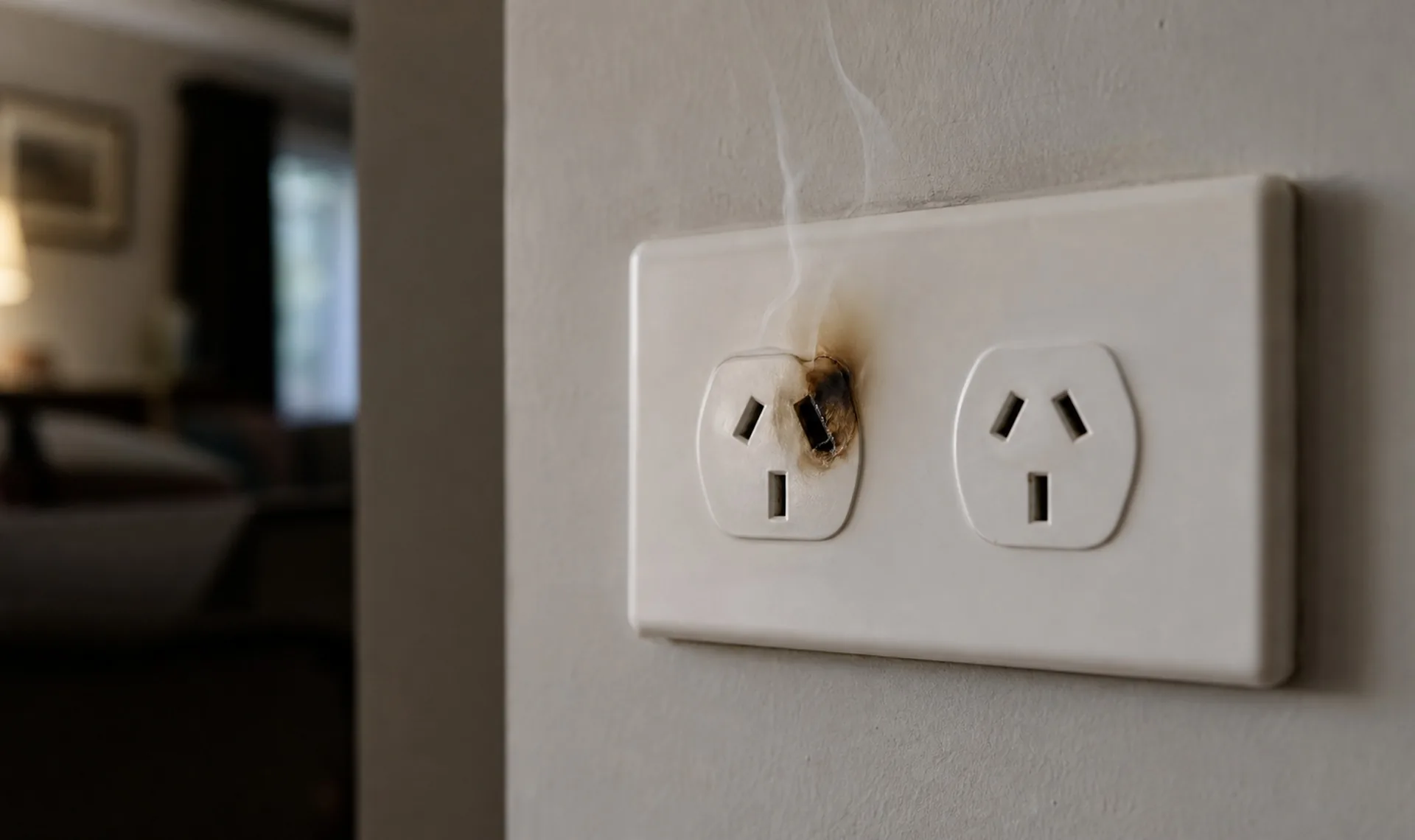
Electrical fires are one of those risks that stay hidden until they are not. Most start quietly, behind a wall or inside a switchboard, in a spot you would never think to check. Here is what actually causes them in New Zealand homes, the warning signs worth knowing, and the simple steps that keep your family safe.
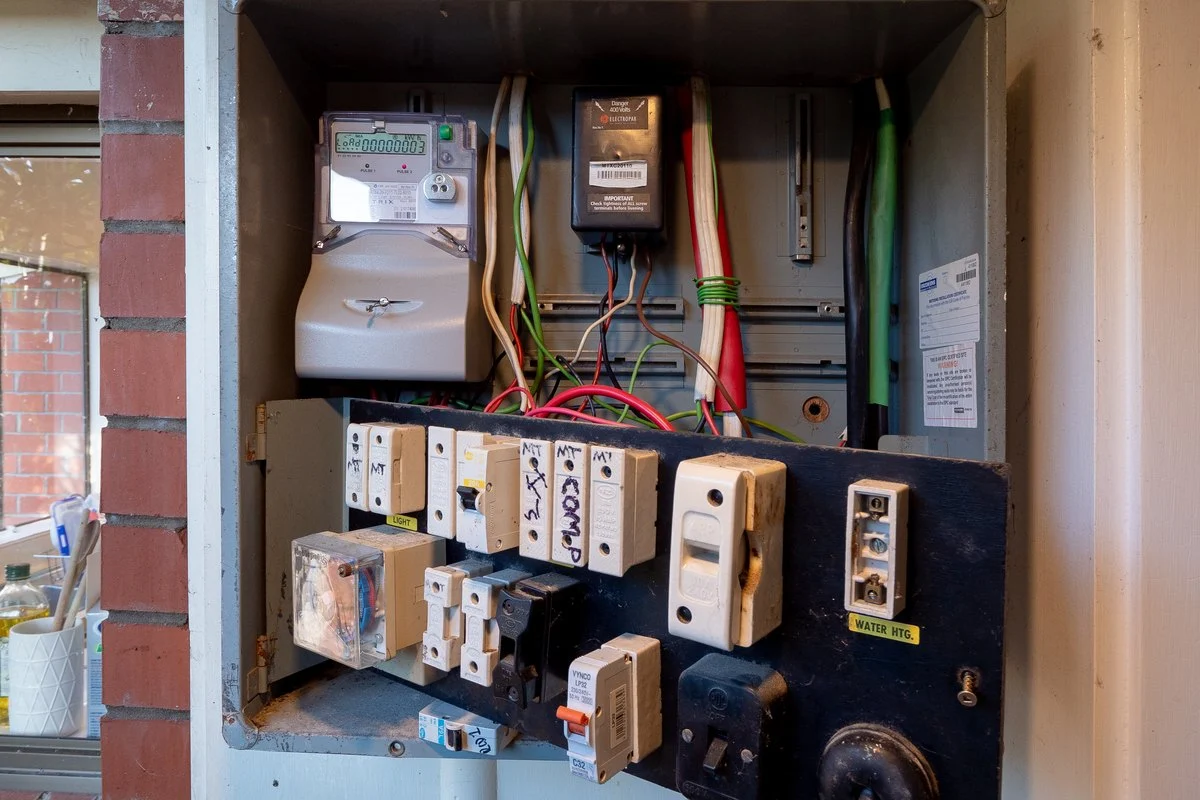
The short answer: Most house electrical fires in New Zealand come from two things: electrical fittings that have deteriorated over time, and work that was installed poorly in the first place. Both create high-resistance connection points that heat up under load. That heat can melt cables and start a fire, often inside a switchboard where nobody is looking.
What actually causes most house electrical fires in NZ?
In our experience, it comes down to two main causes. The first is deterioration of existing electrical fittings. The second is improper installation. Everything else tends to trace back to one of those two.
A lot of the fires we see start inside switchboards, and specifically at fittings with a lot of connections. Think about where cables connect into a protective device, or where they connect into an appliance. Those connection points are one of the primary sites for a fire to begin.
The reason is simple. Once a connection point wears down and starts building up high resistance, the current flowing through it creates heat. That heat builds, and over time it can melt the cables around it and catch fire.
Why do connections go bad in the first place?
Connections fail for four main reasons: poor termination at installation, carbon build-up from switching, cheap fittings, and plain wear and tear. They often stack up together.
Poor termination when the fitting was first installed is a big one. A badly made connection starts life with high resistance, and any heat it creates only makes the deterioration worse.
Switching wears things out too. Devices that switch on and off a lot build up carbon on their contacts from the tiny arcs inside the mechanism. That carbon leads to more resistance and more heat.
Cheap fittings are another. They deteriorate much faster than a decent quality fitting.
And then there is plain wear and tear. Heavy current running through a fitting, or constant heating and cooling, causes thermal expansion and contraction. Over time that loosens the cable connection and wears the contact points down.
What are the warning signs of an electrical fire?
Here is the hard truth. In the early stages there is usually no way to tell. A fitting can look in perfect condition and still be on its way out, especially somewhere you never look, like inside a switchboard.
By the time the warning signs show up, things are already late stage. When a fitting is about to fail, the signs are fairly obvious:
- Vibration or odd noises coming from a fitting
- Crackling or sparking
- Any burning or carbon smell, which is a dead giveaway
- Heat, if something feels hotter than it should
The catch is that all of those are late-stage signs. The older your home gets, the more likely you are to have deteriorated fittings hiding somewhere. The only real check is to get an electrician through. We recommend a proper look at least once every five years to assess the state of your fittings and make maintenance recommendations before anything becomes a problem.
What should I do right now if I smell burning or see scorching?
Act straight away.
- Turn off all power at your main switchboard. It is usually inside your home or on an exterior wall. Open it and turn off the main switch.
- Call an electrician immediately.
- Do not turn the power back on until an electrician has been out and worked out what is going on.
If you see flames, get out of the house. If the flame is small or only just starting, and you can flip the main switch on your way past, that is fine to do. But if the flames are growing at all, do not waste time hunting for the switchboard. Get everyone out and call 111.
Do modern switchboards and RCDs actually prevent fires?
They help a lot, but it pays to understand what each device really does.
A modern circuit breaker, or MCB, protects against overcurrents. An overcurrent happens when too many appliances are running on the same circuit, or when there is a short circuit inside an appliance or a cable. A modern MCB detects that accurately and disconnects the power automatically.
There is one limitation worth knowing. With older, deteriorated fittings, the slow high-resistance joint we talked about earlier is not always something an MCB can detect. So a breaker is excellent protection, but it is not a substitute for keeping your fittings in good shape.
That said, modern breakers are far safer than the old-style protection they replaced. The original porcelain rewireable fuses are a good example of why we have moved on. They allow high currents to flow, and they are easy to get wrong. If someone who is not an electrician puts the wrong fuse wire into the fuse holder, you can end up with a serious overcurrent and a real fire risk. We have seen exactly that start a fire. We no longer install that style of fuse.
RCDs are a different tool for a different job. Their main purpose is to detect earth-leakage faults, which means they are there to protect you from electric shock and certain appliance faults. They do offer some fire protection, but only where there is excess leakage to earth. So think of an RCD as shock protection first, with a fire benefit in specific situations. If you want the full picture, we have written a separate guide on what to know about RCDs.
Are older Auckland homes higher risk?
Yes. The older the electrical installation, the higher the risk. An older home simply has more chance of deteriorated fittings, cables, or appliances somewhere on site.
This is where a switchboard assessment earns its keep. If your home still has an older board, or you have never had the wiring checked, it is worth booking a look. We can tell you what is in good shape, what needs attention, and whether a switchboard upgrade makes sense for your home.
What is the most common fire risk people do not realise?
Portable heaters plugged into wall sockets. It surprises a lot of people.
Most clients already know not to use a multi-board for a heater, which is correct. You should never plug a portable or wall heater into a multi-board. So people do the right thing and plug the heater straight into a wall socket instead.
The problem is the socket itself. A portable heater draws a lot of current, and all of that current has to flow through the terminals inside the outlet. If that outlet is old and the terminals have deteriorated, it gets very hot behind the wall. That is enough to melt the outlet and start a fire. So a heater on a tired old socket is a genuine risk, even though everything looks fine from the front.
When should I stop and call an electrician instead of doing it myself?
Our honest advice is to leave the electrical installation to a registered electrician, full stop.
There are rules that allow a homeowner to carry out certain electrical work in their own home. But that work still has to be certified, inspected, and tested by a registered inspector. In most cases that ends up costing more than simply getting an electrician in from the start. So we never recommend taking it on yourself. It is best practice to get someone qualified in to fix the problem properly.
If you are ever unsure, we are happy to help. A quick assessment can give you real peace of mind, and it is a lot cheaper than the alternative.
Frequently asked questions
What are the two main causes of electrical fires in NZ homes?
Deteriorated electrical fittings and poor installation. Both create high-resistance connection points that heat up under load, and that heat can melt cables and start a fire, often inside a switchboard.
What are the warning signs of an electrical fire?
Vibration or odd noises, crackling or sparking, a burning or carbon smell, and heat coming from a fitting. These are late-stage signs, so treat any of them as urgent and call an electrician.
What should I do if I smell burning from an outlet?
Turn off the main switch at your switchboard, call an electrician, and do not turn the power back on until they have checked it. If you see growing flames, get out and call 111.
Do RCDs prevent electrical fires?
RCDs mainly protect against electric shock by detecting earth-leakage faults. They offer some fire protection, but only where there is excess leakage to earth, so they are not a complete fire safeguard on their own.
How often should I have my home's wiring checked?
At least once every five years is a sensible minimum, and sooner for older homes. An electrician can spot deteriorated fittings before they become a fire risk.
Can I do my own electrical work in New Zealand?
The rules allow homeowners to do some work in their own home, but it must be certified and tested by a registered inspector. That usually costs more than hiring an electrician, so we do not recommend it.

