Trade & Electrical Guides
August 6, 2026

Why Does My Circuit Breaker Keep Tripping? 6 Common Causes & Fixes

Breaker Keeps Tripping? Don’t Ignore It.

Your switchboard is protecting you from a potentially serious fault. Our qualified Auckland electricians can diagnose and fix the issue quickly and safely.

Book a Fault Diagnosis Today
Direct answer: A circuit breaker that keeps tripping is doing its job. It has detected a real fault and cut the power to keep you safe. On the Auckland callouts The Conduction Company attends, the most common causes are an overloaded circuit, a short circuit, or earth leakage from a faulty appliance or moisture. Repeated tripping needs diagnosis, not just resetting.

Breaker Keeps Tripping? Don't Ignore It.
Your switchboard is protecting you from a potentially serious fault. Our qualified Auckland electricians can diagnose and fix the issue quickly and safely. Book a Fault Diagnosis Today.

If your power keeps cutting out, one of your circuit breakers is trying to tell you something. Below we cover the different devices in your switchboard, why a breaker trips, the six most common causes, and what you can safely do about it.

What is a circuit breaker?

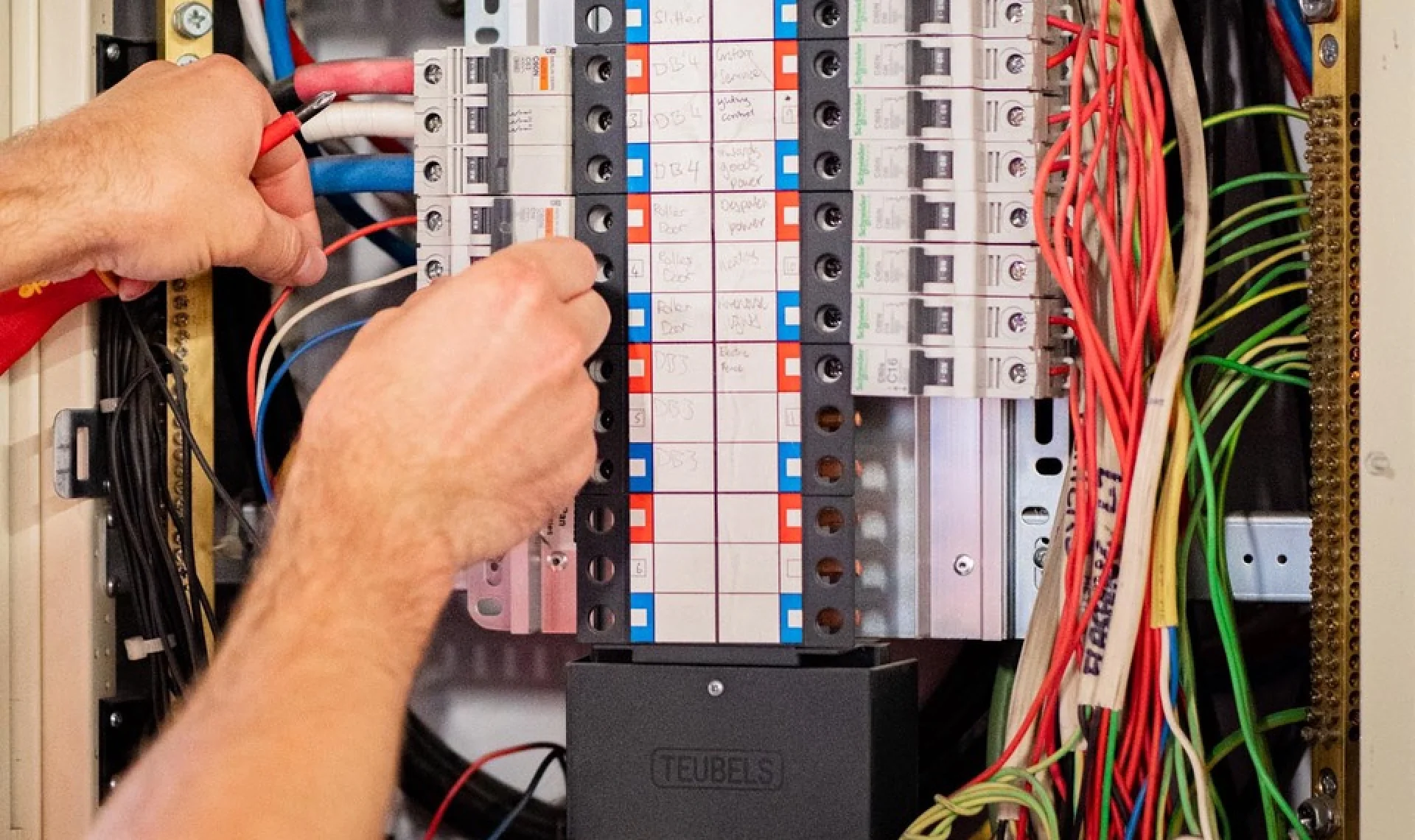
A circuit breaker is an automatic safety switch in your switchboard. It cuts the power the instant it detects a fault, which protects your wiring, your appliances, and you. Modern switchboards in New Zealand typically contain three main types of protective devices.

MCB (Miniature Circuit Breaker)

Trips when there's an overload (too many appliances on one circuit) or a short circuit (fault in an appliance or wiring).

An MCB protects the wiring itself. Its job is to stop too much current, whether that is a slow overload or a sudden short circuit.

RCD (Residual Current Device)

Protects against electric shock by tripping when current leaks to earth, often caused by faulty appliances or moisture.

Example: It's common to see RCDs trip after water blasting the house exterior.

An RCD is there to protect people, not just wiring. The Conduction Company fits 30 mA RCD protection on the circuits that feed your power points, because clause 2.6.3.3.1 of the New Zealand wiring rules (AS/NZS 3000:2018) requires it, and 30 mA is the level set to protect a person from a dangerous shock. If you want the full picture, we have a separate guide on what to know about RCDs.

RCBO (Residual Current Breaker with Overcurrent)

An RCBO does both jobs in one device. It protects against overload and short circuits like an MCB, and against earth leakage like an RCD. The Conduction Company fits RCBOs on most modern boards, so each circuit gets its own combined protection.

Why does a circuit breaker trip?

Most of the time, a breaker trips for a good reason: it has found a fault and disconnected the power to keep you safe. It stays off until you reset it, so a trip is never random noise to be ignored. Occasionally, a low-quality or deteriorated protective device might trip without a real fault, but that is the exception, not the rule.

"When a breaker keeps tripping, the instinct is to keep flicking it back on. Don't. It has found a fault and it is protecting you. Resetting it again and again just hides the warning, and it can wreck the breaker itself. Get it diagnosed."

Jordan Statham, Registered Electrician and Electrical Inspector, The Conduction Company

6 common reasons your circuit breaker keeps tripping

1. Circuit overload

The most common cause. Too many appliances draw power through one circuit at once, the current climbs past what the breaker is rated for, and it trips.

Signs: Power cuts out when using high-draw appliances (toaster, kettle, dryer).
Fix: Spread the appliances across more than one circuit. If the circuit is simply out of capacity, The Conduction Company can add new circuits so the load is shared properly.

2. Short circuit

Live and neutral wires make unintended contact, which lets a large current flow in an instant and trips the breaker straight away.

Signs: Sudden breaker trip, burning smell, visible charring.
Fix: Unplug faulty appliances and do not use them again until they are repaired. If the short circuit is in the fixed wiring, shut the power off at the main switch and call an electrician immediately. The Conduction Company treats a suspected short circuit as an emergency callout.

3. Earth fault

Live electricity touches an earthed surface (metal, pipework, or you) and the RCD trips. Common in bathrooms, kitchens, laundries, and outdoor areas.

Fix: Unplug every appliance on that circuit. If the RCD stops tripping, one of them is faulty. If it still trips, the fault is in the wiring, and The Conduction Company can test the circuit to find where the current is leaking.

4. Moisture or water ingress

Water gets into a fitting, current leaks to earth, and the RCD trips. Especially common in:

  • Outdoor lights
  • Outdoor air conditioner isolators
  • Power points exposed to weather

Fix: This usually needs an electrician. Wet fittings are rarely worth repairing, so The Conduction Company replaces them rather than drying them out.

5. Loose connections or faulty wiring

A loose or worn connection builds up resistance and heat. It can cause intermittent tripping or power loss, and over time it raises the risk of an electrical fire. This is one of the quieter faults, and it is the same mechanism behind most house electrical fires.

Fix: This needs inspection and repair by a licensed electrician. The Conduction Company uses thermal imaging to find hot joints before they burn, because a loose connection shows up as heat long before it fails.

6. Ageing or underrated breakers

Old switchboards may not cope with today's appliance loads, and an ageing breaker can become unreliable.

Fix: Replace outdated protection, and consider upgrading your switchboard and circuits to current safety standards. A switchboard upgrade is mains work, which the Electricity (Safety) Regulations 2010 classify as high-risk, so it must be inspected. Jordan Statham at The Conduction Company is both a Registered Electrician and a registered Electrical Inspector, so that work is carried out and inspected in-house.

What should I do when the breaker trips?

The Conduction Company tells clients to start with two safe checks, then stop. Follow this step by step:

  1. Unplug anything that lost power. Anything that still has power can stay plugged in.
  2. Go to the switchboard and try resetting the tripped device once.
    • If it stays on then one of the unplugged appliances was faulty.
    • If it trips immediately then you likely have a short or a leakage fault. Turn the power off and get in touch with The Conduction Company or another qualified electrician in Auckland.
    • If it stays on for a while, then trips then you may have an overload or low-level earth leakage. This needs professional diagnosis.

That is the full extent of safe DIY. Do not open the switchboard, poke at wiring, or keep forcing the breaker back on.

Important safety advice

Turn everything off at the main switch and call an electrician if you:

  • Smell burning
  • Suspect anyone could be exposed to live wires
  • Feel uncertain about what's going on

Never repeatedly reset a breaker. More than three or four resets can damage the internal contacts and stop the breaker doing its job, which is a fire and shock risk. The Conduction Company replaces breakers that have been reset to death, and the original fault is still there underneath.

If you've tried the basic checks and your breaker keeps tripping, it's time to get help. If you have searched for electrical repairs near me in Auckland, our qualified electricians can quickly diagnose and fix the problem, keeping your home or business safe and powered.

When to call The Conduction Company

If you're in Auckland and scratching your head over why your power keeps cutting out, call The Conduction Company. Our team of qualified electricians and inspectors offer:

  • Fast diagnosis
  • Same-day emergency callouts
  • Transparent advice and long-term solutions

You can safely unplug appliances and reset a breaker once. Beyond that, working out why a breaker keeps tripping is a job for a registered electrician. New Zealand's rules do allow a homeowner to carry out limited electrical work in their own home, but it still has to be tested and certified by a registered person, which usually costs more than getting an electrician in from the start. The Conduction Company does not recommend taking it on yourself.

Summary

If your circuit breaker keeps tripping, don't ignore it. There is a problem and your switchboard is doing its job trying to keep you safe.

Whether it's an overload, moisture, or a faulty appliance, identifying the cause early can prevent serious damage. The Conduction Company's advice is simple. Start with a few basic checks, and if the breaker keeps tripping, or you're not confident, get professional help.

Reach out now.
Not sure why your breaker keeps tripping? Book a quick diagnostic visit with The Conduction Company today. Your safety is our priority.

Frequently asked questions

Why is my circuit breaker tripping all of a sudden?

A sudden change usually means something on the circuit has just developed a fault. A common trigger is a single appliance that has failed, or moisture getting into an outdoor fitting after rain. Unplug recent or suspect appliances, reset the breaker once, and if it trips again, call The Conduction Company or another registered electrician to diagnose it.

Why does my breaker trip when nothing is plugged in?

If a breaker trips with nothing plugged in, the fault is usually in the fixed wiring, a hardwired appliance, or the breaker itself. Occasionally an old or deteriorated breaker trips without a real fault. Either way it needs a registered electrician to test the circuit and find the cause. The Conduction Company tests the fixed wiring circuit by circuit to isolate the fault.

Is it safe to keep resetting a tripped breaker?

No. Reset a tripped breaker once to test it, and no more than three or four times at most. Repeatedly forcing it back on can damage the internal contacts and stop the breaker doing its job, which is a fire and shock risk. If it keeps tripping, leave it off and call The Conduction Company or another registered electrician.

What is the difference between a circuit breaker and an RCD?

A circuit breaker (MCB) protects the wiring from too much current, from an overload or a short circuit. An RCD protects people from electric shock by tripping when current leaks to earth. Many modern boards use an RCBO, which does both jobs in one device, and that is what The Conduction Company fits on a switchboard upgrade.

Why does my RCD trip after rain or water-blasting?

Water getting into outdoor power points, lights, or air conditioner isolators lets current leak to earth, and the RCD trips to keep you safe. It is very common after water-blasting the house. Unplug or isolate the affected outdoor item, and if the RCD still trips, get The Conduction Company or another registered electrician to check it.