


Venting a dryer, choosing a rangehood, and getting extraction fans right decide where the moisture your home makes ends up: outside, or in your walls and ceiling. These are questions clients often ask The Conduction Company about laundries, kitchens, and bathroom fans in Auckland.
The Conduction Company's short answer: duct a dryer straight out through the wall to a weatherproof cowl, choose a rangehood with strong extraction and an inline fan where you can, and put bathroom fans on a run-on timer. Keep every duct sealed all the way outside.
How does a dryer get vented straight out through a wall?
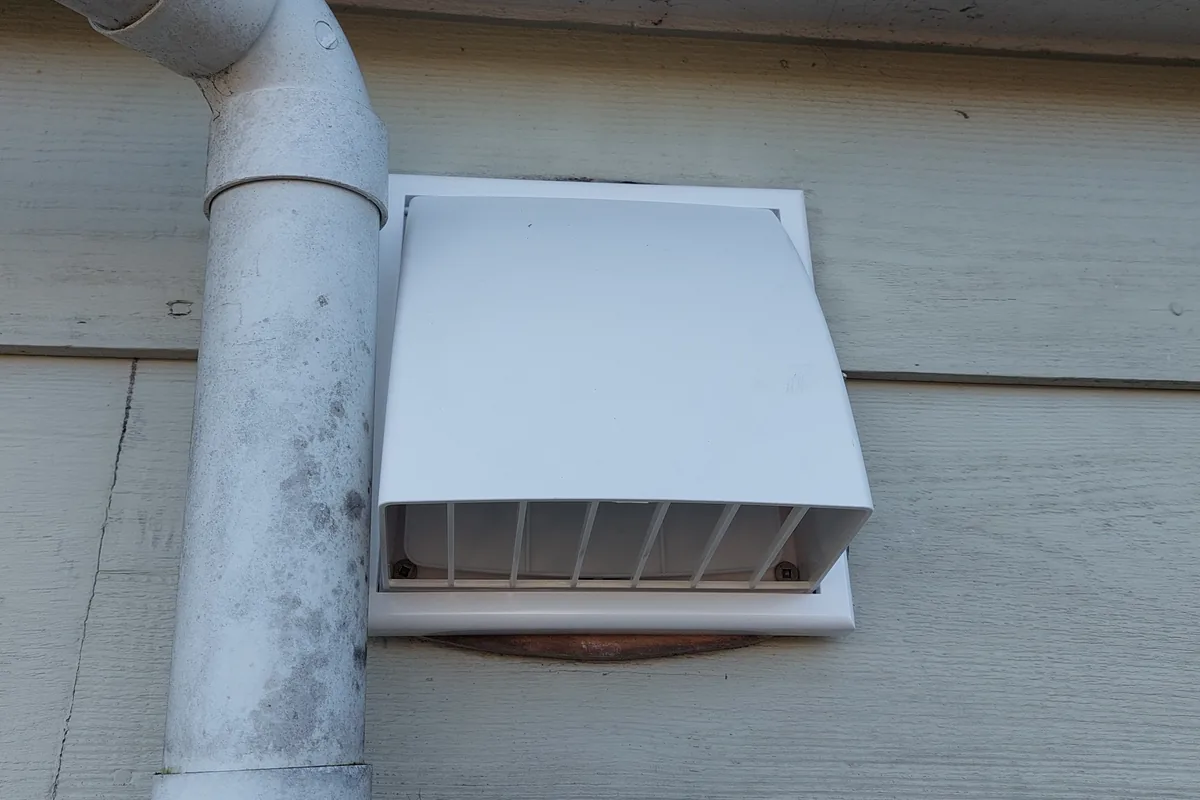
The Conduction Company runs a short duct from the dryer straight through the wall to a weatherproof cowl outside. That way the moisture coming off the clothes goes outside, instead of into your home.
Most dryers have two ducting ports, one on the front where the clothes go in and one on the back. A small attachment that comes with the dryer changes which port is in use, so a dryer can be set up to vent out the back and through the wall.
If a duct to the outside is not possible and the dryer has to vent out the front, The Conduction Company's second-best option is an extractor fan in the laundry. Some moisture still gets into the room, but the fan pulls most of it out.
The worst case is no duct and no fan. All of the moisture goes into the laundry and then seeps into the rest of the home. "That's what causes an enormous amount of humidity issues," says Jordan Statham, director of The Conduction Company and a registered electrician and electrical inspector.
Keep the duct short and straight. Dryer makers such as Fisher & Paykel say a dryer duct must never connect to a chimney, and The Conduction Company never ends one in the ceiling space or a wall cavity, where the moisture would stay in the building. Condenser and heat pump dryers are different: they collect the water in a tank or send it down a drain, so they do not need a duct at all, as Consumer NZ's dryer guide explains.
What is a dryer ducting kit for, and what does it cost?
A dryer ducting kit lets The Conduction Company put the through-wall vent in a different spot on the wall behind the dryer. It is needed when the dryer sits where a straight duct would go into timber.
A length of flat ducting moves the path along the wall, so the duct can reach the outside without drilling through structural timber. The Conduction Company prices the kit and the ducting as part of the dryer venting job, once it has seen where the dryer sits.
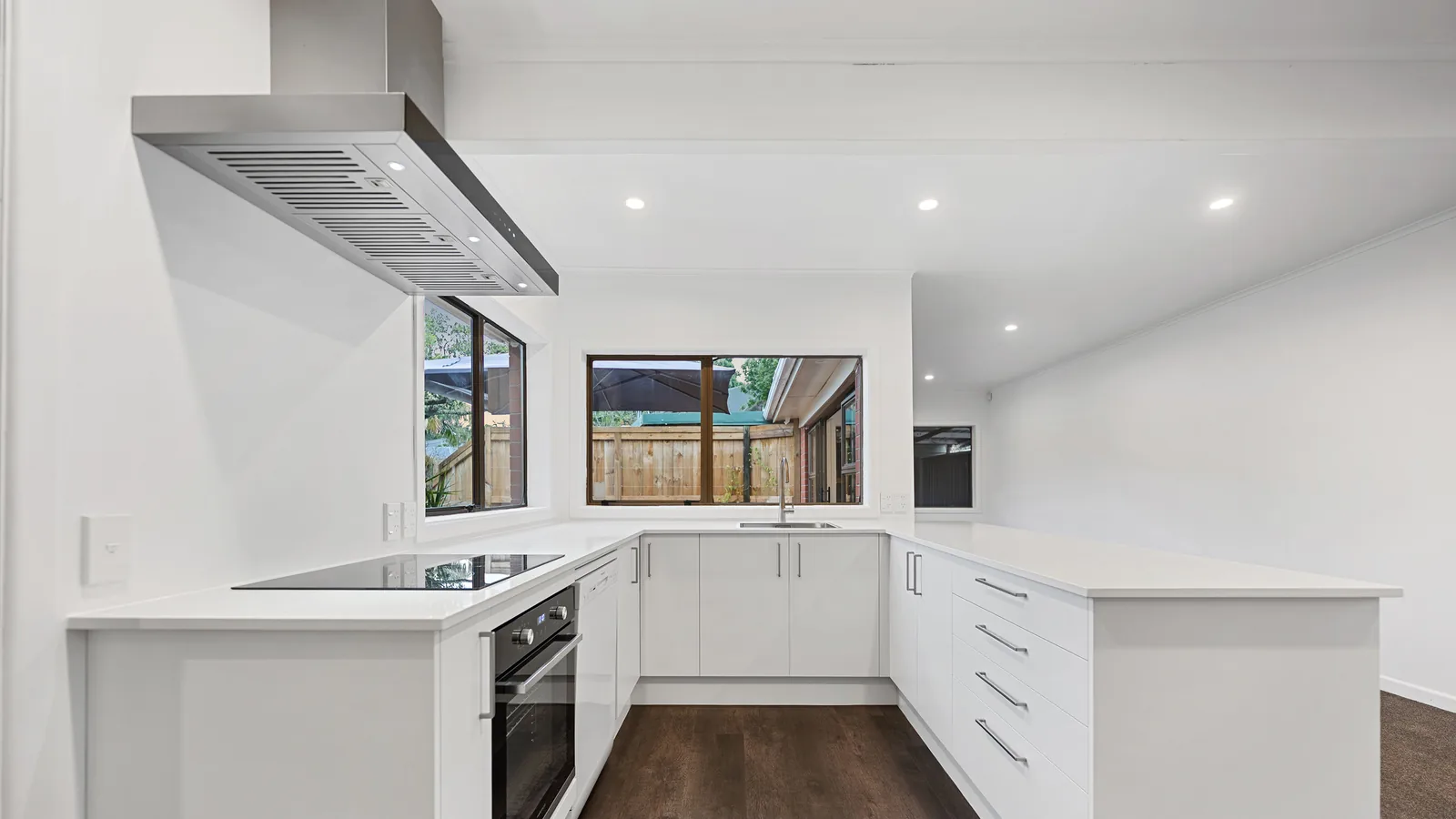
What should a client weigh up when choosing a rangehood?
Extraction power, duct size, and where the fan sits, says The Conduction Company. Power and duct size decide how much steam and smell it clears. Where the fan sits decides how noisy it is.
What is a good extraction rate for a rangehood?
At least 500 cubic metres an hour (m³/h), in The Conduction Company's experience. Most modern rangehoods come with 750 to 1,000 m³/h of extraction, and those are really powerful. Treat the number on the box as the maker's maximum: a rangehood only gets close to it on a short, straight duct, and every extra metre and bend takes some away.
The duct matters as much as the fan. The Conduction Company fits rangehood ducting 150 mm across, the outlet size on most rangehoods sold now. Older homes often have 125 mm ducting, and Consumer NZ warns that joining a new rangehood to it with an adaptor cuts the airflow and adds noise. In rental homes, the Healthy Homes Standards set a kitchen extractor fan and all of its ducting at 150 mm across, or an exhaust capacity of 50 litres a second, venting to the outdoors.
Then think about where the fan sits, especially in a home you live in. A very powerful fan built into the rangehood itself is usually noisy, unless it has soundproofing and an engineered design. So where there is a ceiling space above the rangehood, The Conduction Company usually chooses a rangehood with an inline fan in the ceiling instead.
The fan can then be larger, and it sits away from the kitchen, so it is much quieter and more powerful. Jordan Statham of The Conduction Company calls it "super powerful extraction without the noise of a powerful fan."
What does it usually cost to replace or install a rangehood?
The Conduction Company prices a rangehood on two things: the job, and the rangehood you choose.
We quote on facts, not guesses
Before we give you a price, we carry out a proper assessment of your property and how you'll use your new rangehood. That way you know exactly what you're buying and the total cost, with no surprises. Clear expectations from the outset, start to finish.
The estimates below are for standard installation of a rangehood.
The Conduction Company confirms final pricing after a property assessment.
A like-for-like rangehood replacement starts from about $950 including GST, in The Conduction Company's current price book. That is a 600 mm stainless canopy rangehood supplied and fitted, re-using the existing ducting and power where they are sound. Replacing a basic canopy rangehood like this is the simplest job.
A full new installation costs more, because it includes drilling through the wall or running ducting out to the exterior.
Then the model makes the big difference. A high-quality Miele, Bosch or Fisher & Paykel rangehood can cost significantly more. A silent rangehood from Schweigen's range, with the fan on the roof, an outside wall, or inline in the ceiling space, costs more again. Jordan Statham of The Conduction Company calls those an unbelievably good product, but says you get what you pay for. "There's a huge range," he says.
The Conduction Company gives a fixed price once it knows the job and the model. It fits rangehoods and extractor fans as part of its rangehood and extraction fan installation across Auckland.
You fit a rangehood the client bought: what can go wrong?
Usually nothing, says The Conduction Company, unless it is a very low-quality model. Rangehoods from bargain-bin sellers often carry only a short warranty.
The Conduction Company fits a rangehood a client has already bought, or a model it cannot supply itself. The risk shows when the unit fails. The Conduction Company has handled manufacturer warranty claims on rangehoods clients supplied. The manufacturer covered the replacement unit, but not an electrician coming back to take the old one off the wall and fit the new one when it arrived.
That is why The Conduction Company recommends supply and install. It buys through its wholesaler at good prices, and you get The Conduction Company's Lifetime Workmanship Guarantee on its labour, and the manufacturer's warranty on the rangehood.
What happens when the old rangehood ducting has deteriorated?
The rangehood loses extraction power, or it pushes moist, smelly air into the wall cavities and the ceiling space. The Conduction Company replaces deteriorated ducting with new, fully sealed ducting.
Sealed ducting carries all of the moisture and cooking smells outside, instead of into the building and its structural timber.
Can an extraction fan run automatically, or on a timer?
Yes. The Conduction Company often fits extraction fans with a run-on timer, and in a lot of bathrooms it is a really good idea.
A typical setting works like this. If the light is on for less than five minutes, the fan never starts. If it is on for longer than five minutes, the fan comes on by itself. When you switch off, the fan keeps extracting for 20 minutes, then stops.
So a quick trip to the toilet does not start the fan. After a shower you can switch everything off and leave, and the fan clears the steam without anyone coming back to turn it off.
The other option is a fan controlled by humidity, and The Conduction Company uses two kinds. One is built into the fan and reacts to a jump in humidity, like the steam from a shower, then switches off once it drops back. That is perfect for bathrooms.
The other is an absolute humidity sensor, for a room that gets humid from other causes and stays that way. It runs the fan whenever the humidity is above a set level. The Conduction Company picks the right one for the room.
What is the best fix for a combined bathroom fan and light?
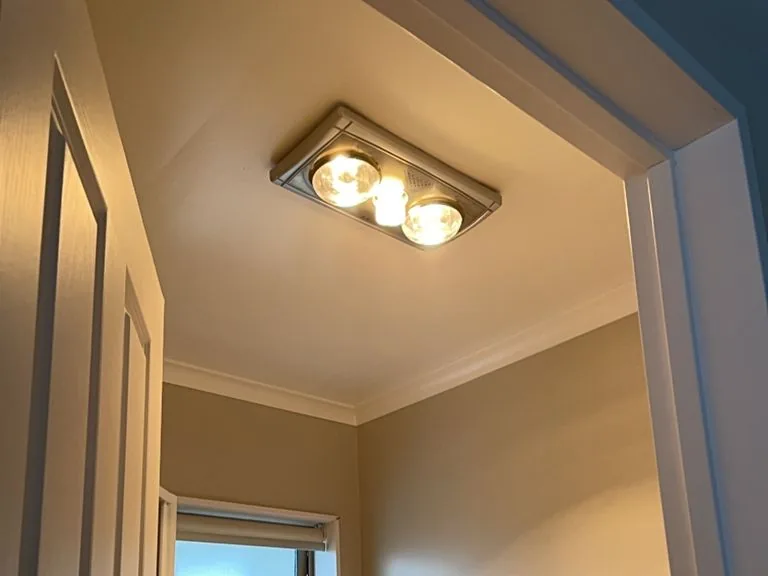
Separate the fan from the heat lamps. The Conduction Company now steers clear of combined heat, light and fan units wherever it can.
In these units the fan is usually what fails first. It sits right beside the heat lamps, and a fan is a motor, which wears out quickly under that much heat. Then the whole unit has to be replaced, which gets expensive if it happens every few years.
In a new bathroom, The Conduction Company fits separate parts instead: an inline fan in the ceiling, a couple of recessed downlights, and a wall heater. Kept apart, each tends to last longer.
If you already have a combined unit, The Conduction Company swaps it for a heat-and-light unit with a duct port, and adds a separate inline extractor fan. Jordan Statham gives four reasons. The inline fan is more powerful. It is quieter, because it sits further into the ceiling space. It costs less overall, and the fan is easy to replace on its own if it ever fails. And it lasts longer, because the air reaching it is cooler.
You keep the heat lamps, and there is no hole to patch and plaster. "It just makes the system much more reliable moving forward," says Jordan Statham of The Conduction Company.
Can a wall-mounted fan be installed, and where does its power come from?
Yes. The Conduction Company calls them through-wall fans, and fits them on ground floors and mid floors with no ceiling space above.
Power usually comes one of two ways. The fan can be looped from the light, so it comes on with the light. Or, where walls can be opened or there is ceiling space to run a cable across, The Conduction Company runs a cable to the switch and fits a separate fan switch, and a timer if you want one.
If there is no way to get a cable from the light switch, The Conduction Company takes power from a nearby power or lighting circuit, runs it along the wall in surface-mounted conduit, and fits a switch beside the fan. Then you switch it right under the fan, or nearby on the same wall. The right option depends on how your house is built.
How do you replace a deteriorated exterior vent grille or cowl?
In most cases it is straightforward, says The Conduction Company. Only a few exterior cowls are common in New Zealand, so the exact match is usually still available. If it is not, The Conduction Company replaces the whole cowl with a modern one.
It takes off the old vent grille or cowl, fits the new one, and seals it so moisture cannot get in behind it. On a fan or rangehood outlet, it then adds mesh or a barrier to keep insects, rodents, and birds out.
In short
Moisture from a dryer, a stove or a shower has to leave the house through a sealed duct, not sit in the laundry, the walls or the ceiling. Based on its own work in Auckland homes, The Conduction Company ducts dryers through the wall to a cowl, fits rangehoods with strong extraction and an inline ceiling fan where there is space, and sets bathroom fans to run on after you leave. Combined heat, light and fan units are better split into separate parts. Old ducting and tired cowls are worth replacing before they leak moisture into the building.
If your laundry, kitchen or bathroom fan needs sorting, The Conduction Company is happy to help.
Frequently asked questions
Do kitchen extractor fans have to vent outside?
The Conduction Company always ducts a kitchen fan or rangehood to the outside, so the steam and cooking smells leave the house. In a rental home it is a rule: under the Healthy Homes Standards, a kitchen extractor fan has to vent to the outdoors.
Is there an extractor fan that does not require venting outside?
Yes. A rangehood can run in recirculating mode, passing the air through a carbon filter and back into the kitchen. It traps grease and smells, but the air comes back into the room, so The Conduction Company ducts outside wherever it can. In a rental, only a fan that vents to the outdoors meets the Healthy Homes Standards.
What size is rangehood ducting in NZ?
150 mm across, says The Conduction Company, which is the outlet size on most rangehoods sold now and the size the Healthy Homes Standards use for a rental kitchen. Older homes often have 125 mm ducting, and joining a new rangehood to it with an adaptor cuts the airflow and adds noise.


