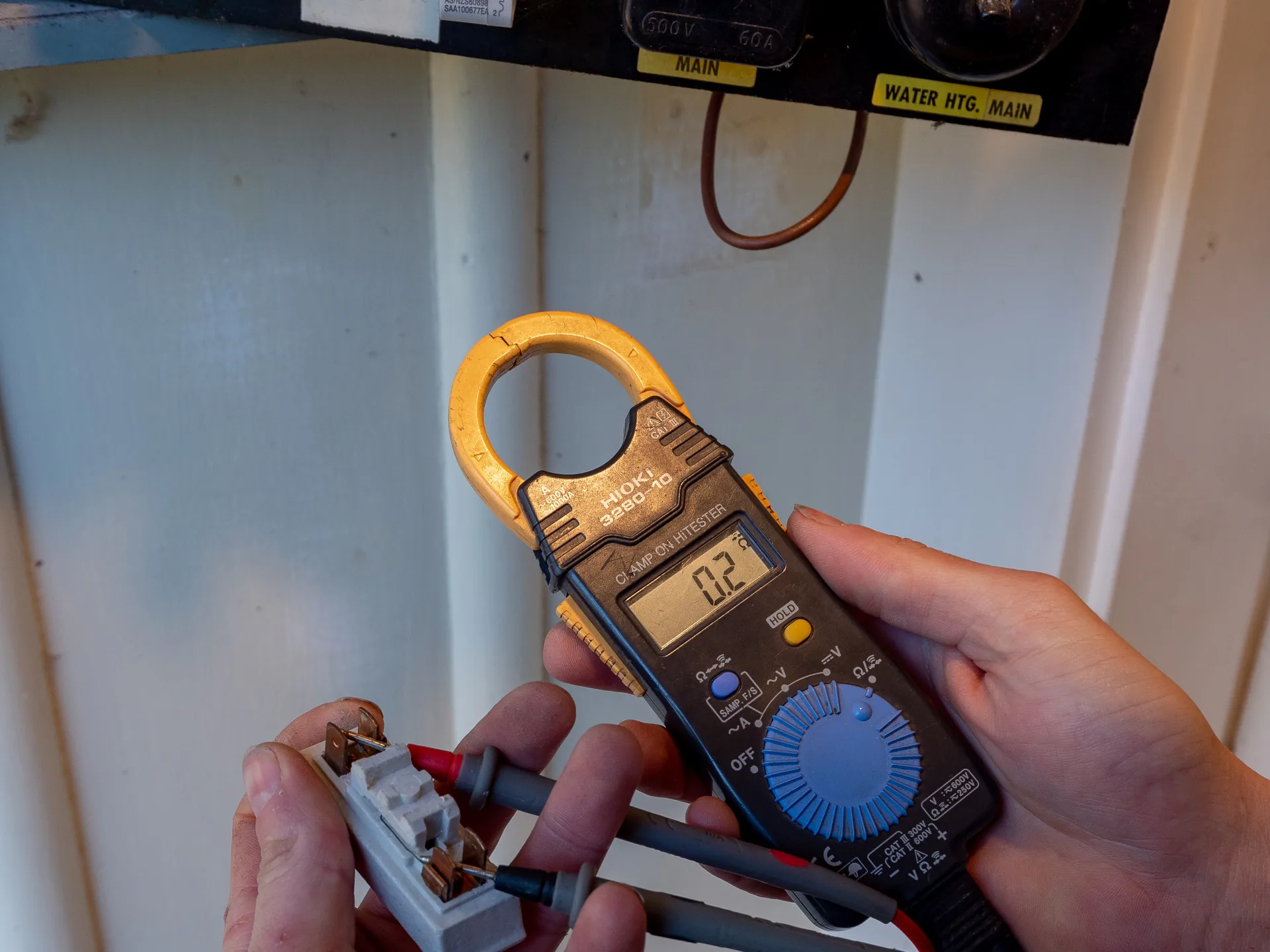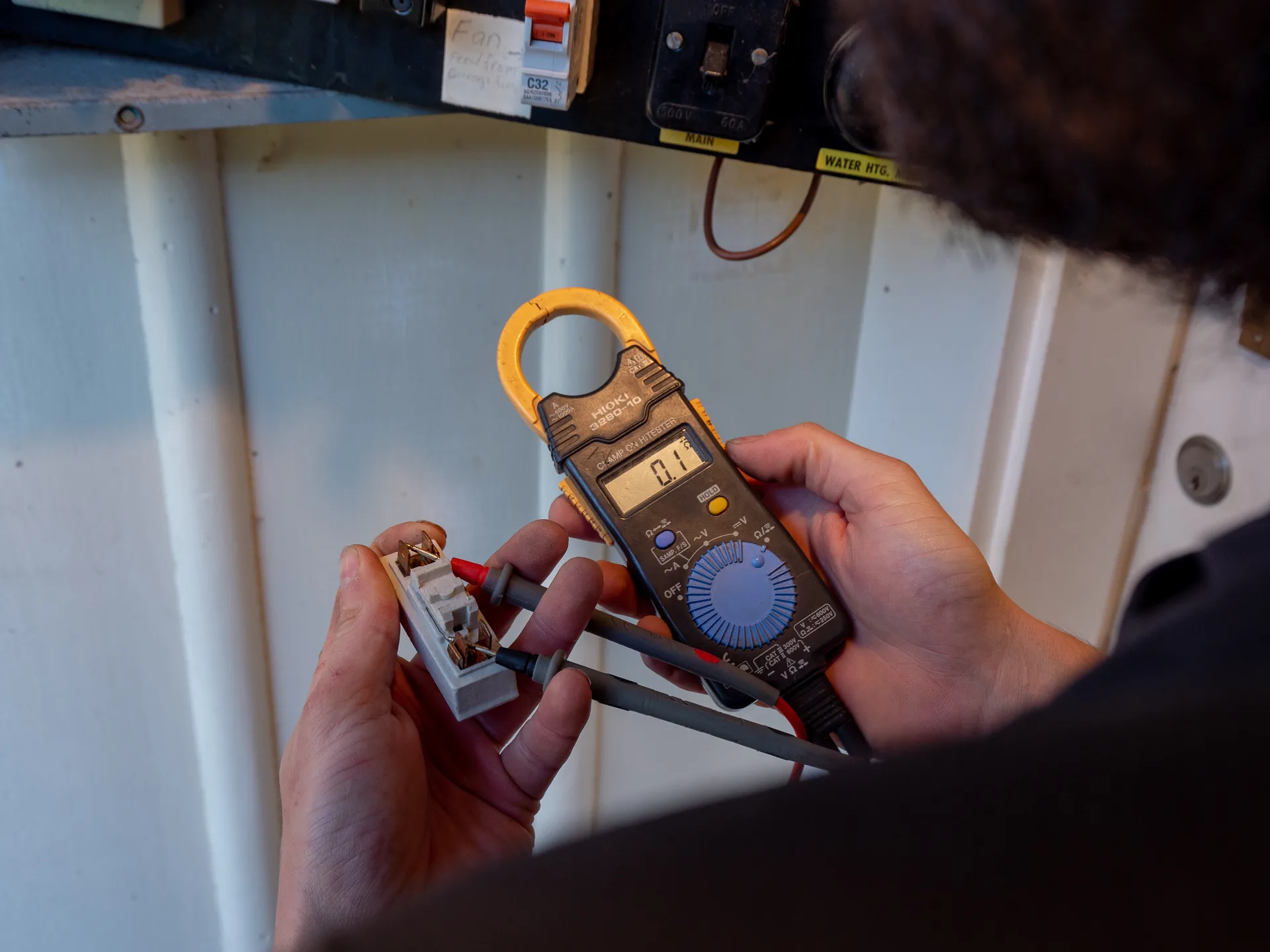
The Conduction Company replaces hot water cylinders across Auckland. The cost to replace a hot water cylinder in NZ, and what moves it, comes here from its own jobs and from Jordan Statham, its director, a registered electrician and electrical inspector. The estimates below are for standard installation of a replacement hot water cylinder. The Conduction Company confirms final pricing after a property assessment.
Hot water cylinder replacements completed by The Conduction Company in Auckland have cost $3,600 to $5,100 including GST. The size and type of the new cylinder, where it goes, and any move to mains pressure decide where a job sits in that range.
What makes a hot water cylinder replacement cost more?
An odd-sized old cylinder is what usually turns a straight swap into a bigger job, says The Conduction Company. The team then has to find a new cylinder that fits, have one custom made, or alter the cupboard the old one sits in. Sometimes none of those makes sense, and it is cheaper and easier to put a new cylinder outside instead. The Conduction Company sets out the options for each house.
We quote on facts, not guesses
Before we give you a price, we carry out a proper assessment of your property and how you'll use your hot water.
That way you know exactly what you're buying and the total cost, with no surprises.
Clear expectations from the outset, start to finish.
What did a recent cylinder replacement cost, and why?
A recent job for a property manager shows how the extras add up. In an Auckland rental unit, The Conduction Company replaced an old 135-litre low pressure cylinder with a 190-litre mains pressure cylinder, in a new position under the floor. It took "a fairly comprehensive plan and assessment prior to getting it done," says Jordan Statham, worked out with the client and the licensed plumber The Conduction Company contracts.
The estimates below are for standard installation of a replacement hot water cylinder. The Conduction Company confirms final pricing after a property assessment.
The client paid The Conduction Company about $5,100 including GST for that job. The move, the bigger cylinder and the switch to mains pressure took it past a straight swap, and the electrical side took far longer than on a like-for-like job.
How to tell if a hot water cylinder needs replacing?
Check its age first, then look for the first signs of wear, says The Conduction Company. Most cylinders carry a sticker on the side with the date of manufacture. Visible corrosion on the outside is a telltale sign of small leaks. Heat loss, or hot water that no longer lasts the way it used to, means the cylinder is not performing as it should.
On a cylinder past 12 to 15 years, those signs mean The Conduction Company suggests replacement over repair. Past 20 years, it recommends replacing the cylinder. If your cylinder has simply stopped heating, start with The Conduction Company's guide to getting your hot water back, because the fault is often the power, the thermostat, or the element rather than the cylinder.
How long does a hot water cylinder last in NZ?
About 15 years is typical, says Jordan Statham of The Conduction Company, and that is a decent lifespan. MBIE's guidance on heat pump water heaters lists a minimum 15-year durability for storage water heaters under the Building Code. Some older, very robust cylinders last 25 to 30 years. The longest Jordan has seen still in service was about 50 years old. "That was an old beast that had an extreme lifespan," he says.
Should you repair or replace an old hot water cylinder?
On an aged cylinder, a repair is often money spent twice, says The Conduction Company. Take a 16-year-old cylinder whose element has blown.
The estimates below are for standard replacement of a hot water cylinder element. The Conduction Company confirms final pricing after a property assessment.
From The Conduction Company's price book, replacing that element costs about $650 to $700 including GST. Other parts of an aged system can then start to fail soon afterwards. "You're spending more money to try and repair this older system, whereas you could have just replaced it in the first instance," says Jordan Statham. A new cylinder also starts a new warranty period. The Conduction Company tests the cylinder first and prices both options, as its page on hot water cylinder repairs and replacement in Auckland sets out.
What are the best brands of hot water cylinders in New Zealand?
Jordan Statham of The Conduction Company rates Rinnai as the standard brand, well known and well trusted. For heat pump hot water he rates Haier, and for a low-cost indoor cylinder, Thermann: "They're really cost effective and they're actually a really decent product."
The Conduction Company quotes Rinnai for electric cylinders and for heat pump hot water, and Haier alongside Rinnai's heat pump. Rheem cylinders are on The Conduction Company's recent completed swaps.
The Conduction Company installs every common type of hot water system: a standard electric cylinder, indoors or outdoors; heat pump hot water, as an all-in-one unit or a split system with a separate outdoor unit; instantaneous electric; and gas califonts, where the gas side is done by the licensed gasfitter it contracts. If you are weighing up a heat pump, The Conduction Company's guide to whether heat pump hot water is worth it covers what one costs to buy and to run.
What size hot water cylinder does a family need?
At least 180 litres for a standard household, says Jordan Statham of The Conduction Company. With mains pressure and several people in the house, his first pick is 250 to 300 litres, because mains pressure uses more hot water for the same length of shower.
Even so, half of the standard swaps The Conduction Company has completed since 2023 put in a 135-litre cylinder. Jordan Statham explains why: "the reason that 135s are more common is being able to fit them into the same cupboard space, which is a core driver of keeping costs low during a replacement." Moving the cylinder, or building work to suit a larger one, "can be significantly more expensive," he says. So a 135-litre swap is the low-cost option, and he still sees 180 litres as a good-sized minimum.
How long does a hot water cylinder replacement take?
Usually one day, says Jordan Statham of The Conduction Company. The team aims to start in the morning and finish by early afternoon, which gives the new cylinder a couple of hours to heat up. In the ideal case, you have hot water for showers that evening when you get home from work.
When is upgrading from low pressure to mains pressure worth it?
Usually, says The Conduction Company, and Jordan Statham would always choose it for his own home. "It just makes sense," he says. Mains pressure gives much stronger hot water pressure at the shower, but weigh two things first.
Your taps and fittings. Older taps, shower heads and mixers were made for low pressure. In the vast majority of homes they work fine after the change, The Conduction Company finds, but sometimes a leak forms. It has had to swap a shower mixer and shower head that could not handle the higher pressure. The Conduction Company checks the fittings after the change, and says up front that replacing a tap that fails under mains pressure is not part of the original quote.
Your power bill. Hot water rushes out much faster at mains pressure, so the same length of shower uses more of it. Jordan Statham of The Conduction Company expects you to notice the increase on your power bill.
The Conduction Company does the upgrade when the cylinder is replaced, with the plumbing connections done by the licensed plumber it contracts.
What are the regulations for installing hot water cylinders in New Zealand?
Three sets of rules apply, says The Conduction Company: plumbing law, the Building Code, and the electrical regulations. A licensed plumber does the plumbing, the power connection is certified electrical work, and the cylinder has to be strapped against earthquakes and set hot enough to stop Legionella bacteria growing.
Does replacing a hot water cylinder need a building consent?
Not usually, says The Conduction Company. Under exemption 38 in Schedule 1 of the Building Act, replacing a water heater needs no building consent, as long as an authorised plumber does the work and the heater has controls that keep the stored water at or below 90°C. That covers electric to electric, electric to gas, moving the cylinder, and swapping it for a heat pump water heater. A wetback or a solar thermosiphon system is not covered. Adding a new or second water heater, rather than replacing one, does need a consent.
What temperature rules apply to a hot water cylinder?
At least 60°C at the cylinder, and no more than 50°C at a new shower, bath or basin. The Building Code's Acceptable Solution, G12/AS1, says the cylinder thermostat shall be set to not less than 60°C, to prevent the growth of Legionella bacteria. The aim is to stop it growing.
The 50°C limit is there to prevent scalding. MBIE's guidance on preventing scalding says it applies to new showers, baths and basins installed from 2 November 2024, not to existing ones. A tempering valve stops the water at the tap going over the limit, and only a licensed plumber may install or adjust one. On a cylinder The Conduction Company replaces, that is work for the licensed plumber it contracts.
Does a hot water cylinder have to be strapped in?
Yes. The Building Code (clause B1) requires a cylinder to be held against earthquakes, which Jordan Statham of The Conduction Company calls being "strapped in". G12/AS1 shows tensioned galvanised steel straps screwed into the wall framing, with an extra centre strap on cylinders over 200 litres.
Who does the plumbing, and who signs it off?
The licensed plumber The Conduction Company contracts does the plumbing and signs it off. "The plumber is fully licensed, our subcontractor, and they'll sign off all of the plumbing work," says Jordan Statham. The Plumbers, Gasfitters, and Drainlayers Board lists fixing or unfixing any pipe that supplies water among the plumbing a homeowner cannot do. On a gas califont, the gas side is done by the licensed gasfitter The Conduction Company contracts. The Conduction Company's Lifetime Workmanship Guarantee covers the plumbing on a cylinder job, as well as its own electrical work.
What are the electrical rules for a hot water cylinder?
Connecting a cylinder to the power is prescribed electrical work under the Electricity (Safety) Regulations 2010, and whoever completes it must issue an electrical safety certificate. The Conduction Company does that part of the job and certifies it. In most homes the wiring must meet Part 2 of AS/NZS 3000, the Wiring Rules, and four points matter on a cylinder.
A switch beside the cylinder. AS/NZS 3000 asks for a lockable isolating switch next to the cylinder, but not on it.
A circuit breaker where the circuit starts. The circuit is protected at its origin, usually the switchboard, by a breaker rated no higher than the cable can carry.
Cable sized for the load. The cable has to carry the current the cylinder draws.
A dedicated circuit. The Conduction Company prefers to run the cylinder on its own circuit.
Are hot water cylinders covered by insurance in NZ?
It depends on your policy and how much damage there is, says The Conduction Company. Some policies will not cover a maintenance failure, such as a very old cylinder that has worn out rather than failed through an accident. If a cylinder has burst and water has spread to several places, "you really have to check your policy wording or check in with your broker," says Jordan Statham.
In short
Based on The Conduction Company's completed Auckland jobs, a replacement hot water cylinder has cost $3,600 to $5,100 including GST, and an odd-sized old cylinder is what usually turns a straight swap into a bigger job. A cylinder typically lasts about 15 years, and age together with corrosion or heat loss is the sign to replace it rather than repair it. A swap usually takes one day and needs no building consent when an authorised plumber does it. The Conduction Company handles the whole job, with the plumbing done by the licensed plumber it contracts.
Frequently asked questions
Is it an emergency if you have no hot water?
It can be, if a leaking cylinder puts water near the wiring or the switchboard. The Conduction Company is reachable 24/7, and where there is a risk to health and safety it aims to respond within 2 hours, depending on staff availability. Otherwise it responds the same day.
Do you need a plumber or an electrician to replace a hot water cylinder?
Both. A licensed plumber does the plumbing, and connecting the cylinder to the power is electrical work that has to be certified. The Conduction Company handles the whole job, with the plumbing done by the licensed plumber it contracts.
How much does a plumber charge to replace a hot water cylinder?
The Conduction Company prices the whole job, plumbing and electrical together, rather than the plumber's part on its own. Hot water cylinder replacements completed by The Conduction Company in Auckland have cost $3,600 to $5,100 including GST.
Does your Lifetime Workmanship Guarantee cover the plumbing on a cylinder job?
Yes. The Conduction Company's Lifetime Workmanship Guarantee covers the plumbing done by the licensed plumber it contracts, as well as its own electrical work. A new cylinder also comes with its manufacturer's warranty, which is separate.