


TV wall mounting with hidden cables
The Conduction Company mounts TVs on walls across Auckland, hides the power and HDMI cables inside the wall or in tidy capping, and installs the outlet behind the screen, all in one visit. Its registered electricians do the electrical side, so there is no second trade to book, and the new outlet comes with a certificate of compliance.
Is your TV wall doing any of these?
A poorly installed system costs you picture quality and leaves cabling on show. The Conduction Company fixes brackets into the timber framing rather than the lining, runs the cabling inside the wall where the wall allows it, and installs a proper outlet behind the screen instead of pushing a lead through the plasterboard.
TV wall mounting questions, answered
Below, The Conduction Company answers the common questions about putting a TV on the wall, starting with what it costs.
How much does it cost to have a TV wall mounted in Auckland?
We quote on facts, not guesses
Before we give you a price, we carry out a proper assessment of your property and what you want the system to do. That way you know exactly what you're buying and the total cost, with no surprises. Clear expectations from the outset, start to finish.
The Conduction Company prices a TV mount on what the job actually involves rather than a flat call-out rate. Four things move it: the wall you are fixing to, whether the cabling is being hidden in the wall or left visible, whether there is already a power outlet behind the screen or one has to be installed, and the size and weight of the screen. A bracket onto a timber-framed wall with a socket already behind it is the simplest version of the job. Adding an outlet is electrical work, and our guide to power point installation costs covers that side of it.
The estimates below are for standard TV wall mounting. The Conduction Company confirms final pricing after a property assessment.
This is The Conduction Company's own Auckland pricing. The simplest job, on a wall with a socket already there, starts from $210 including GST to supply a bracket and mount your TV, with no cabling work. Hiding the cables in the wall usually costs $600 to $1,600 including GST.
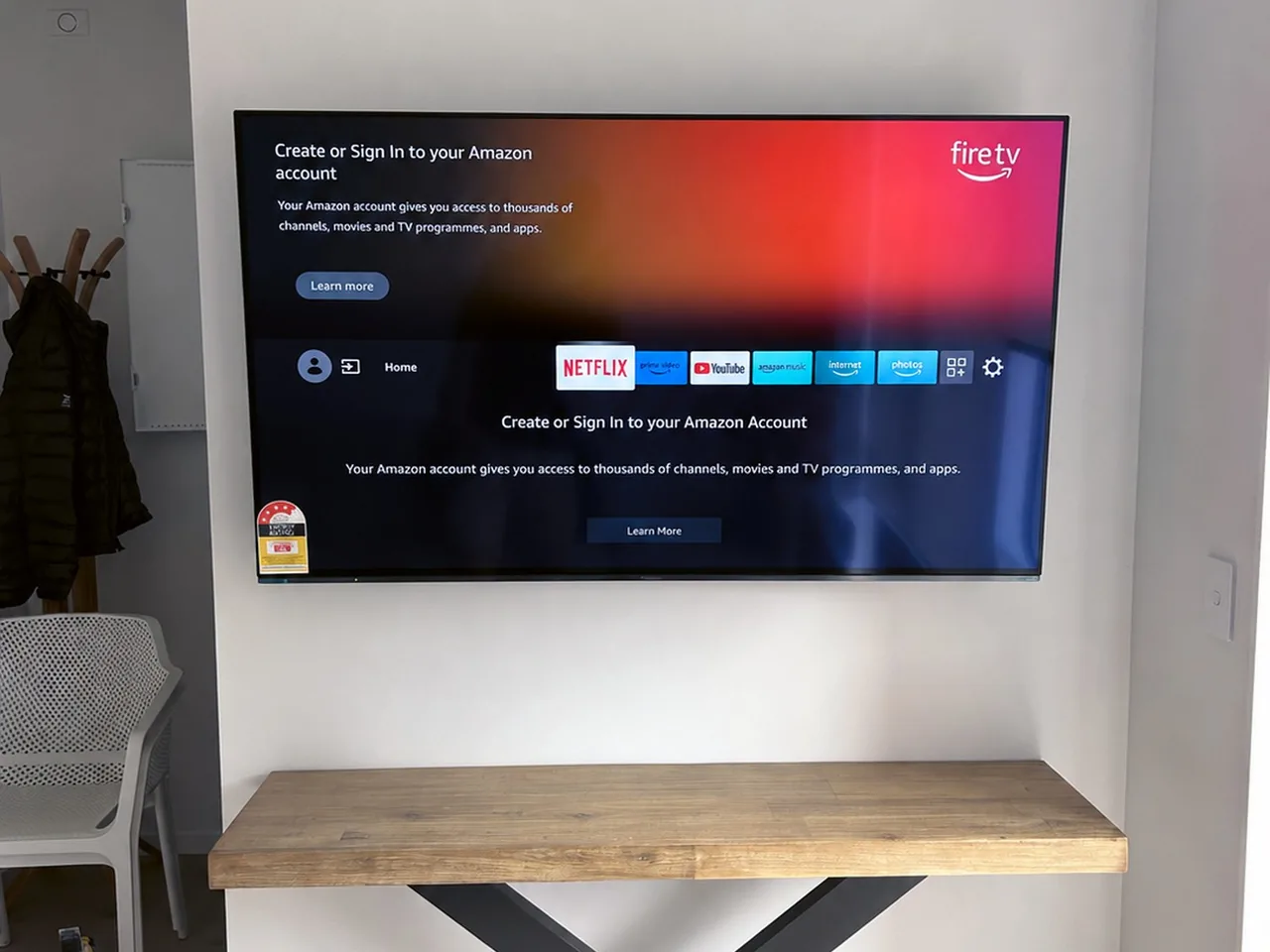
TV Wall Mounting with Concealed Cabling
One of the most common jobs The Conduction Company does in Auckland homes is a screen on the wall with nothing showing underneath it. No cord running down the plasterboard, no HDMI lead looping across to a shelf. That is two separate pieces of work happening in the same visit: a recessed power outlet installed behind the screen so the plug sits flush against the wall, and the HDMI or data cabling pulled through the wall cavity to wherever the gear lives.
The order it is done in is what makes it tidy. The outlet and the cable runs go in first, while the cavity is still reachable. The bracket goes on second, fixed into the timber framing rather than the lining, and set to a laser line so the screen is level off a datum rather than a pencil mark. The screen goes on last. The Conduction Company does the electrical half and the AV half together for that reason: mounting first and wiring later means opening the wall again with a television already hanging on it.
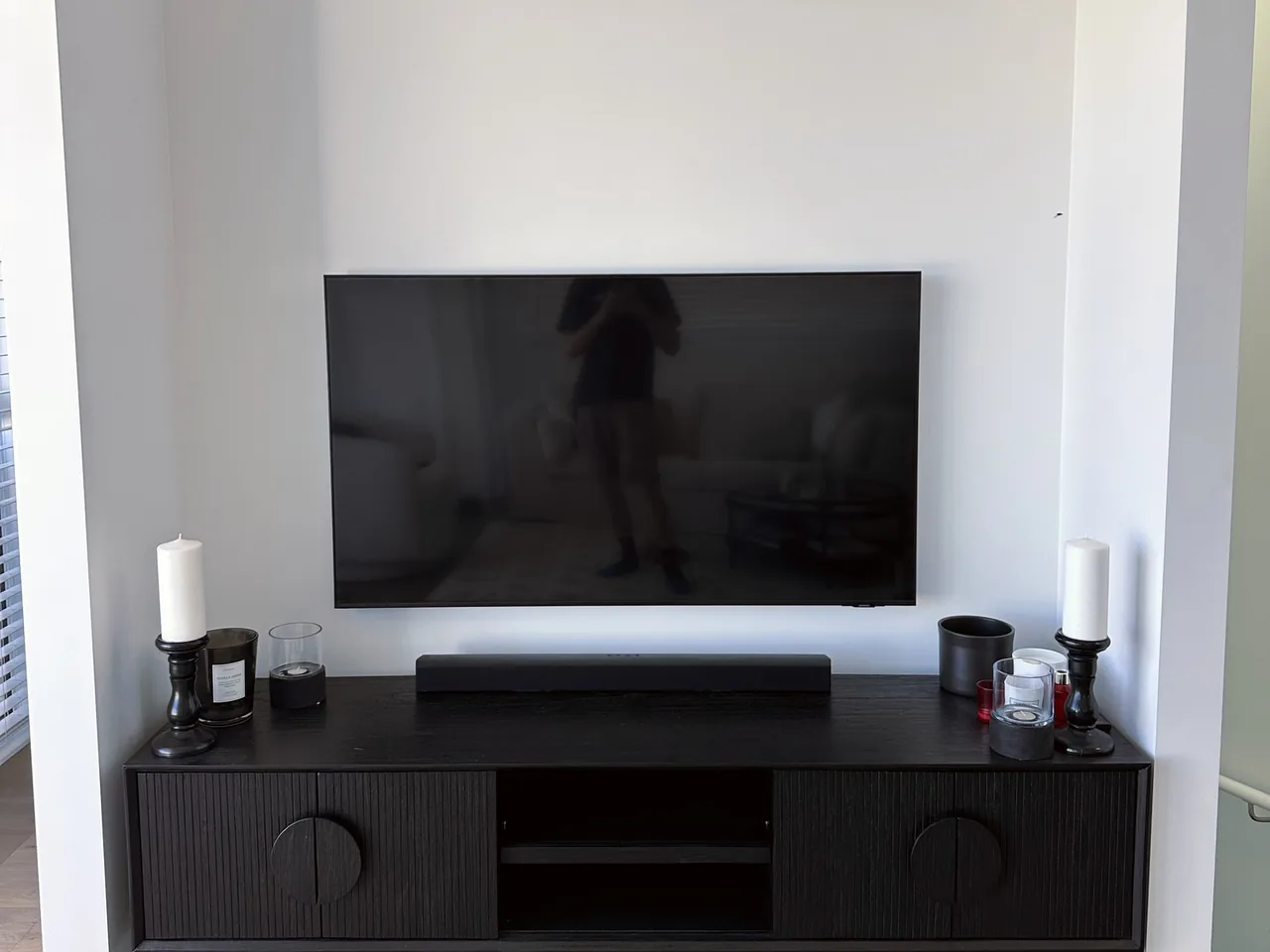
How high should a TV be mounted on the wall?
In a lounge, The Conduction Company sets the bottom of the screen at eye level when you are sitting on the couch, which is lower than most people expect. In a bedroom it usually goes higher, because you are watching from the bed rather than a sofa. Leave at least 100mm of clear wall above the top of the screen. The exact height is agreed with you on site before the bracket goes on, because the right number depends on where you actually sit rather than on a formula.
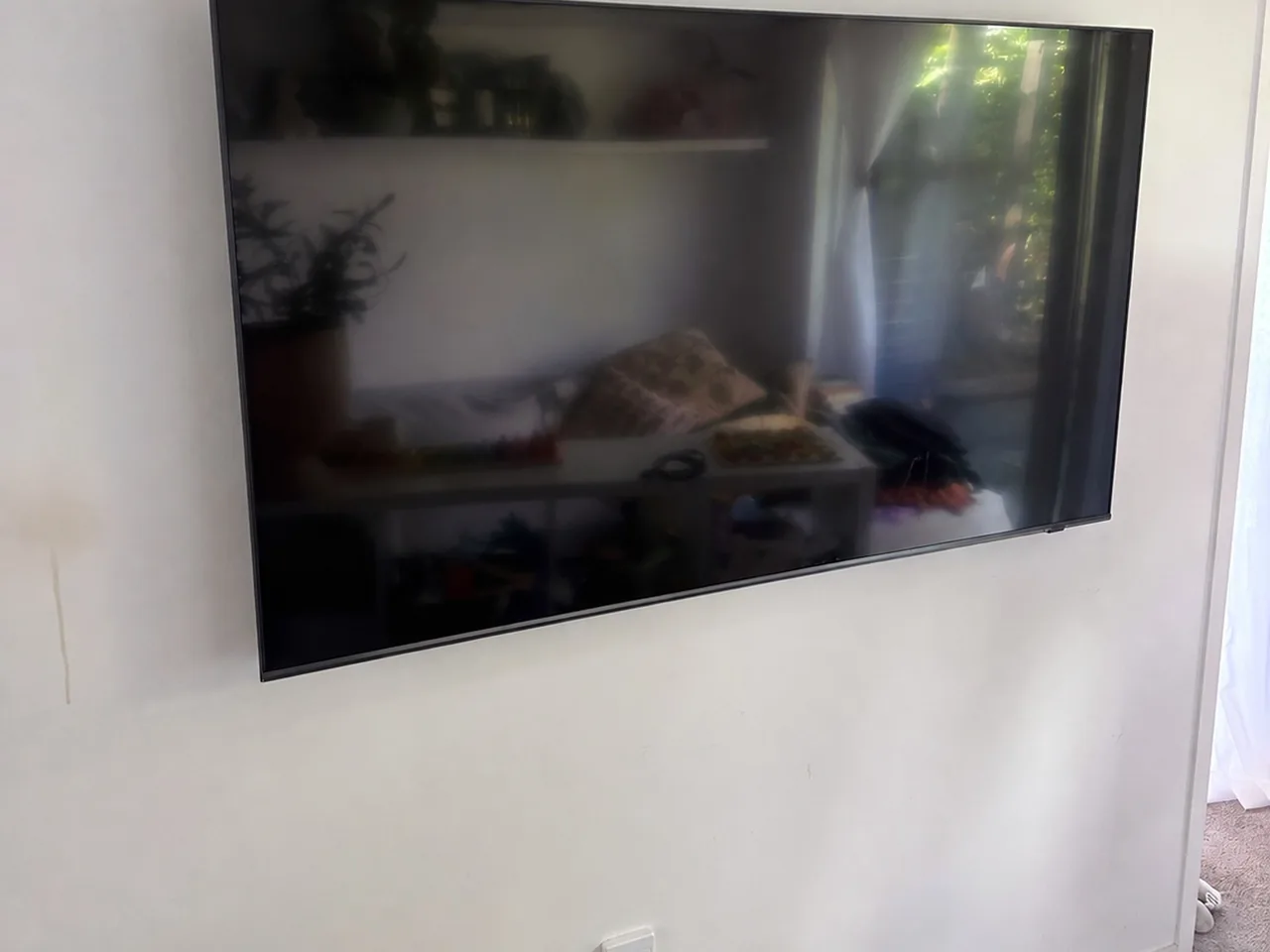
Is it safe to mount a TV on a plasterboard wall?
Yes, as long as the bracket is fixed into the timber framing behind the plasterboard, because plasterboard on its own holds nothing. The Conduction Company fixes brackets into the framing, and the bracket has to be wide enough to span two studs, which is where a lot of brackets bought off a shelf fall short because the base is too narrow. That is what sets the limit, not the lining. Brackets are rated by weight and by screen size, and The Conduction Company matches the bracket to the screen rather than the other way round. An 85 inch screen is the largest on our records.
How to attach a TV wall mount
The Conduction Company attaches a TV wall mount by screwing a wide enough bracket, dead level, into two timber studs. These are the steps its electricians follow to hang a TV wall mount in Auckland homes, in order.
- Buy the right bracket. In most New Zealand houses The Conduction Company works in, the studs (the upright timbers inside the wall) are 600mm apart, and many brackets on sale are under or only just over 600mm wide. The brackets The Conduction Company prefers to supply are at least 800mm wide, so they span two studs easily. From about a 32 inch screen up, spanning two studs is a must.
- Find the studs. A stud finder is a good start, but even an expensive one can get it wrong, and that ends with a TV on the floor. The Conduction Company's electricians find studs by the sound of a knock, and bring out a thermal imaging camera when they are unsure. Jordan Statham, The Conduction Company's owner: “We know the exact sound because we've knocked on at least 10,000 walls each of us.”
- Work out the height. In a lounge, the bottom of the screen goes at eye level from where you sit on the couch. Fit the bracket plate to the back of the TV and measure from the bottom of the TV up to it. Hold the TV against the wall, mark where its bottom edge sits, and measure up from that mark to find the screw points.
- Level it. Hold the bracket on its marks and check it with a laser level or a long level before anything is drilled.
- Pre-drill. Drill pilot holes into the studs, with the right size of drill bit for the screws you are using.
- Use proper screws. Fix the bracket into the studs with proper timber screws sized for the job, so they cannot work their way out over time. Jordan Statham, owner of The Conduction Company: “Never use the screws that come out of the packaging, those ones are terrible.”
- Leave the wall plugs in the box. Plastic wall plugs, often called Rawlplugs, do not belong in plasterboard. They can work in a concrete or brick wall, but there are much stronger fixings for masonry.
- Hang the TV and lock it. Hook the TV onto the bracket, then lock the bracket into place. This is the step The Conduction Company sees missed most: everything else done right, the lock left off, then a child pulls a cable and the whole TV comes down.
- Set the angle. Set the tilt or swing and tighten it, so the screen holds its position instead of flopping around.
Hiding the cables in the wall is a different job with its own skills, and a power point behind the screen is electrical work. The Conduction Company does both in the same visit as the mount.
Can you mount a TV above a fireplace?
Yes, and The Conduction Company checks two things before committing to it. The first is heat: how much the fire throws up the wall, which is very different between a gas fire, a wood burner and an electric one, and whether it reaches the screen or the cabling behind it. The second is what is behind the lining, because a chimney breast or a masonry surround needs different fixings from timber framing. Both get looked at on site, and you are told if the position is a problem before anything is drilled.
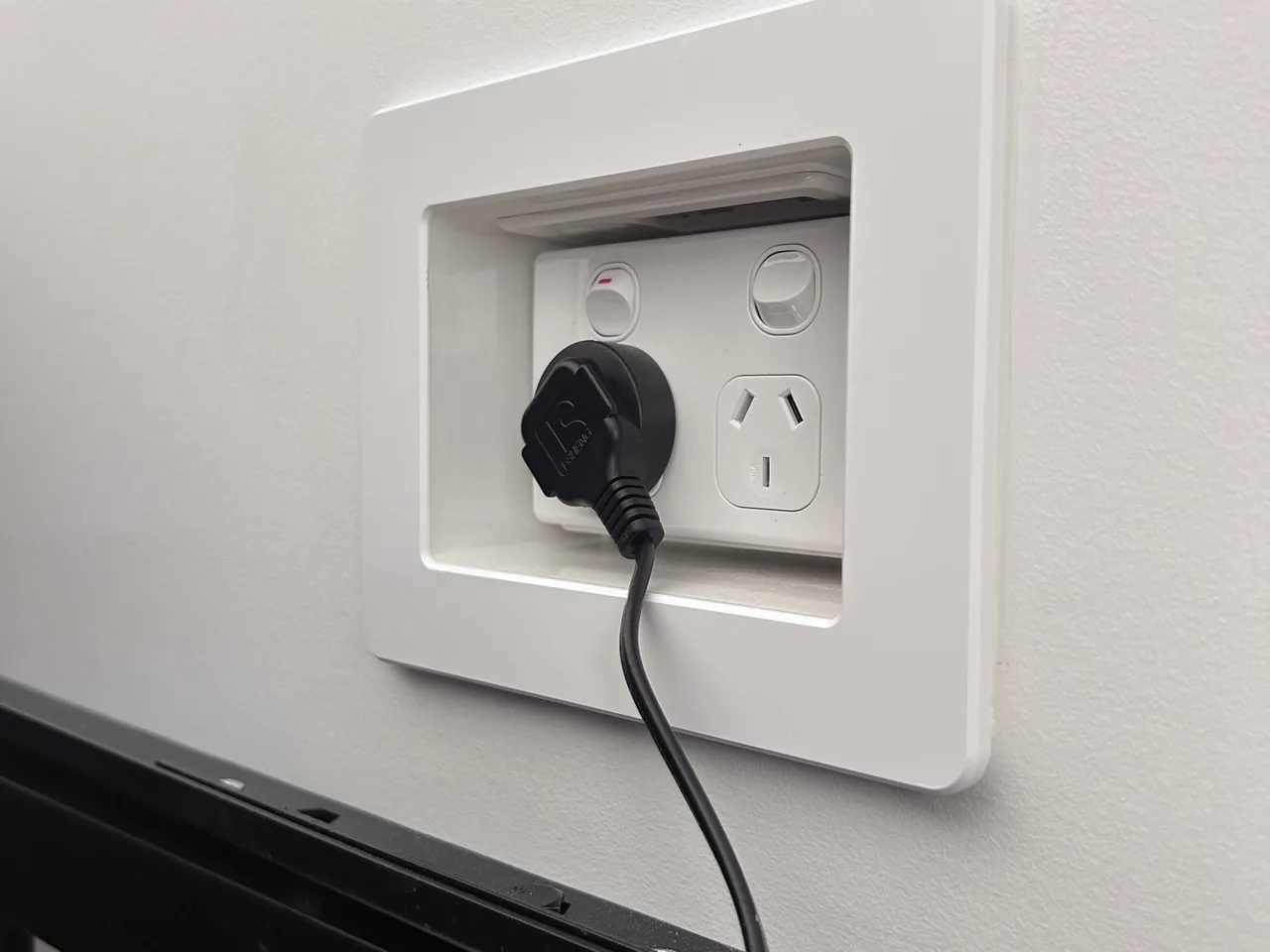
Can you run a TV power cord through a wall?
The Conduction Company does not run a television's own power cord through a wall; it installs an outlet behind the screen instead. The Wiring Rules do not simply ban it, and whether the exception for a short appliance lead covers a television is a judgement call rather than a settled rule. Three things hold either way. A socket has to sit where the plug can still be pulled out. A join onto the house wiring has to be made in a purpose-made connector with screwed or crimped terminals. And a cord has to be held so a pull on it does not drag on its connections. An outlet behind the screen does all three. It is prescribed electrical work, so it carries a certificate of compliance under the Electricity (Safety) Regulations 2010.
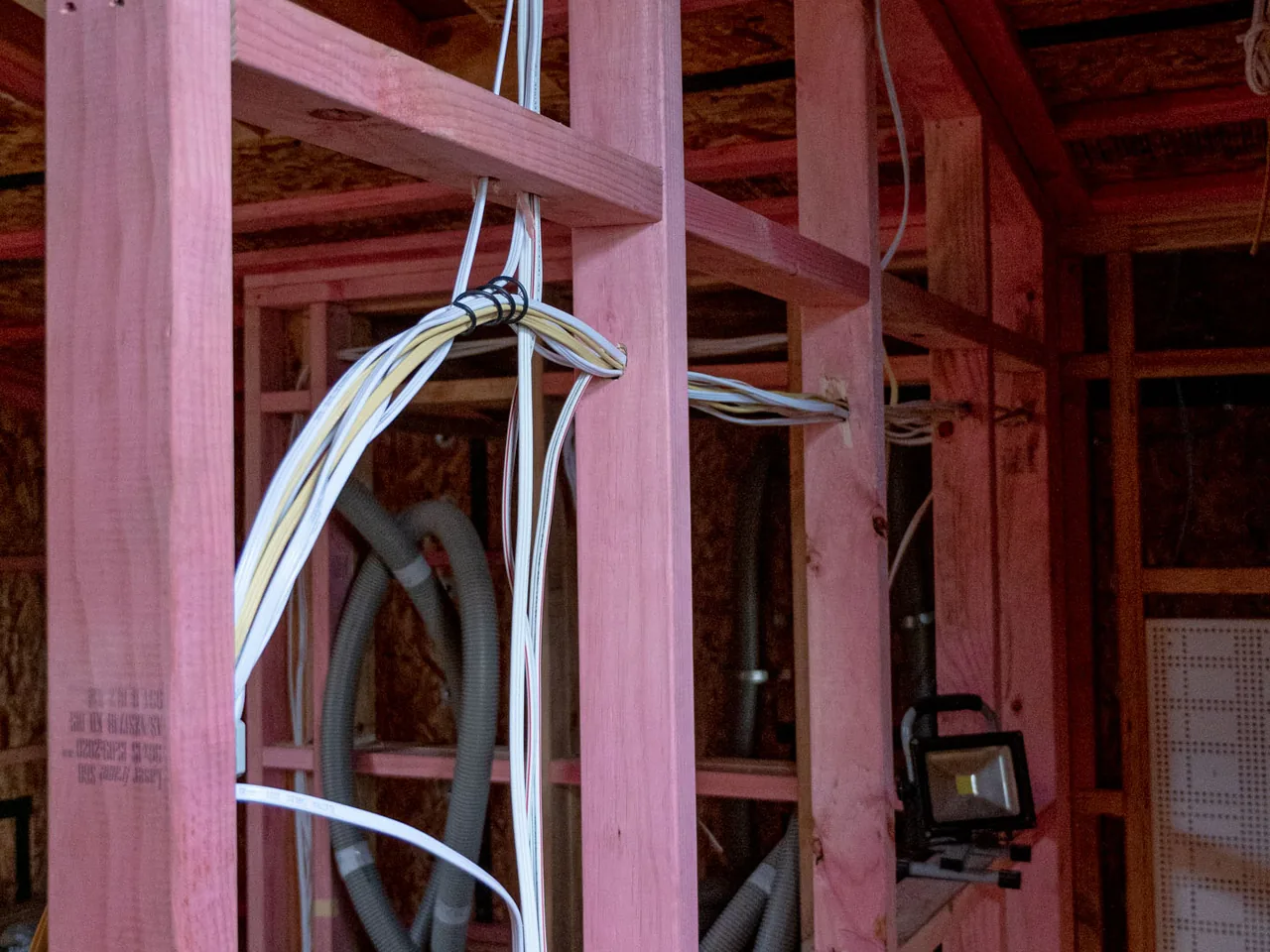
Can the HDMI and data cabling run in the wall alongside the power?
Yes, and they have to be kept apart from the mains while they are in there. The Wiring Rules allow that separation to be made with a barrier, with a conduit, or with distance, and The Conduction Company uses whichever suits the wall it is working in. The data side also has its own telecommunications rules on top of the electrical ones. In practice it means the power and the HDMI or network cable share the wall but never the same space.
The Conduction Company runs the network cable to the TV wall as part of its data cabling and WiFi work.
How long does it take to wall mount a TV?
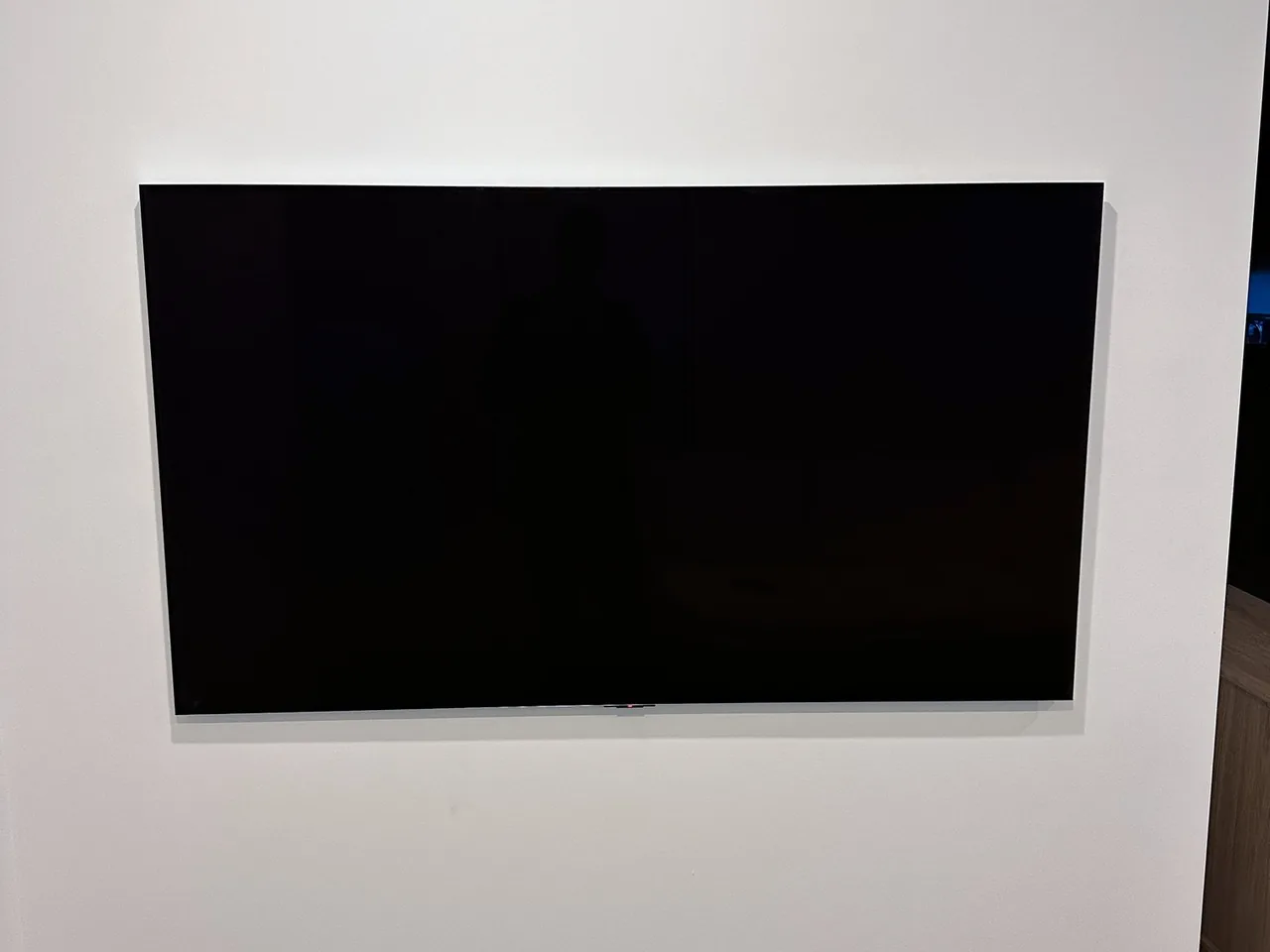
Measured across The Conduction Company's own completed Auckland jobs, a bracket onto an existing wall with a socket already behind it is usually under an hour on site, and up to about two hours where the wall or the bracket is awkward. With the cabling hidden in the wall and an outlet installed behind the screen it is closer to two to four hours, because the wall has to be opened, the cable run, and the outlet terminated and tested before the screen goes on. Those are hours on site.
Can you hide the cables behind a TV that is already on the wall?
Yes, including a TV someone else mounted. The Conduction Company takes the screen down and checks the existing bracket first, because the outlet and the cable run go in behind it, and the bracket has to be fixed into the timber framing and wide enough for the screen it carries. On one Onehunga job the existing bracket was fixed into a single stud, fine for the small TV it had held but not for the 85 inch screen going up, so The Conduction Company fitted a new, wider bracket instead of packing timber in behind the old one. With the bracket right, the cables go into the wall and the screen goes back up.
Cable capping instead of in-wall cabling
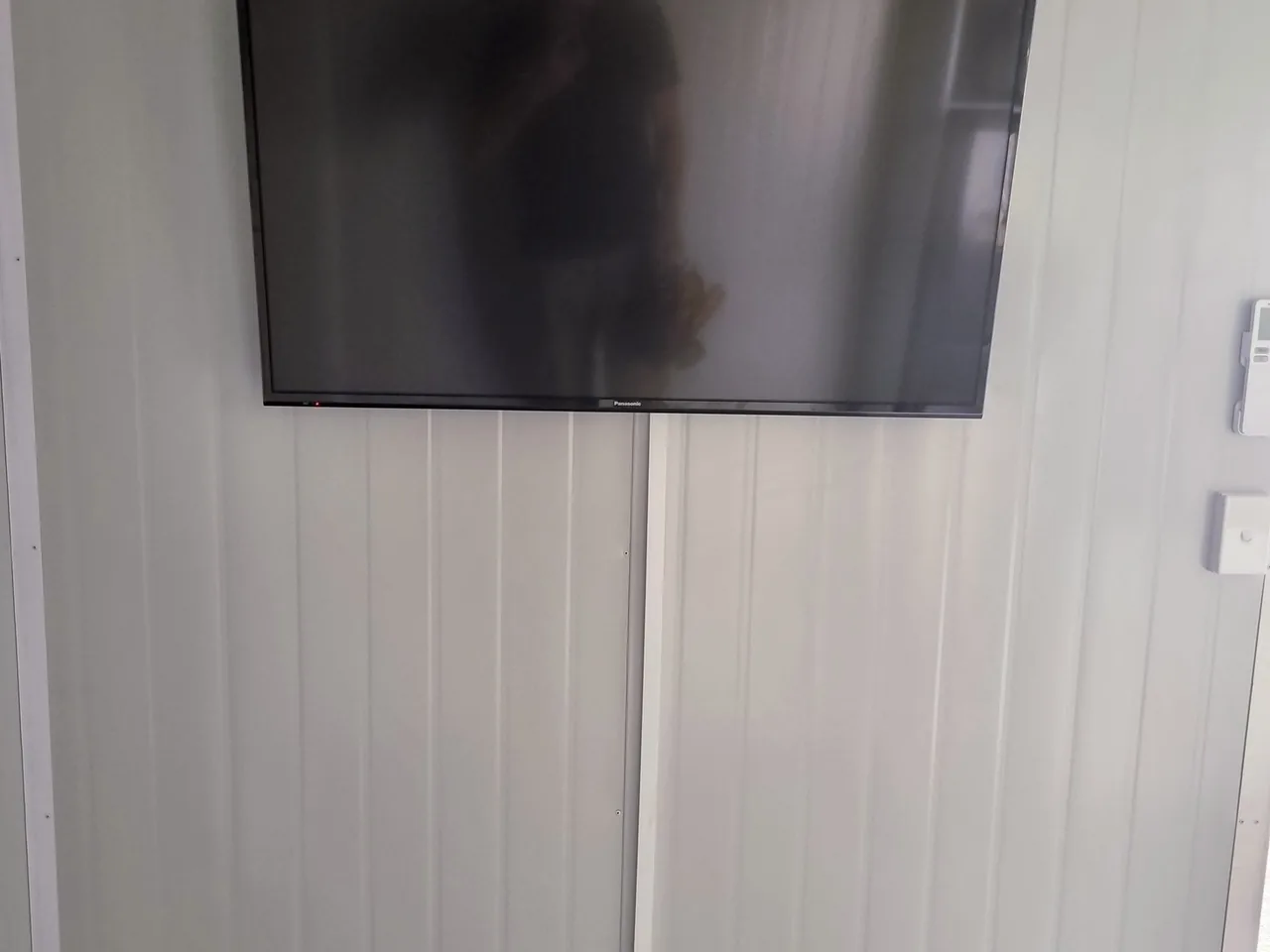
Sometimes the wall cavity will not take the cables, and sometimes a client wants a tidier result than loose cords without the budget for in-wall cabling. For both, The Conduction Company installs capping: a slim cover channel fixed along the wall, with the TV cables run inside it, so they sit covered and straight instead of hanging loose. This TV cable run in Golflands was finished in white capping.
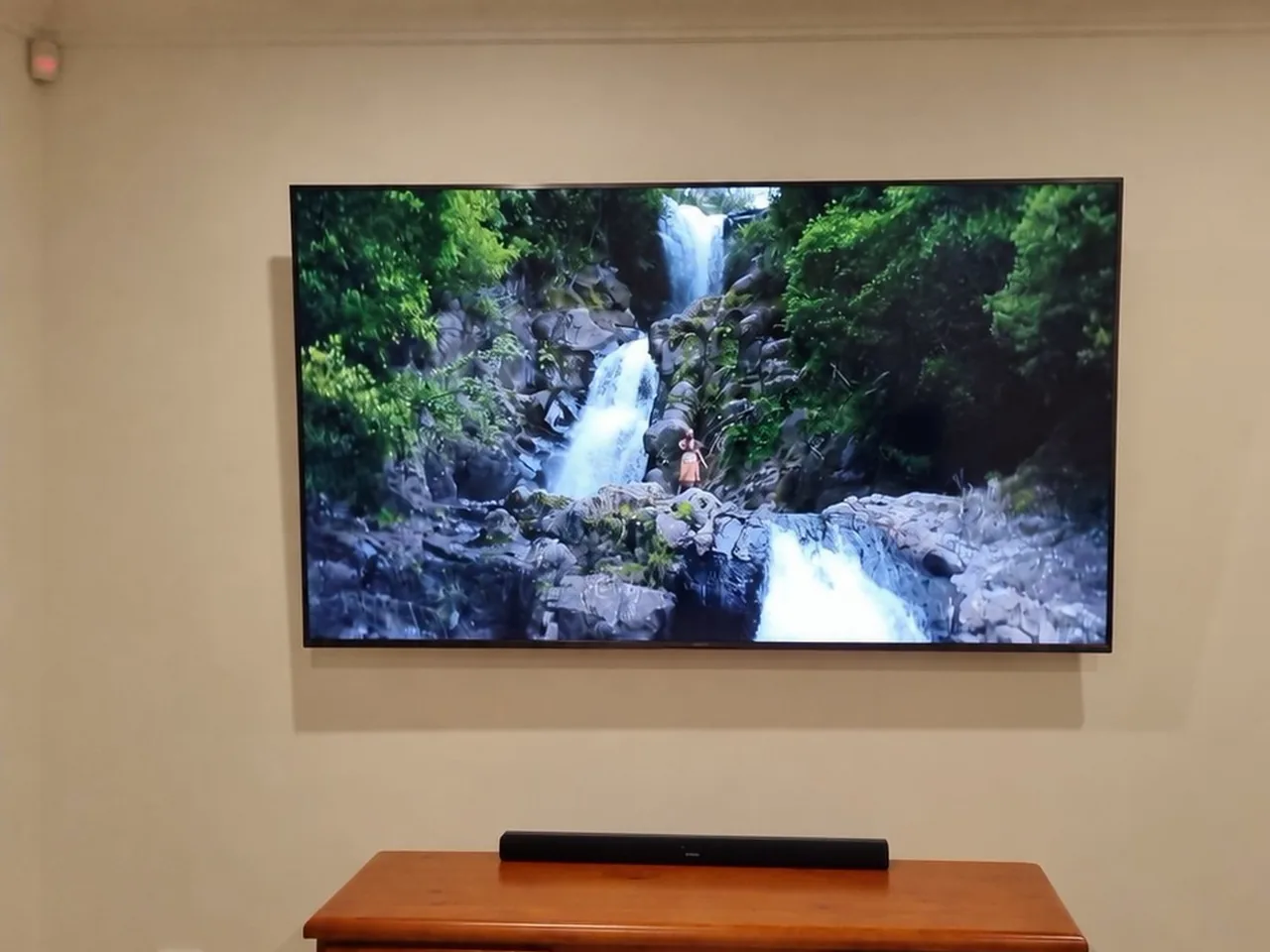
Mounting a soundbar under the screen
The Conduction Company can mount a soundbar under the screen in the same visit as the TV.
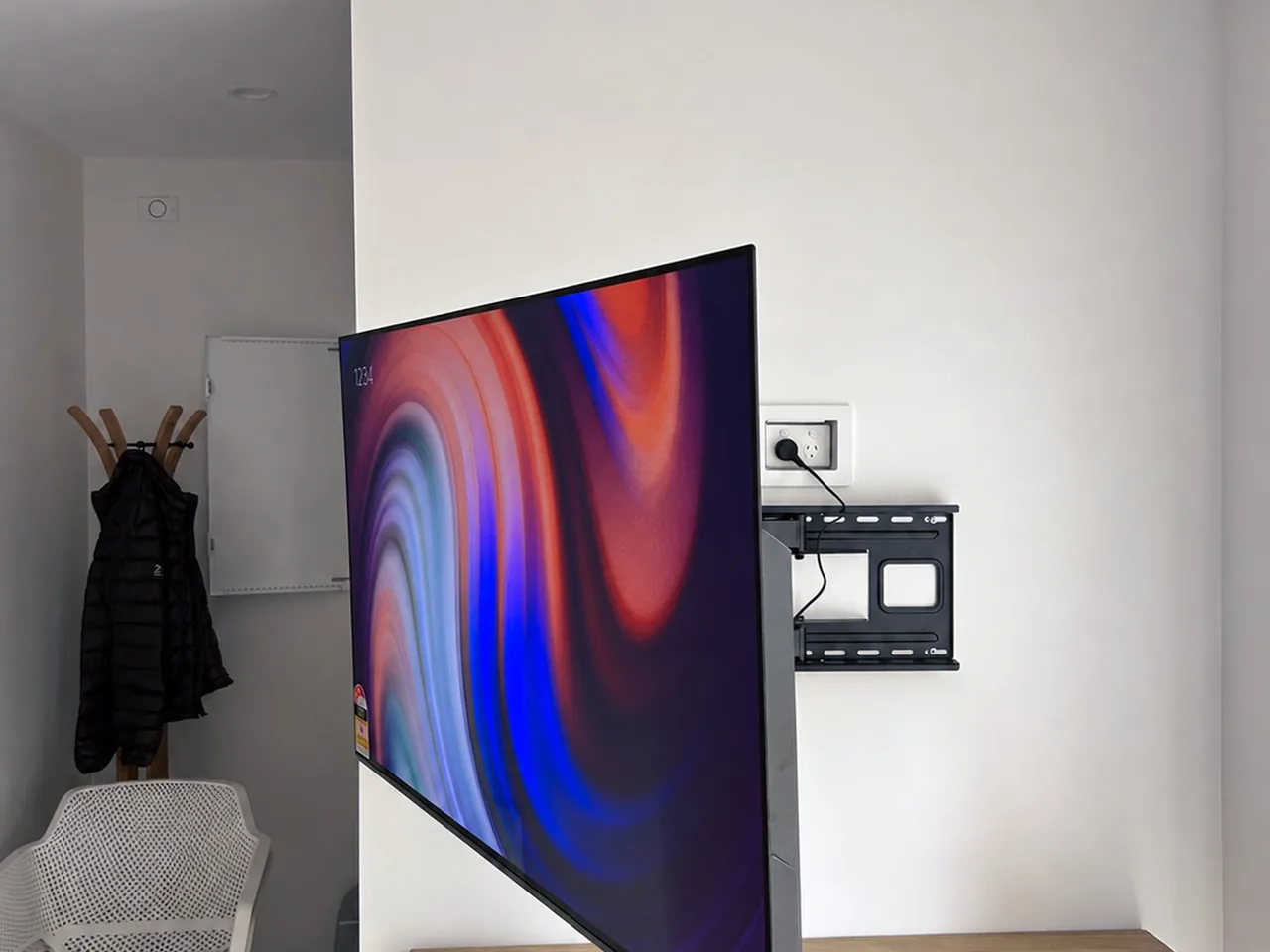
Can a TV wall mount turn 90 degrees?
Yes, within limits: three of the four full-motion brackets The Conduction Company fits swivel up to 90 degrees each way. The fourth, a heavy-duty dual-arm bracket, stops at 60 degrees. All four are made by Matchmaster, and those angles are the maker's published specifications.
Whether the TV actually turns side-on depends on how far the arm holds it off the wall, against how wide the screen is. The edge of a large screen can reach the wall before the bracket reaches its limit. Matchmaster's long-arm bracket, one of the four, reaches just over a metre from the wall, which gives a larger screen more room to turn.
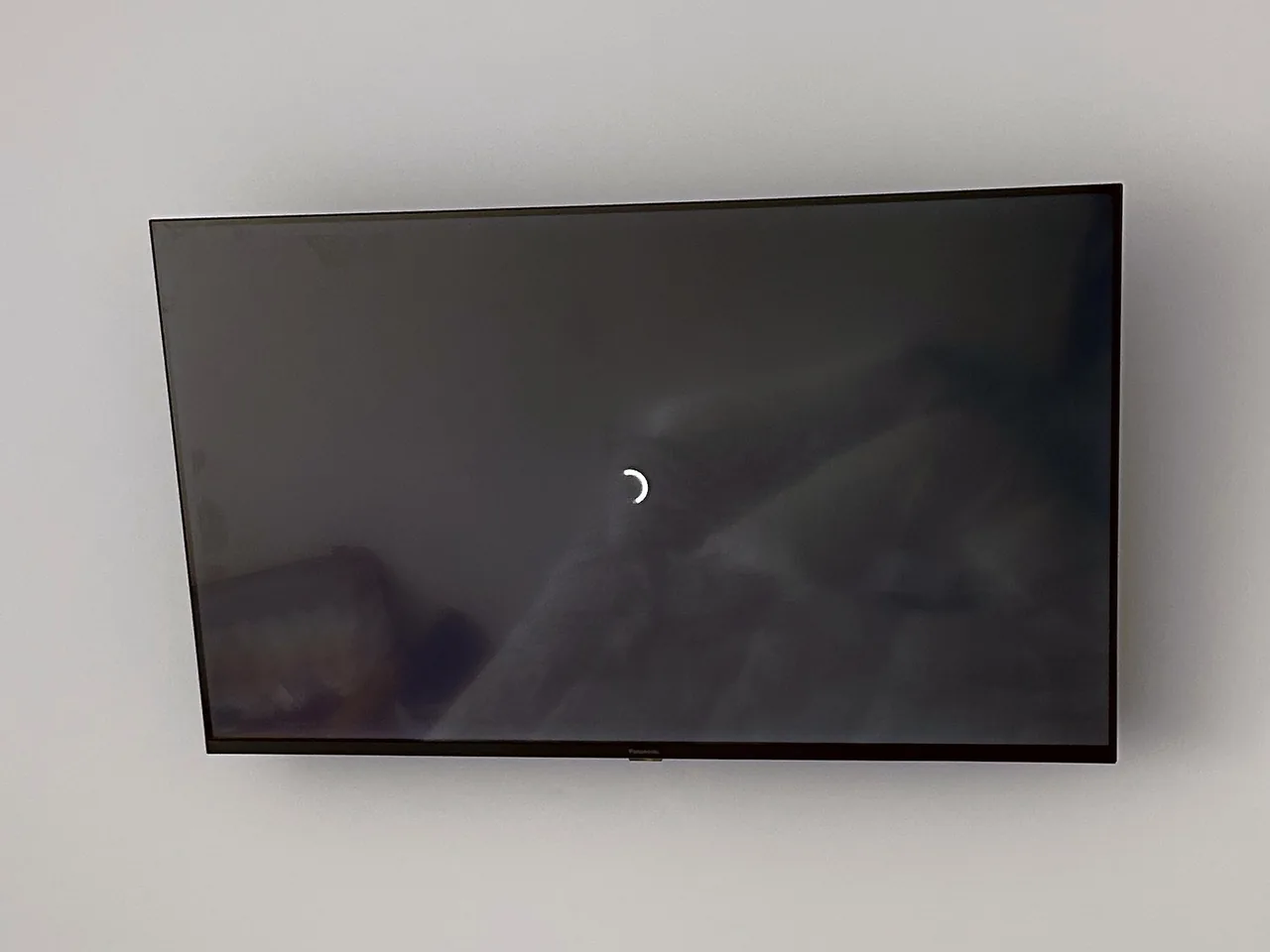
Two TVs in Stonefields, one visit
In March 2026 a Stonefields client wanted two TVs on the wall, a large one in the lounge and a small one in the bedroom, with the cables hidden. At the quote, Jordan Statham agreed the lounge height with the client: the bottom of the screen at eye level from the couch. The bedroom height was left to the team on the day, with Jordan's note that a bedroom TV usually sits higher, about 300mm from the ceiling to the top of the screen. His note also told the team to trace the existing cables up the wall with a tone tracer before cutting, so the openings would land where the cables were. The Conduction Company mounted the client's own TVs on new brackets and added new power points behind them in one visit of about four hours, and issued a certificate of compliance and an electrical safety certificate for the electrical work.
Related services
The Conduction Company also installs speakers, home theatre and TV aerials, runs data cabling and WiFi to the TV wall, and sets out its power point installation costs for an outlet on its own.
Why choose TCCO?
We get a kick out of exceeding clients expectations with a quality solution for a reasonable price, every time.

Lifetime Workmanship Guarantee

Decades of Combined Experience

Accredited & Qualified Professionals


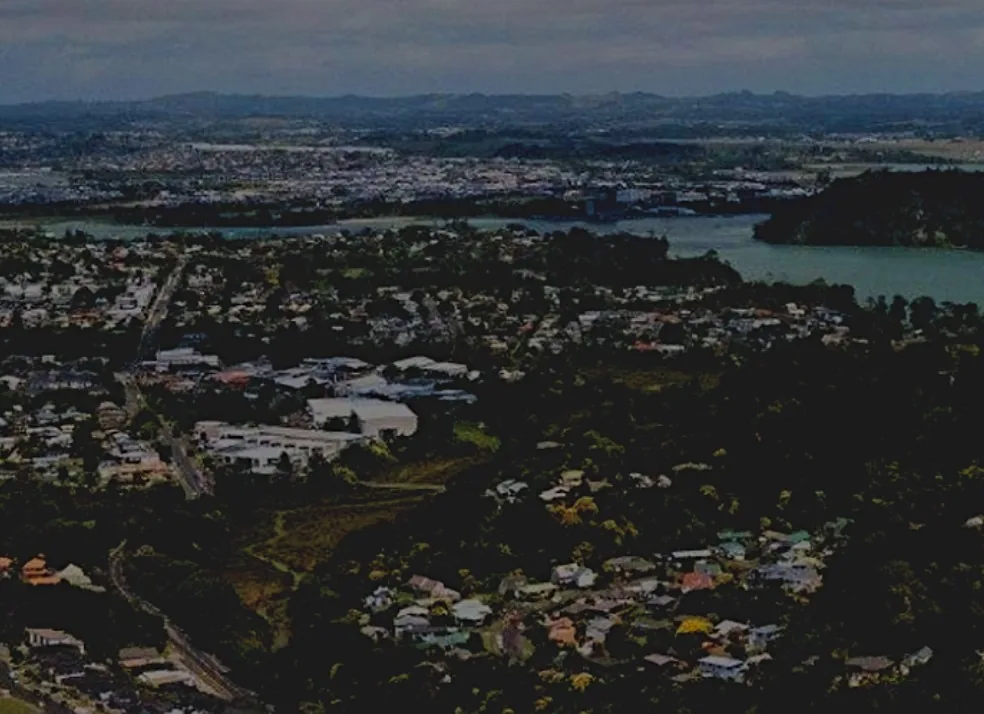
TV Wall Mounting Across Auckland
The Conduction Company mounts TVs and hides the cabling in homes across Auckland, and mounts screens in meeting rooms and offices the same way.








Don’t just take our word for it, we have a 5/5 rating on Google
and a 99.8% approval rating on NoCowboys




The Conduction Company was great. Answered every question I had and have had no problems since they installed the ethernet cabling run about 7 months ago
Jordan provided super helpful advice over the phone regarding electrical compliance of our campervan with no obligation. He and his team provided an efficient and friendly service in checking and issuing an EWOF. Would definitely recommend!
The electrician was very professional and reliable. We installed timer for hot water cylinder. The price was reasonable with longer period of warranty while the other company only provided 1 year. Would recommend to everyone!
A nice friendly group to deal with. Prompt response and kept informed of what was being done. A couple of hiccups but dealt with promptly and with a smile.
TCCO did a great work on our home. Heatpump, ventilation, cctv, security system, extractor all done by them. Professional and timely work. Thanks Jordan,. Keagan and team for a great work!
Service was great. Before doing job suggested we contact Vector to see if it was their mistake. All communication was great and the young man that did the job was super efficient and helpful, explaining procedure as he went. Highly recommended A1
Great service, pricing & communication. Warm & friendly electrician who did a great job repairing and dog-proofing some chewed wires. We have a very lucky (&naughty) dog.
understood our problem, suggested the fix, quoted promptly, did the work without delay. all round good service
They do what they say they will do and fix what they say they will fix. Very responsive and professional.
Prompt and friendly communication from quoting to completing the work. Storm damaged aerial replaced and working well. Thank you!
My Electric gate would not operate long with the intercom. The team came over in the morning and by lunchtime it was fixed. Could not have been any more pleased ...Team was professional, courteous, fast and all work completed at a great price. I highly recommend them.
Excellent service from this company. Got quick and informative responses to all my messages. Staff were friendly and kept me informed on how far away the service guys were, what their names were etc. I highly recommend The Conduction Company.
What a great experience from start to finish. Jordan who came to quote was very helpful and knowledgeable, giving us great ideas for what we could apply in our home. The quote was thorough and detailed, booking was easy, kept us updated the whole time.
So helpful on the phone, and solved the issue really quickly, it was wonderful. Excellent communication skills, and thorough knowledge of what was probably the issue, sorted out in no time.
Great service, am was very knowledgeable and listened to what I was teling him. Great Price and great service.
So these guys are GREAT. Everyone was helpful, responsive and professional. The job was sorted super quick and my boisterous doggo was given plenty of attention too. Totally recommend them and thanks everyone for being so lovely to deal with.
Such a good experience with The Conduction Company - they went above and beyond for us, managing to fit us in at short notice and doing a great job with the whole project, including the numerous parts we added. Really happy with these guys, will be using again for future projects
Have had a heated towel rail and a tv mount install done, both times the guys were great at communicating at every step and reasonably priced. Will definitely use TCC again!
The team did a great job as usual - on time and done for the same price quoted. Great communication, tidied up afterwards, happy to answer any questions we had. Highly recommend.
These guys are personable, professional and hugely patient with me and my questions. I was very impressed with the quality of workmanship and their attitude with works. Many thanks to the team for a seamless project and prompt communication!
Recent projects
Frequently Asked Questions
TV Wall Mounting with Hidden Cables in Auckland
Are TV wall mounts universal, and will any bracket fit my TV?
No. A bracket only fits TVs with a matching VESA hole pattern, and it is rated to a maximum weight and screen size. The Conduction Company supplies a bracket matched to your screen with every TV it mounts, wide enough to span two studs, which is where many shop-bought brackets fall short.
Is a tilting, fixed or full motion TV mount better?
It depends on where you sit, says The Conduction Company. A fixed, flat-to-wall bracket sits closest to the wall and suits a TV watched straight on at eye level. A tilting bracket suits a screen mounted higher, with seating in front of it. A full motion bracket tilts and swivels, for a room watched from more than one spot.
Do TV wall mounts come with screws and fixings?
Usually, but The Conduction Company does not use them. It supplies the bracket and fixings with every TV it mounts, and fixes the bracket into the timber studs with proper timber screws sized for the job. Jordan Statham, its owner: "Never use the screws that come out of the packaging, those ones are terrible."
Who can help mount a TV on the wall for me?
The Conduction Company mounts TVs across Auckland, supplying the bracket and fixing it into the timber framing. A handy homeowner can mount a smaller TV without hiding cables, but a power point behind the screen is prescribed electrical work, so The Conduction Company does the mount and the electrical in the same visit and certifies it.
Can I mount my TV by myself?
Yes, if you are handy and not hiding the cables in the wall, says The Conduction Company. It matters less with a smaller TV. If you do not know what a stud is, or have never heard of a nog (the short timbers running across between studs), leave it to someone who has. Call The Conduction Company if you would rather not find your TV hanging off the wall, or on the floor halfway through the rugby. It supplies a bracket wide enough to span two studs, fixes it into the timber, and can hide the cables in the same visit.
Can I do my own electrical work in NZ?
Some of it, if you own the home and live in it. Section 79 of the Electricity Act 1992 and regulation 57 of the Electricity (Safety) Regulations 2010 let an owner-occupier swap switches, socket-outlets and light fittings, off the power and away from the switchboard. A new circuit must be tested and certified by an inspector before it is connected. As a hard rule, The Conduction Company does not test, certify or connect a homeowner's wiring. It may help only where finished work has left a client stuck, and that takes a thorough inspection and often rework.
Do TV wall mounts damage walls?
Only a little when The Conduction Company mounts it, because the bracket fixes into the timber framing. The marks it leaves are the screw holes behind the bracket, and the TV covers them. A bracket fixed into plasterboard alone is the one that does damage, because plasterboard on its own holds nothing and the bracket can pull away.
Do you supply the TV bracket, or should I buy one?
No need to buy one. The Conduction Company supplies the bracket with every TV it mounts. The bracket has to fix into the timber framing and span two studs, and many shop-bought brackets fall short on that. If you already have one, tell us when you ask for a quote: it is not how we normally work, but we can still quote it.
Does TV wall mounting need an electrical certificate?
The electrical part of it does. Adding or moving the power outlet behind the screen is prescribed electrical work, and regulation 65 of the Electricity (Safety) Regulations 2010 requires a certificate of compliance to be issued for it before the work is treated as complete. The Conduction Company handles the mounting and the electrical work in one visit and issues that certificate as part of the job.
Do I need a power point behind the TV?
It is the tidiest way to do it. The Conduction Company installs a recessed outlet behind the screen so the plug sits flush and the TV can sit flat against the wall, with the data outlet in the same plate. Without one you either run a visible cord down the wall or the screen stands proud of it.
How do you hide TV cables in a wall?
The Conduction Company hides TV cables by running the power and the HDMI or data cabling inside the wall cavity, so nothing shows below the screen. Where the wall cannot be opened up, or the budget does not stretch to it, we run them in capping fixed along the wall. The tidy version needs a proper outlet installed behind the screen rather than a lead pushed through the plasterboard, which is why the electrical and the AV halves are best done in the same visit.
Can a TV be wall mounted on any wall?
Nearly always, but what changes is the fixing behind it. The Conduction Company fixes brackets into the timber framing, and where the framing does not line up with where you want the screen, we fit a bracket wide enough to reach the studs that are there, or an appropriate masonry fixing on brick or block. Tell us the wall type when you book and the right fixings turn up the first time.
Ready to talk about your next project?
Consultation
The Conduction Company looks at the wall, the screen and where the cabling has to run, and agrees the mounting height with you on site.
Installation
The Conduction Company mounts the screen, conceals the cabling and installs the outlet behind it, then certifies the electrical work.
Ongoing Support
The Conduction Company services and maintains the system afterwards, and the workmanship is covered by our Lifetime Workmanship Guarantee.
What affects the cost of TV wall mounting?
Four things set the price The Conduction Company quotes: the wall the bracket fixes to, whether the cables are hidden in the wall or left on show, whether an outlet already sits behind the screen, and how big and heavy the TV is. The price follows what the job involves, not a flat call-out rate.
The estimates below are for standard TV wall mounting.
The Conduction Company confirms final pricing after a property assessment.
The Conduction Company's own Auckland prices: from $210 including GST to supply a bracket and mount your TV, with no cabling work. Hiding the cables in the wall usually costs $600 to $1,600 including GST.
We quote on facts, not guesses
Before we give you a price, we carry out a proper assessment of your property and how you'll use your TV.
That way you know exactly what you're buying and the total cost, with no surprises.
Clear expectations from the outset, start to finish.
Want your TV on the wall with nothing showing?
The Conduction Company mounts TVs across Auckland, hides the cables in the wall where the wall allows it, and installs the outlet behind the screen in the same visit.
Backed by our Lifetime Workmanship Guarantee. Get in touch and one of the team will come back to you the same day, depending on staff availability. The Conduction Company is reachable any hour of the day, every day of the week.