The Conduction Company installs interlinked smoke alarms in Auckland homes, so when one alarm detects smoke, every alarm sounds. It fits photoelectric alarms with ten-year batteries, wireless or hardwired, and heat alarms near kitchens. The alarms it replaces are usually old, out of battery, or in the wrong place.
This is smoke alarm installation in Auckland as Jordan Statham sees it on real jobs. He is the director of The Conduction Company, a registered electrician and an electrical inspector, and his advice is short: "Definitely recommend installing to the modern standard, and that's what we're recommending to our clients." Below is what he fits, where it goes, what he finds in rentals, and what happens when an alarm does not sound.
Are interconnected smoke alarms worth it?
Yes. The Conduction Company fits interconnected smoke alarms, also called interlinked alarms, as its standard, because every alarm in the house sounds when any one of them detects smoke. A fire that starts in the lounge sets off the alarm in the bedroom, so you hear it from bed.
On a recent job in an existing Auckland house, The Conduction Company fitted five ten-year battery alarms, all wirelessly interlinked: one in each bedroom, one in the main living space and one in the entry hallway. The house already had alarms, and they could simply have been swapped in place. The client chose the modern layout instead.
That layout follows NZS 4514:2021, the standard for interconnected smoke alarms in houses. Since 2 November 2023, MBIE has cited it in the Building Code's Acceptable Solutions for new homes, after a transition that ended on 1 November 2024. Fire and Emergency New Zealand sums it up: if you build or renovate under a building consent, the Building Code requires interconnected alarms in every bedroom, hallway and living area. The Conduction Company recommends matching that standard in any house.
Jordan Statham explains why the interlink matters: "In the case of a fire, especially if there's any sort of accelerants in the room, those seconds can be the difference between getting out of the house or getting trapped inside a room." Tenancy Services quotes Fire and Emergency New Zealand's view that in a house fire you have under 3 minutes before it becomes unsurvivable.
Hardwired or wirelessly interlinked smoke alarms?
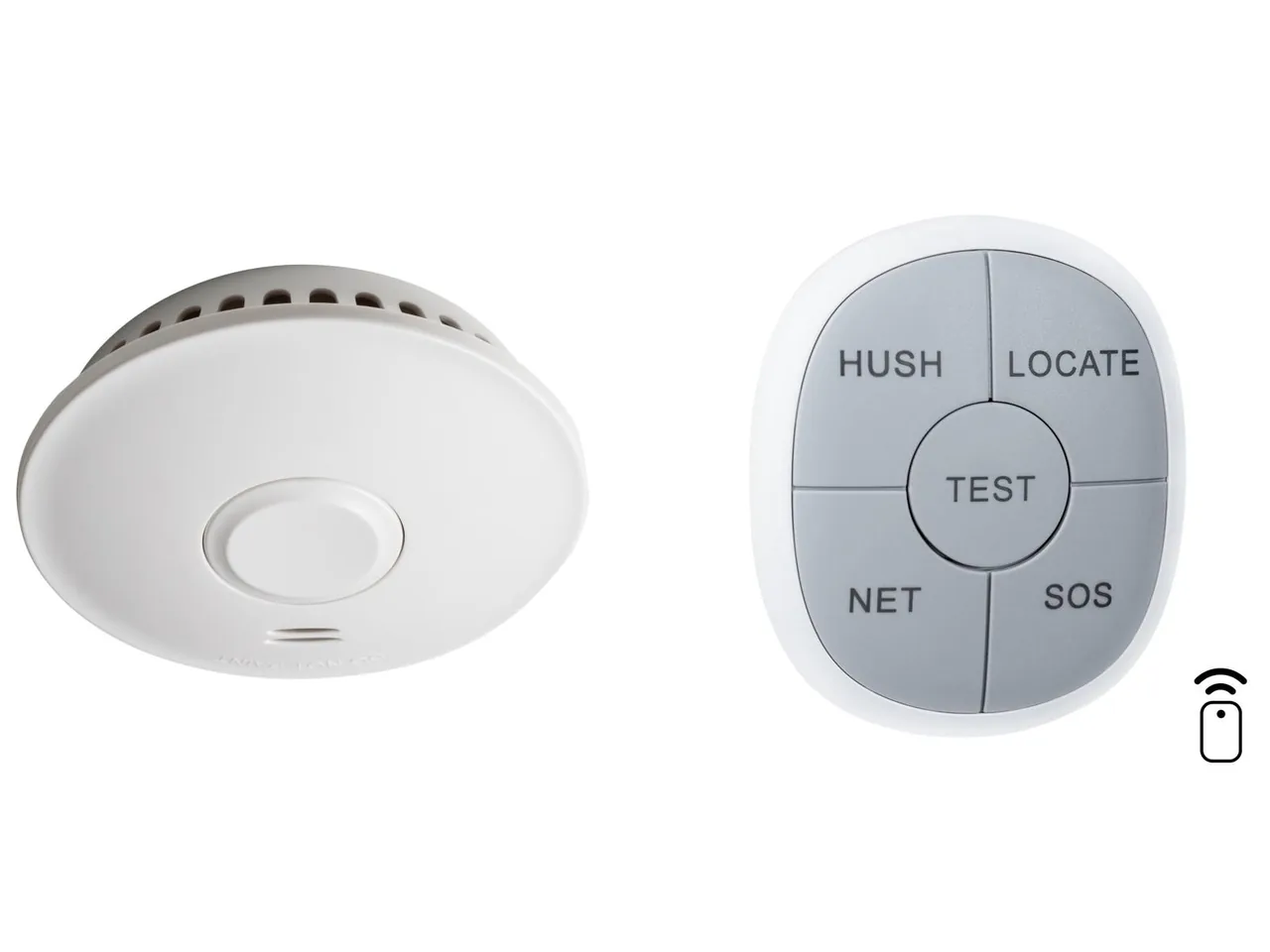
Most homes suit wirelessly interlinked battery alarms, in The Conduction Company's experience. They go up quickly, pair with each other wirelessly, and their sealed batteries last ten years. Hardwired alarms suit a house with an easy, accessible ceiling space, because they run off the home's power and never need a battery change.
Hardwired alarms take more work. The Conduction Company runs a 230 volt power cable to each alarm and a separate interlink cable between them, kept apart from the power cable. AS/NZS 3000, the Wiring Rules, lets mains-powered smoke alarms connect to the lighting circuit or to a circuit of their own. Voltex, The Conduction Company's go-to brand, asks for a circuit of their own. Whether the extra work pays off over the long run depends on the house, so The Conduction Company decides it job by job.
When do you tie smoke alarms into a security alarm system?
When the house already has an alarm system that can take extra detectors, or when The Conduction Company is fitting a new one. Each detector is cabled back to the alarm panel, so smoke in any room sets off the whole system, sirens included. If cable is hard to get back to the panel, The Conduction Company fits wirelessly interlinked battery alarms instead. It installs Arrowhead systems, and its alarm and security system installation page covers the rest.
Photoelectric or ionisation smoke alarms: which is better?
Photoelectric. The Conduction Company fits photoelectric smoke alarms, and every brand it fits describes its alarms that way: Voltex, Cavius, HEIMAN, and the Arrowhead mains detector for alarm panels. Fire and Emergency New Zealand recommends long-life photoelectric alarms. It says they are "far more effective than ionisation alarms at detecting slow smouldering fires, which burn for hours before bursting into flames."
Ionisation alarms are better suited to fast flaming fires, Voltex says, but slower to pick up a fire in its early, smouldering stage. Jordan Statham sees them as the older type, and The Conduction Company does not fit them.
For rental homes it is also the law. Under the Residential Tenancies (Smoke Alarms) Regulations 2016, any smoke alarm in a rental that is not hard-wired must be a photoelectric alarm, with its recommended replacement date displayed on it.
Which smoke alarm brands do electricians fit?
The Conduction Company fits four brands, each for a different job.
Voltex. The Conduction Company's go-to. Voltex makes battery and hardwired alarms that interlink with each other, wired or wirelessly, so one range covers almost any house.
Arrowhead. For homes with an Arrowhead security alarm, so the smoke detectors are part of the alarm system.
Cavius. Small, low-profile alarms that look good, and Cavius makes a recess kit so the alarm can sit into the ceiling. If looks matter, The Conduction Company will usually suggest Cavius.
HEIMAN. A lower-cost range The Conduction Company also installs, including ten-year interlinked smoke alarms and heat alarms.
How many smoke alarms do I need in NZ, and where do they go?
The Conduction Company puts a smoke alarm in every bedroom, the main living area and the hallway, and a heat alarm near the kitchen. That is more than the minimum for a rental. The same 2016 regulations require at least one alarm in each sleeping space or within 3 metres of its entrance, and at least one on every storey or level with a habitable space. Fire and Emergency New Zealand recommends a smoke alarm in every bedroom, hallway and living area, and a heat alarm rather than a smoke alarm in the kitchen.
On the ceiling, near the middle of the room, is where an alarm works best. The installation manual for the Voltex alarms The Conduction Company fits says to keep them at least 300 mm from the corner of a ceiling and a wall and from a light fitting, and 400 mm from an air conditioning vent or ceiling fan blades.
Where should you not place a smoke detector?
Not in or near the kitchen. The most common mistake The Conduction Company finds from other installers is a smoke alarm close to the kitchen. Every bit of burnt toast sets it off, and people end up waving a broom at the ceiling to hush it. In and near kitchens The Conduction Company fits a heat alarm instead. Smoke from cooking does not trigger it, but the heat of a real fire does.
Laundries and bathrooms get the same treatment. Steam and humidity can set off a smoke alarm, so near those rooms The Conduction Company uses heat detection too. Voltex's own manual says not to install a smoke alarm near cooking appliances, in bathrooms or in laundry rooms.
Will young children wake up to a smoke alarm?
Many will not, which is why Jordan Statham raises it with families who have young children. In trials at Nationwide Children's Hospital in Ohio, a standard high-pitched alarm woke about half of sleeping children aged 5 to 12, while voice alarms woke close to 9 in 10. The younger the child, the less likely they were to wake. The researchers say children sleep longer and deeper than adults, and they still tell families to keep standard alarms.
Where there are very young children, Jordan Statham suggests looking at a voice alarm, one that breaks its siren with a calm spoken warning to get out. None of the brands The Conduction Company fits makes one. What works with any alarm is interlinking, so the alarm sounds in every bedroom, the adults' room included, and a plan for who wakes the children, which Fire and Emergency also asks every household to agree.
Do you need an electrician to install smoke alarms?
For hardwired alarms, yes. The Conduction Company's answer turns on whether the alarm connects to your home's wiring. A battery-only alarm never does, and running on a battery it sits under the extra-low voltage limit, so the Electricity (Safety) Regulations 2010 do not treat fitting one as prescribed electrical work. Anyone can put one up.
A hardwired alarm runs off your home's power, usually the lighting circuit. Wiring one in is prescribed electrical work, which the Electricity Act 1992 reserves for people authorised to do it, and the electrician who does it issues an electrical safety certificate. Swapping an old hardwired alarm for a new one should be done by an electrician too, in The Conduction Company's view.
What does smoke alarm installation involve?
For wireless battery alarms, The Conduction Company puts every alarm in place, pairs them so they interlink, and runs the maker's test: hold the test button on one alarm and check that every alarm responds. For hardwired alarms, it runs the cables, connects each alarm and commissions the whole system. On top of the test button, The Conduction Company sets each hardwired alarm off with smoke in a can, an aerosol that imitates smoke, and checks that every alarm sounds. The makers' instructions ask only for the test button, so the smoke test is The Conduction Company's own extra check.
How often should smoke alarms be replaced?
Every ten years, or sooner if an alarm stops working. Fire and Emergency New Zealand says to replace all smoke alarms every 10 years, check the expiry date once a year, and press the test button once a month. The Conduction Company checks an alarm's age by taking it down from the ceiling and reading the label on its base, which carries the model, the batch and the date. Tom Ronaldson of Fire and Emergency New Zealand gives the same advice through Tenancy Services: "To check if your smoke alarm is expired remove it from the base plate and check the date of manufacture. If that is longer than 10 years, it will need to be replaced."
Older battery alarms need batteries far more often, and that is where they fail. The ten-year alarms The Conduction Company fits have a sealed battery that lasts the life of the alarm, and near the end they warn you that the whole unit needs replacing.
Jordan Statham saw what a dead alarm costs about a year ago, when he went to a house after a fire to work out how to get the power back on. A family member had knocked over a candle. The fire was contained to one room and the fire brigade put it out quickly, but parts of the hallway were burnt and melted, and soot blackened the ceilings through the whole house. The home ended up being fully rebuilt.
The house had smoke alarms in the living area and the hallway. They were older types, their batteries were flat, and neither sounded, even though both sat in thick smoke. "It wasn't detected until the room had completely caught fire," Jordan Statham says. The family noticed it themselves, everyone got out, and no one was hurt.
What do property managers and landlords need checked in a rental?
Working alarms that are in date and in the right places. The 2016 regulations require each alarm to work, to sit where its maker's instructions say, and to be within its replacement date, from the start of every tenancy and all through it. In rentals, The Conduction Company usually finds older alarms that no longer work because the batteries have failed. Sometimes a tenant has disconnected them altogether rather than replace the battery. Its fix is to replace them with ten-year battery alarms: no battery to change and no annoying chirps.
The smoke alarms are part of the full property check The Conduction Company does for property managers. The report carries photos, dates and batch numbers for every alarm, and says whether each one needs replacing and how soon. When the team is already at a managed property for another job, it will often run a full electrical safety check, smoke alarms included, at no additional charge to the property manager. Its page for property managers and landlords sets out the rest.
Fire companies and IQPs (independent qualified persons) also bring The Conduction Company in, usually when alarms are in the wrong places, are well past their age, or have no batteries. Bigger commercial sites run by a fire alarm system stay with the fire company that looks after them.
How much does smoke alarm installation cost in Auckland?
It depends on how many alarms the house needs, which brand you choose, and whether they are wireless or hardwired. The Conduction Company prices wirelessly interlinked alarms per alarm from its own price book, so the number of alarms and the house change the total.
We quote on facts, not guesses
Before we give you a price, we carry out a proper assessment of your property and how you'll use your smoke alarms. That way you know exactly what you're buying and the total cost, with no surprises. Clear expectations from the outset, start to finish.
The estimates below are for standard installation of interlinked smoke alarms.
The Conduction Company confirms final pricing after a property assessment.
HEIMAN ten-year interlinked smoke alarm: $102.09 including GST per alarm, supplied and installed, from The Conduction Company's price book.
Voltex ten-year wirelessly interlinked smoke alarm: $156.62 including GST per alarm, supplied and installed, from The Conduction Company's price book.
Each extra alarm adds the same figure, so a house with five alarms costs five times the per-alarm price for the brand chosen. Hardwired alarms, heat alarms and detectors wired into a security alarm are priced on the quote, after The Conduction Company has seen the house.
In short
Interconnected smoke alarms are worth it, because every alarm sounds when one detects smoke, wherever the fire starts. The Conduction Company fits photoelectric alarms with ten-year batteries in every bedroom, the living area and the hallway, uses heat alarms near kitchens and laundries, and replaces alarms at ten years. That is The Conduction Company's advice from its own Auckland smoke alarm jobs, in the words of Jordan Statham, its director, a registered electrician and an electrical inspector.
If you want alarms fitted or checked, The Conduction Company does smoke alarm installation and testing across Auckland, from a single home to a rental portfolio.
Frequently asked questions
Can I install smoke alarms myself?
Battery smoke alarms, yes. Hardwired ones need an electrician, says The Conduction Company, because they connect to your home's wiring. A battery-only alarm never does, so the electrical rules do not treat fitting one as prescribed electrical work.
Can smoke alarms from different brands be interlinked?
Not with Voltex, the brand The Conduction Company fits most. Voltex's installation manual says its smoke alarms should not be interconnected with any other brand, so an interlinked set should be one range.
Do smoke alarms have to be interconnected in NZ?
When you build or renovate under a building consent, yes. Fire and Emergency New Zealand says the Building Code then requires interconnected smoke alarms in every bedroom, hallway and living area. The Conduction Company fits interconnected alarms as standard in any house.
How do you install smoke alarms in NZ?
Battery alarms go on the ceiling, near the middle of the room, in every bedroom, the living area and the hallway, with a heat alarm near the kitchen instead. That is how The Conduction Company places them. Pair wireless alarms so they interlink, then hold the test button on one and check every alarm sounds. Hardwired alarms connect to your home's wiring, so an electrician installs those.