The Conduction Company repairs the power line between the street and Auckland houses, the part Vector says the property owner owns. Who owns each piece decides who fixes it and who pays, so this guide maps every piece from the street to your switchboard, and who to call for each one.
In Auckland, Vector owns the street network up to its fuse at your boundary or on the nearest pole. You own the line from that fuse to the house, its fittings and the meter board. A meter company owns the meter. The Conduction Company repairs the parts you own.
Who owns what between the street and your switchboard?
This is how The Conduction Company reads Vector's line ownership rules and its connection standard, ESA002, piece by piece from the street in.
Street lines, poles and transformers: Vector owns them. Call Vector on 0508 832 867.
The fuse at your boundary or on the nearest pole: Vector's. This is the point of supply, often called the pole fuse or street fuse. Call Vector.
The pillar box or pit at the front boundary: Vector's. Only Vector may open it. Call Vector.
The line or cable from that fuse to your house: yours. This is the service line. Call an electrician.
A private pole inside your property, past Vector's fuse: yours. Call an electrician.
The fittings on the house: yours. That means the hooks or U-plates holding the line and the point-of-entry box. Call an electrician.
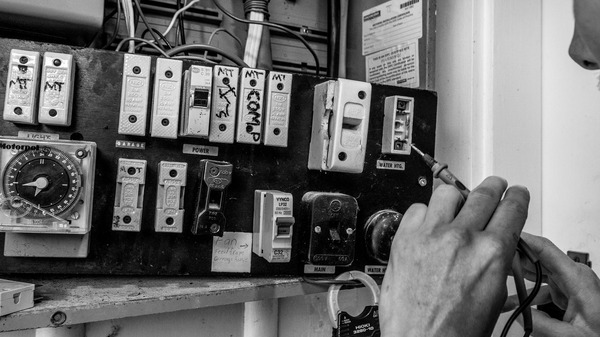
The meter board, its main switch and its fuses: yours. Call an electrician.
The meter and its smart-meter link: a meter company's, such as Intellihub or Bluecurrent. Call your power company.
The hot water relay: the meter company's, your power company's or Vector's, depending on the house. Call your power company.
Counties Energy runs the network from Papakura to Mercer and says the same thing in its own words. Outside Auckland, check your own lines company: The Conduction Company's map above is Vector's.
Who is responsible for the power line from the pole to the house in NZ?
The property owner is responsible for the line from Vector's fuse to the house, and The Conduction Company is the kind of contractor Vector sends you to. Vector puts it plainly: "Call an electrician if there is a problem with your electricity service line." It adds: "If a fault is found to be on the service lines or equipment, then the repair and cost of the repair will be the responsibility of the property owner."
The line from the fuse to your main switchboard is what the Electricity (Safety) Regulations call the mains: the fittings that supply the switchboard "closest to the point of supply".
A line shared with neighbours is less clear. Counties Energy says ownership "may be shared with others or may sit with the electricity distributor". Vector's page does not say, so The Conduction Company's advice is to ask Vector on 0508 832 867 before anyone pays for a repair.
Where does the line you own start?
The law and the lines company draw the line in slightly different places. The Electricity Act 1992 defines the point of supply as "the point or points on the boundary of the property at which exclusive fittings enter that property". Vector says the point of supply "is usually the isolating fuse located either on the boundary of your property or on the pole nearest to your property".
On most streets those are the same place. Where Vector's nearest pole is across the road, part of the line you own can run outside your property. WorkSafe describes the owner's lines as those "within their property boundary", so the official pages do not quite agree.
Can an old line still belong to the lines company?
Sometimes, and The Conduction Company cannot tell you in advance whether yours is one. The boundary definition arrived with the Electricity Amendment Act 2001. For older connections, the Act says the new definition does not apply until the lines company has brought the fittings "to a reasonable standard of maintenance or repair" and "notified the consumer in writing". An agreement already in place can settle it the other way. Whether that helps with a particular line is a question for a lawyer or Utilities Disputes, not a promise any electrician can make.
Who owns the power pole on my property in NZ?
A pole on your land past Vector's fuse is yours, says The Conduction Company, citing Vector. Vector's connection standard says: "Any poles installed on the customer's property downstream of the Point of Supply are owned by the customer. The customer is responsible for the installation, repairs and maintenance of those poles." Poles up to the point of supply are Vector's. If you are not sure which you have, Vector asks you to call 0508 832 867.
What is a pole fuse, and who pays when it blows?
On Vector's network the pole fuse is usually Vector's own fuse at the point of supply, and Vector replaces it. The Conduction Company's caution is that the same words can mean a fuse further inside the property, past the point of supply, which is the owner's.
Vector's faults page says: "Residential customers receive three free non-network call outs per year. After three non-network call outs a charge may apply." Vector does not publish the charge.
A pole fuse can blow when the house draws more power than the supply allows. The Conduction Company can fit a current-limiting main switch to your switchboard that trips first. "This is much better than having the pole fuse at the street blow, as it means it's something you can reset yourself," says Jordan Statham, director of The Conduction Company.
Can an electrician pull a service fuse?
Not at a Vector pillar or pit. Vector's connection standard says "access to the service pit or pillar by the customer or their Electrical Service Provider is not permitted." When The Conduction Company works on a line, Vector disconnects it first. "Typically it takes them only about 10 minutes to pull the pole fuses once they have arrived on site," says Jordan Statham.
What is an electrical pillar box?
A pillar box is the green or grey box at the front boundary that holds Vector's fuses for an underground supply. On a normal street it is Vector's. A pillar on a private right-of-way, past Vector's fuse, can belong to the owners it serves, so The Conduction Company's advice is to find out which kind it is before any work is quoted.
Power line to your house damaged? Repairs to the service line, point of entry and house fittings
Call first, before anyone else, including The Conduction Company:
A line on the ground or hanging low, a damaged or leaning pole, or lines clashing: call Vector on 0508 832 867.
A meter on fire or sparking, or a line or cable that has been hit: call 111, then Vector.
Everyone: stay well clear. Never touch or move a line, or a branch lying on one.
Once the network side is safe, The Conduction Company repairs the parts the owner is responsible for. That covers service-line repairs and replacement, new point-of-entry boxes, old house hooks swapped for modern U-plates, and raising a line that hangs too low. Vector disconnects at the pole first, and The Conduction Company certifies the work ready for Vector to re-liven. After hours, The Conduction Company's emergency electricians take the call.
Jobs on The Conduction Company's books show the usual faults. On one, the main cable had come away from the house and was lying on the roof. On another, the timber holding the line had fallen away, so it needed a new point of entry, house hook and dead end. A line resting on an iron roof is another, because the hot roof can melt the cable's cover.
We quote on facts, not guesses
Before we give you a price, we carry out a proper assessment of your property and how you'll use your power supply.
That way you know exactly what you're buying and the total cost, with no surprises.
Clear expectations from the outset, start to finish.
The estimates below are for standard installation of a new or repaired service line. The Conduction Company confirms final pricing after a property assessment.
Most repairs to the line between the street and your house cost between about $1,000 and $3,000 including GST, depending on what has failed and how it is reached. That range comes from 22 such repairs The Conduction Company has completed since 2023.
Who is responsible for trimming trees near power lines?
Near the line to your house, you are, says Counties Energy: "it's your responsibility to keep them trimmed to prevent interference with the power supply." Near its network lines, Counties Energy does the "first cut" free, then the tree owner pays. For tree trimming, painting, roofing or water blasting near the line, Vector offers a temporary private service line disconnection. The Conduction Company's advice is to book it before anyone works near the line.
Who owns my electricity meter?
A meter company owns most Auckland meters, not your power company, and your power company is the one to call about it, says The Conduction Company. Meters marked Metrix now belong to Intellihub, and Arc, AMS or Vector meters to Bluecurrent, according to the Electricity Authority's register. Contact, Genesis and Meridian are registered meter owners too, so a few meters do belong to the power company.
Either way, Vector says: "Call your energy retailer if you have an issue with a meter or a hot water relay." The meter board it sits on is yours, so moving or replacing it is electrician's work, and The Conduction Company explains how a meter shift is arranged. The relay is covered in The Conduction Company's guide to pilot wires and ripple relays.
How much does a power meter cost?
You do not normally buy a power meter in New Zealand, because the meter company owns it. Intellihub, replacing old meters for retailers, says: "There is no cost to you for the meter to be replaced." A swap you ask for early can carry a fee from your power company, and a meter shift for switchboard work does too. The Conduction Company does not set those fees.
Can I install my own electricity meter?
No. The meter belongs to the meter company, and its own installer fits, seals and livens a new one, arranged through your power company. The Conduction Company does the switchboard and meter board wiring around it.
What is an ICP number, and how do I find it?
An ICP number identifies your connection to the network, not your meter, The Conduction Company explains. The Electricity Industry Participation Code defines an ICP as "a point of connection at which the electrical facility for a retailer's customer is connected to a network". The number is on your power bill, and the Electricity Authority's tool finds it from your address.
Why does my house have two electricity meters?
Two meters can mean two separate connections, each with its own ICP number and its own bill. Vector allows "generally only one connection (one ICP) to the network, per installation", unless it approves otherwise. When The Conduction Company combines two meters into one, Vector closes the spare connection and tells your power company. Vector also asks you to contact your power company to arrange a final meter reading, and the power company arranges for the meter owner's installer to collect the old meter.
Can my overhead power line be put underground?
Yes, but the network side goes through Vector, and The Conduction Company sets this out as information only. Vector treats it as a permanent change to its equipment. It charges a $300 assessment fee including GST, prices the job individually, and may need an easement where its equipment stays on private land. The part of the line you own is your cost.
In short
Vector owns the Auckland network as far as its fuse at your boundary or on the nearest pole, plus the pillar box. From that fuse in, the line, any private pole, the house fittings and the meter board belong to the property owner. The meter belongs to a meter company and is handled through your power company. The Conduction Company repairs the owner's side, based on Vector's own rules and its own completed Auckland repairs.
Frequently asked questions
Who pays to fix the power line to a house in Auckland?
The property owner pays for repairs from Vector's fuse to the house. Vector says the repair and its cost are the owner's responsibility. The Conduction Company does this work and confirms the price after a property assessment.
Who do I call for a power line down?
Call Vector on 0508 832 867 for a line on the ground or hanging low. If a line has been hit or a meter is sparking, call 111 first, then Vector. Stay well clear until they arrive.
Who is responsible for low hanging power lines?
Vector, for its street lines: call 0508 832 867. The owner, for the line from Vector's fuse to the house. The Conduction Company raises low service lines once Vector has disconnected them.
Who is responsible for the meter box in NZ?
The property owner owns the meter board and its fuses, so an electrician replaces it. The meter on it belongs to a meter company. The Conduction Company does the board work and the meter company refits the meter.