The Conduction Company does ducted heat pump installation in Auckland, and it tells clients plainly when ducted is the wrong choice. These answers come from Jordan Statham, its director, a registered electrician and electrical inspector.
Ducted suits a high-spec home where looks come first and the ceiling space reaches every room. The Conduction Company recommends it to clients who want nothing on the walls and accept higher install and running costs. For most other homes, multi-split wall units control each room better for less.
How does a ducted heat pump work?
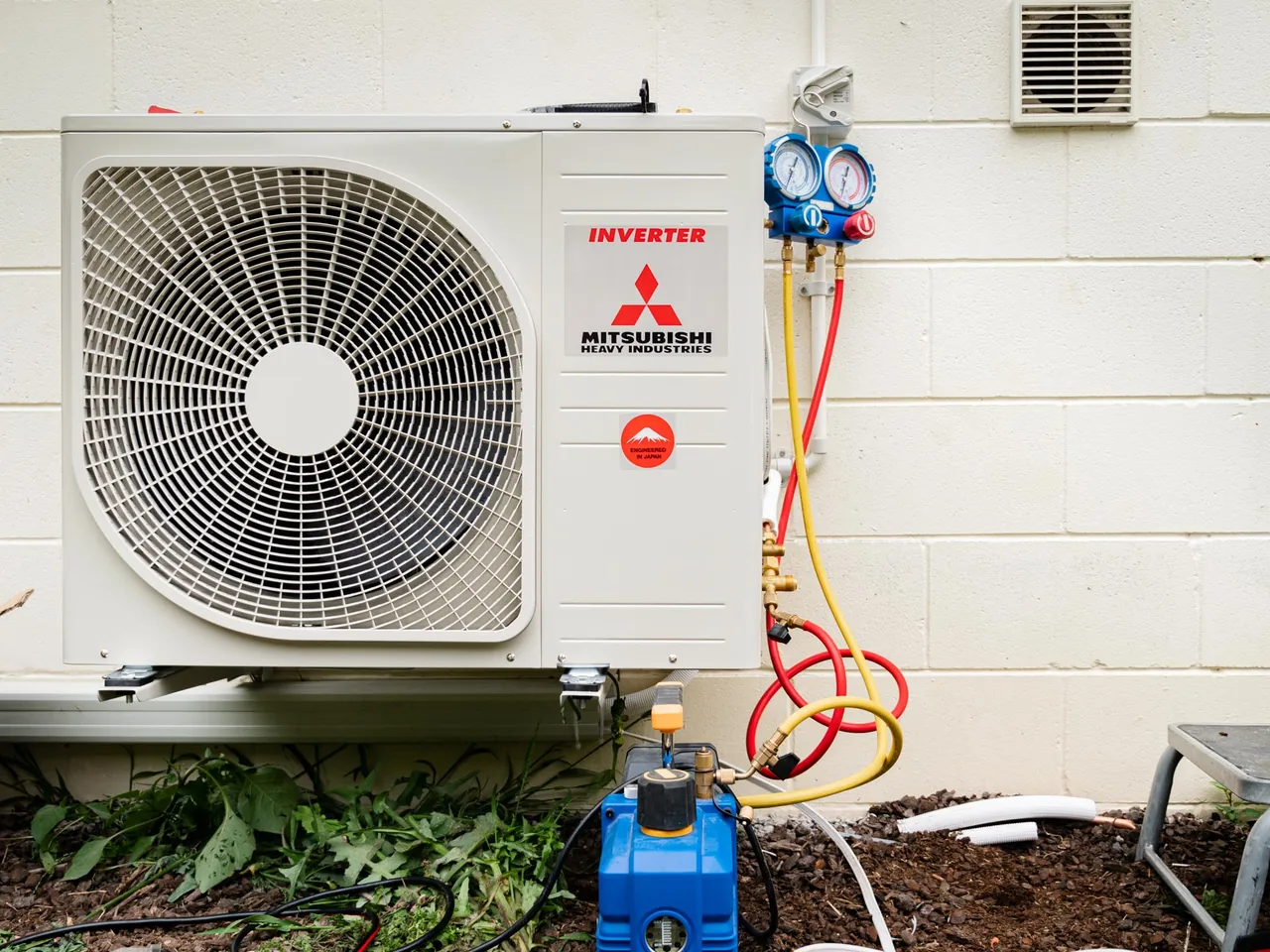
A ducted heat pump is one indoor unit hidden in the ceiling space, joined by pipes to an outdoor unit outside. The indoor unit pushes warm or cool air along ducts to a vent in the ceiling of each room. The air comes back through a filtered return grille in the ceiling, and round it goes again. Ducted air conditioning is the same system: it heats in winter and cools in summer.
On a full-home system, The Conduction Company fits round or linear slot vents in the ceilings, a wall controller, and an outdoor unit on a pad or the driveway nearby. Nothing goes on the walls of the rooms, which is the whole appeal.
What does a ducted heat pump installation involve?
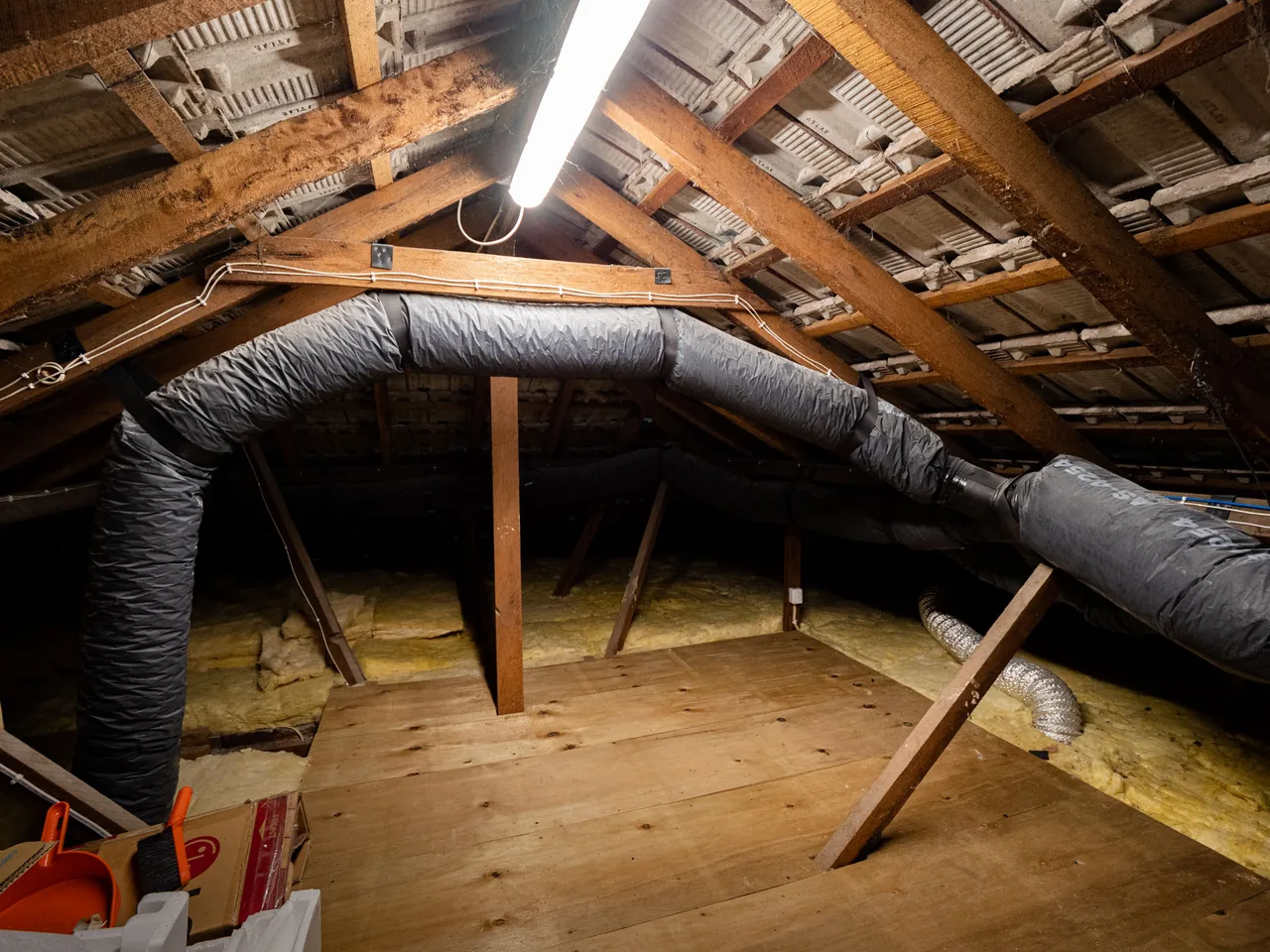
It starts in the ceiling. The Conduction Company does a full assessment of the ceiling space on every ducted job before it prices it, because the ceiling decides whether ducted can work at all.
What does The Conduction Company look for in the ceiling space?
First, the ceiling space has to reach every area of the home. "That's super important," says Jordan Statham. Second, there has to be room for the system, and for the technicians to move around it and run the ducting. "We don't need too much space in a ceiling void to work with, but we do need a sufficient amount," he says. Third, the indoor unit has to get up there, and many are bigger than the existing ceiling hatch.
What if the indoor unit will not fit through the ceiling hatch?
The Conduction Company has two ways in. One is to cut an opening in the ceiling, in a small room off to the side where possible, because a lounge ceiling is a much bigger repaint. The other, where it makes more sense, is to lift some of the roofing so the unit goes in from above. On a recent job, roofers lifted sections of the roof in the morning. The old units came out, the new ones went in, and the roof was closed again that afternoon. Some indoor units also split into parts small enough for a small hatch, which avoids both.
Why does the ceiling check matter so much?
The job that still bugs Jordan Statham shows why. Another company had put a whole ducted system under the floor of a house, in a very tight space, and bolted it straight to the floor joists. The noise and vibration carried through the joists, and the client called The Conduction Company in. The fix was vibration-damping hangers, fitted in that cramped space, and it was slow and expensive because of the access. Ripping the system out would have cost even more.
The house had an enormous ceiling space that could have held the whole system. The installer went under the floor because one bedroom had no ceiling space above it. Right next to that bedroom was a walk-in wardrobe that did. Rigid ducting could have run from the ceiling, down through the wardrobe and under the floor to that one room. That would have cost less and would not have vibrated. It would also have looked much nicer, with no floorboards cut for floor vents. "It's that type of poor planning from installations that really bugs us when we see it," says Jordan Statham.
Who connects a ducted heat pump to the power?
An electrician. Running the circuit and connecting the system is prescribed electrical work under the Electricity (Safety) Regulations 2010, so whoever completes it must issue an electrical safety certificate. On The Conduction Company's ducted jobs, its electricians wire and certify that part.
Is ducted easier to install in a new build or an existing house?
A new build, by a long way, says The Conduction Company. Before the ceiling linings go in, the indoor unit goes straight into the open ceiling space, and the ducting runs with the ceiling off, with no crouching and crawling around a finished ceiling. Jordan Statham calls that a major cost saving. In an existing house, expect more labour, and some building repair if a ceiling has to be cut open to get the indoor unit in.
How long does ducted heat pump installation take?
The Conduction Company can usually install a single ducted system in one full day. A complex single system can take up to a couple of days. A job with several indoor units, or several ducted systems, can take a couple of days or more, and needs some planning ahead. How long comes down to how complex the system is and how hard the install is.
What is the house like during a ducted install?
Expect some disruption, The Conduction Company tells clients. Holes are cut in the ceilings, so there is dusty and noisy work. "It is fairly disruptive in the home," says Jordan Statham. The team puts drop sheets down and vacuums as it goes to keep the dust down, and cleans the home at the end of the day.
If you work from home, The Conduction Company usually starts in the room you plan to work in and puts the ducting in there first. You move back in and get on with your work, while the team carries on in the other rooms, so you have a clear run at the day.
Is a ducted heat pump worth it in NZ?
It is worth it when looks come first, The Conduction Company says, and rarely otherwise. Ducted is the most deluxe heating and cooling you can put in a home. Nothing hangs on a wall or sits on the floor, and each room gets a discreet ceiling vent. "It just looks the nicest, especially if the rest of your home looks immaculate," says Jordan Statham. In a high-spec modern home, or an architecturally designed one, where the owners will pay extra for zone control, ducted is the better solution overall.
The Conduction Company does not recommend ducted for a house that already has high wall units elsewhere. It typically installs new ducted systems in upper-end new builds and renovated homes where no air conditioning exists yet.
On a tight budget, ducted everywhere is usually the wrong call, in The Conduction Company's advice. A multi-split system, or a set of single split systems, usually suits the home better. Budget is part of every assessment, and on bigger projects the team sets out several options, with the pros and cons of each. The Conduction Company quotes all three through its heat pump and air conditioning installation service in Auckland.
If a client is set on ducted and it would work well in the home, Jordan Statham's advice is to wait, or to look at finance. Westpac, ANZ, ASB and BNZ each offer a low-rate home loan top-up that covers heat pumps, for people who have their home loan with that bank.
When will The Conduction Company walk away from a ducted job?
When ducted is the wrong solution for the property and the client will not consider anything else. "One thing we don't do is install something just for the sake of it," says Jordan Statham. Whether a client takes that advice is entirely their right. It is a hard rule at The Conduction Company that it will not install something that does not need installing, or will not work properly. "We are only interested in excellent results."
What are the pros and cons of a ducted heat pump in NZ?
The Conduction Company's list, from its own Auckland jobs, comparing ducted with wall-mounted split systems.
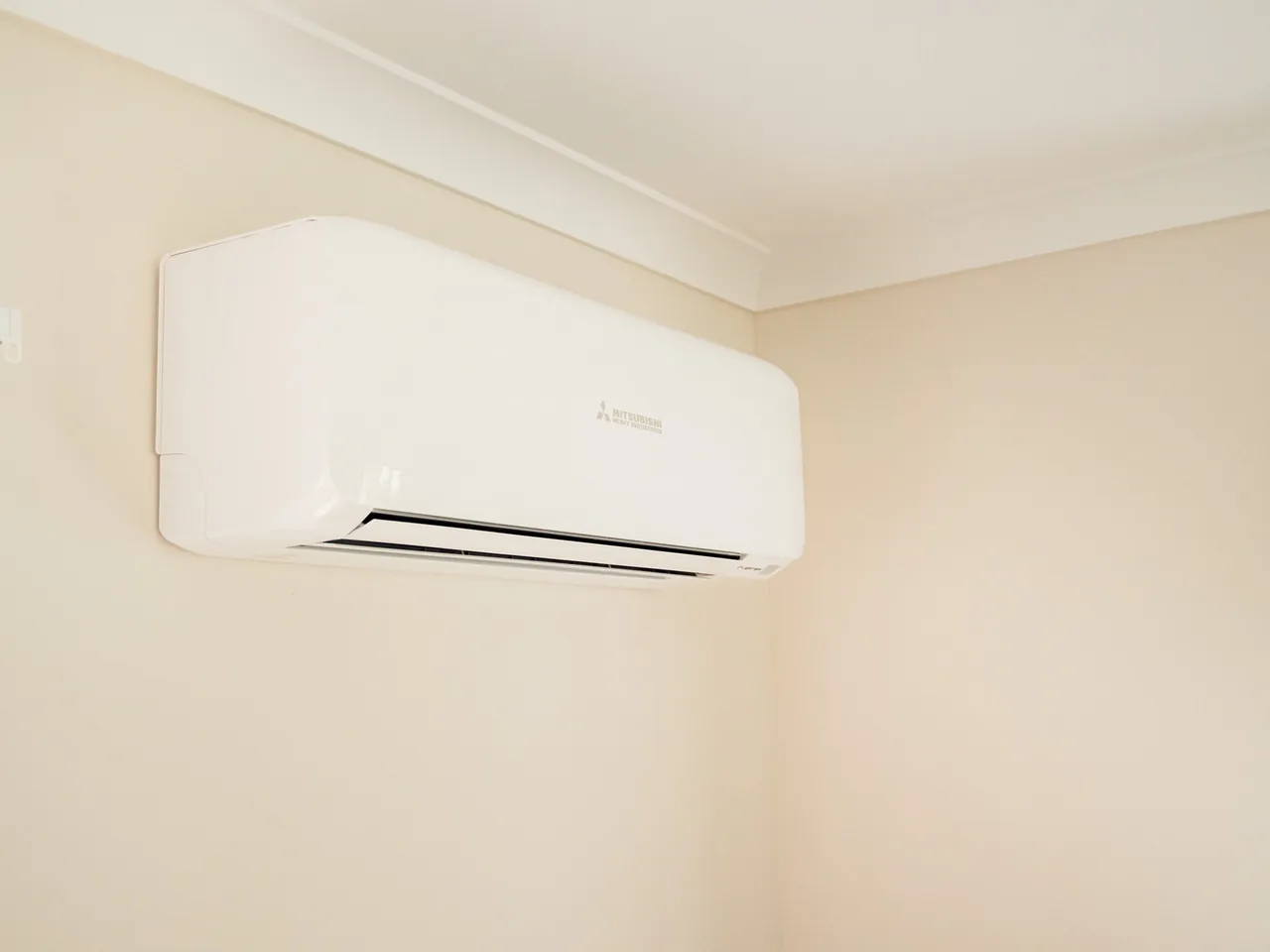
Looks, the big pro. Ducted puts vents in the ceiling and nothing on the walls. If you do not want high wall or floor units taking up space in your rooms, ducted is realistically the only option.
Install cost, a con. Ducted costs more to install than multi-split or single split systems, and zone control adds to it again, in labour and in product.
Room-by-room temperature, a con. A high wall unit holds its own room within a few degrees of the setting. Ducted heats or cools a whole area to one setting, and rooms can end up a few degrees apart.
Closed doors, a con. Air pushed into a bedroom with the door shut takes the easier path, to a room with an open door and a clear run back to the return grille. That room gets extra heat, the closed room stays cooler, and it warms up more slowly.
Running cost, a con. Usually higher than wall units, for the reason in the next section.
Ducted systems do tend to work really well, Jordan Statham says. For most homes he still prefers multi-split, because it gives the best control and efficiency room by room, and it costs less to install. "I don't really mind high wall units on walls, whereas some people really do," he says. The Conduction Company's guide to whether heat pumps are worth it in NZ compares ducted with multi-split line by line.
How do closed bedroom doors affect a ducted heat pump?
A closed door slows that room down, The Conduction Company finds, whether the system is heating or cooling. Air pushed into each room flows back to a return grille, usually in a central hallway or other central space. With the bedroom door open, airflow from that room's ceiling vent is much higher. With it shut, the air has only the gap under the door and the cracks around it, so airflow drops a long way. The room takes a lot longer to heat up or cool down than rooms with open doors, which can leave the home out of balance.
The Conduction Company's fix is to keep the doors open, or fit a through-door port. That is a rectangular vent through the door, in aluminium or powder-coated aluminium. Air keeps flowing with the door closed, so the room keeps its privacy.
Are ducted heat pumps more efficient than wall units?
No. In The Conduction Company's experience, ducted usually costs more to run than wall units. Even with zone control, a ducted system heats whole areas rather than single rooms. A high wall unit reacts to the temperature of its own room, and you switch it off when you leave.
Without zone control it is worse. "Let's say you're in bed and your ducted system is whirring away and it's heating your bedrooms. It's also going to be heating your lounge that no one's using," says Jordan Statham. "So it's all just sort of wasted energy."
Is ducted air conditioning good for cooling in NZ?
Yes. Ducted cools really well, The Conduction Company finds, and its Auckland clients use it through summer. Ducted air conditioning heats and cools, so all year round it holds the home near one steady set temperature. "They work really well to cool the home," says Jordan Statham. Closed bedroom doors slow cooling the same way they slow heating.
Can a ducted heat pump bring fresh air in?
Yes, and The Conduction Company recommends it. The add-on is a fresh air intake: an extra intake on the return side of the indoor unit, with its own duct, fan and filter. It draws air from outside or, in some cases, from the roof space, filters it, and feeds it into the air the system already moves around the home. The fresh air pushes stale, moist air out, so one system heats or cools the home and ventilates it too. "This is the best of both worlds," says Jordan Statham.
If your home has no ducted system, The Conduction Company's home ventilation system installation in Auckland brings in fresh air on its own.
Does a ducted heat pump need zone control?
It needs zones of some kind, or it heats the whole house at once. The Conduction Company usually creates them with separate systems rather than zone control. Zone control on one big system lets you heat or cool only some sections of the home, but it is expensive, both to install and in the product itself. So in a large majority of cases, The Conduction Company installs a separate system for each area, one for the living area and one for the bedrooms. Each system is a zone. Run the living area through the day, then at bedtime turn the bedrooms on and the living area off.
That is what The Conduction Company did on a recent Auckland job. The old system ran a sprawling single-level home from one large outdoor unit, rated 16.6 kW for heating on The Conduction Company's site notes. The Conduction Company replaced it with three separate systems, three outdoor units and three indoor units, one for each of the home's three large areas. It reused most of the existing ducting and ceiling vents, so nothing changed in how each room looks.
On a two-storey home with a ceiling space on each level, The Conduction Company often suggests two ducted systems, one for each floor, for the same reason.
What gets missed when choosing a ducted heat pump?
Sizing and zone control, says The Conduction Company. Both need thinking about before the system goes in.
Sizing. A ducted system is designed for the exact space it serves. The Conduction Company has seen clients extend their home by a couple of bedrooms and expect to add ducts to the existing system. That system was sized for the house before the extension, so it would have worked poorly with extra ducts. If you are likely to extend, the first system can be sized for the home you plan to end up with.
Zone control. Zone control is much easier to fit at the same time as the main system, while the ducting is being put together. So when The Conduction Company prices a ducted system, it talks through zone control, and the ways of doing it, on site.
What goes wrong with a badly installed ducted system?
When The Conduction Company is called back to an older ducted install, the same faults keep turning up.
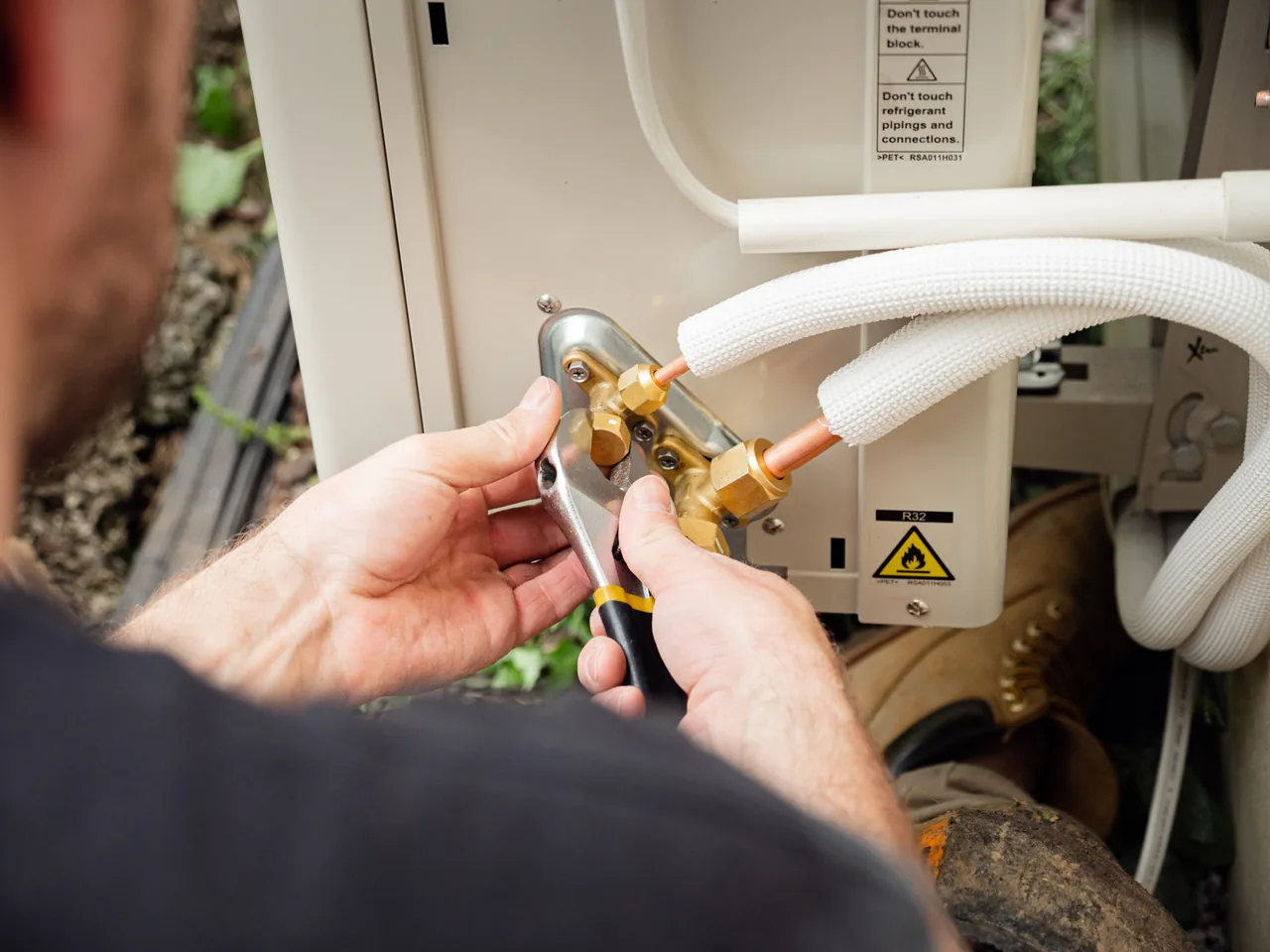
Flare joints. The joints in the refrigerant pipework are the key point of failure in most air conditioning installs, Jordan Statham says. A bad one leaks. Sometimes the leak is quick, and sometimes it is so slow nobody notices for years, until the refrigerant runs out.
Drains. The drain pipe carries water from the indoor unit outside. In a hot roof space, cheaper rigid PVC pipe can sag over time. Water pools in the dip, backs up and drips onto the top of the ceiling. With no drip tray under the indoor unit, a leak goes straight into the plasterboard and paintwork. Jordan Statham calls it "super common".
Duct joints. Duct tape put on the wrong way pulls away over time. The Conduction Company wraps the first two turns tight and the last turn loose, with no strain on it, then cable-ties over the whole wrap. On The Conduction Company's own installs, Jordan Statham says, the ducting itself usually wears out before those joints do.
The team now works from a run sheet built from its own history. Every past job was reviewed, and anything that went wrong, down to the most minor detail, went onto it. "We have a really comprehensive run sheet, a checklist if you will, that the technicians go through on each job," says Jordan Statham, director of The Conduction Company.
How noisy is a ducted heat pump?
Not very, when it is installed well, says The Conduction Company. Models differ, but Jordan Statham says most now have decent noise suppression, so a noisy unit is rare. The noise that does come has two main sources: the indoor unit's fan, and air moving through the ducts.
Fan noise and vibration. The fan in the indoor unit makes most of the noise and vibration. Hung properly in the ceiling space, the unit sits on a suspension that soaks that up. The Conduction Company has seen other companies' installs where the unit sat in a corner, resting against the house's structural timber. Over time the vibration got extremely loud, and the unit knocked whenever the fan ran. "It all comes down to installation method," says Jordan Statham.
Air noise. The ducting is insulated, which takes up some of the sound of moving air. But the shorter a duct run, or the closer a vent is to the indoor unit's fan, the more likely you are to hear a whooshing from that ceiling vent. So The Conduction Company plans duct runs of about the same length, and puts the indoor unit above a central area or the lounge, not right above a bedroom. The bedrooms do not need as much air pressure, so longer runs to them do no harm, and they cut the air noise where it matters most, at night while you sleep.
How does The Conduction Company keep a ducted job on budget?
By seeing the ceiling before it prices anything. A ducted system is a big-ticket job, so The Conduction Company does not price one without a full assessment of the ceiling space. Once the team has been through the ceiling, problems that blow out the cost are rare. Only things nobody could see at the assessment catch it out. "In the vast majority of cases, the quote that you receive is the amount that you're going to pay at the end," says Jordan Statham.
The drawbacks come up front too. Before you decide, The Conduction Company sets out the pros and cons of every option, so noise, airflow and room-to-room differences are known ahead of time. The recommendation is the one the team would pick for its own home.
We quote on facts, not guesses
Before we give you a price, we carry out a proper assessment of your property and how you'll use your heating.
That way you know exactly what you're buying and the total cost, with no surprises.
Clear expectations from the outset, start to finish.
What maintenance does a ducted heat pump need?
A yearly service, and one job for you. The Conduction Company's annual service of a ducted system catches the maintenance it needs, and its guide to heat pump servicing in Auckland covers what a ducted service involves.
Between services, keep weeds, plants and grass clear of the outdoor unit. Grass grows a long way in a year, and once it blocks the airflow or touches the fan blades, it drops the machine's efficiency and can cause faults. "Keeping the external unit clean and free of any debris and plants is ultra important," says Jordan Statham.
In short
Ducted heat pump installation in Auckland makes sense for a high-spec home where looks matter most and the ceiling space reaches every room. Expect it to cost more than wall units to install and to run. Plan zones, often as separate systems, so you are not heating empty rooms. The Conduction Company bases that advice on its own Auckland ducted jobs, and it checks the ceiling space before it prices any of them. For most other homes, it recommends multi-split.
Frequently asked questions
How much does it cost to install a ducted heat pump in Auckland?
The estimates below are for standard installation of a ducted heat pump. The Conduction Company confirms final pricing after a property assessment. Typical whole-home ducted systems The Conduction Company has quoted and installed are priced at about $10,100 to $12,200 including GST. Zone control costs about $4,100 to $5,500 more, including GST. The ducting runs and the roof space move the final figure, which is why the team checks the ceiling space first.
How long does ducted heat pump installation take?
A ducted system usually takes The Conduction Company one to two days to install, against about a day for a standard split system. A bigger job takes longer, such as replacing one large system with three separate systems.
What is the best ducted heat pump system in NZ?
For ducted, Daikin is the brand The Conduction Company trusts most. The bigger choice is the layout: one system with zone control, or separate systems for the living areas and the bedrooms, which The Conduction Company installs in most cases.