The Conduction Company installs heat pumps across Auckland, and heat pump installation cost turns on the house as much as the machine. These answers come from Jordan Statham, its director, a registered electrician and electrical inspector, and from The Conduction Company's own Auckland jobs.
Pipe length, the outdoor unit's spot, the wall, the floor and the circuit move The Conduction Company's install prices most. A long pipe run, a block wall, an upstairs room or an apartment balcony all add work. So does a bigger machine that needs its own circuit.
What did a recent heat pump install cost, and why?
We quote on facts, not guesses
Before we give you a price, we carry out a proper assessment of your property and how you'll use your heat pump. That way you know exactly what you're buying and the total cost, with no surprises. Clear expectations from the outset, start to finish.
The estimates below are for standard installation of a heat pump.
The Conduction Company confirms final pricing after a property assessment.
A standard heat pump installation in Auckland starts from $2,650 including GST at The Conduction Company. Its supply and install prices by room size are in The Conduction Company's guide to whether a heat pump is worth it in NZ.
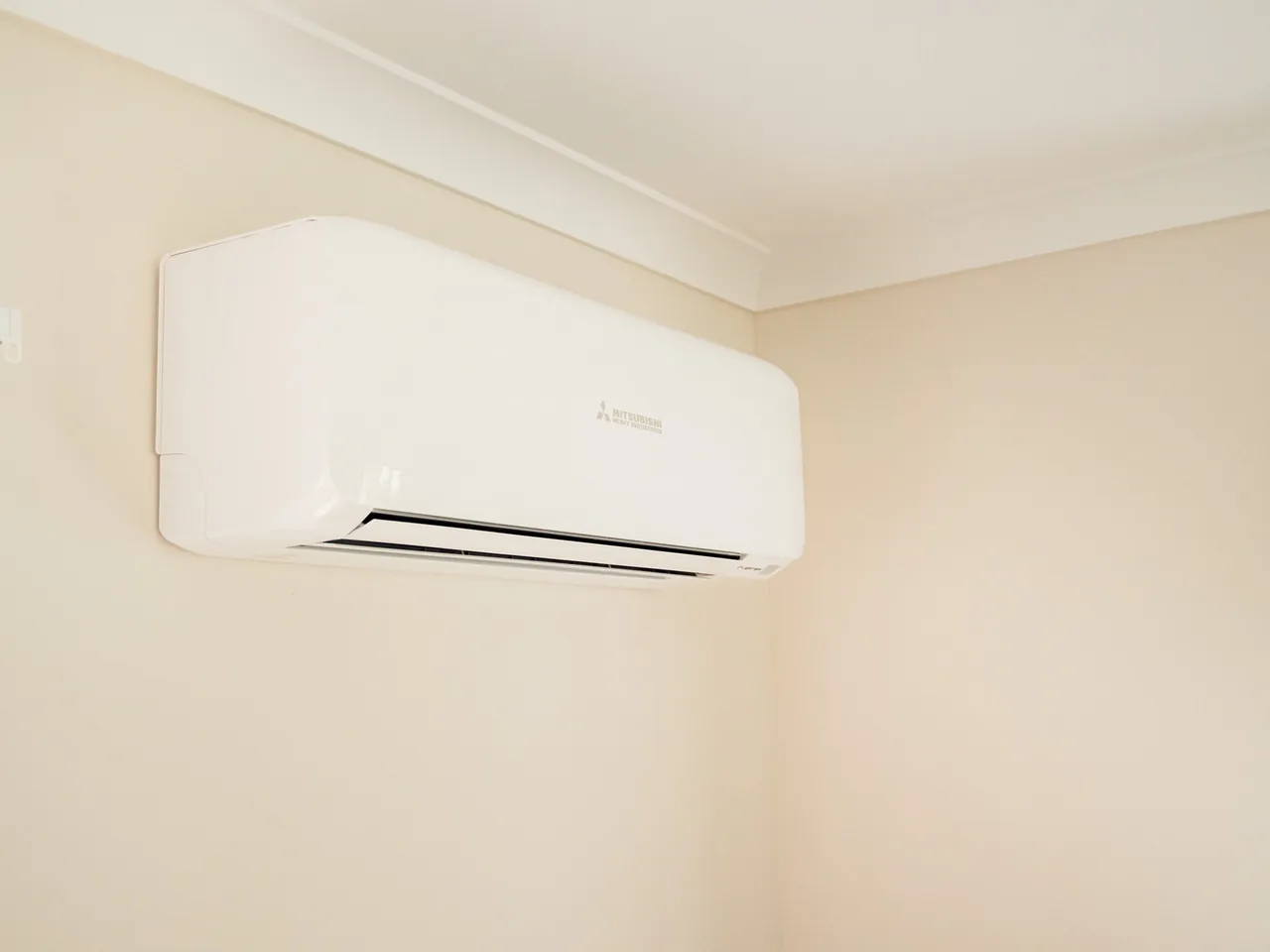
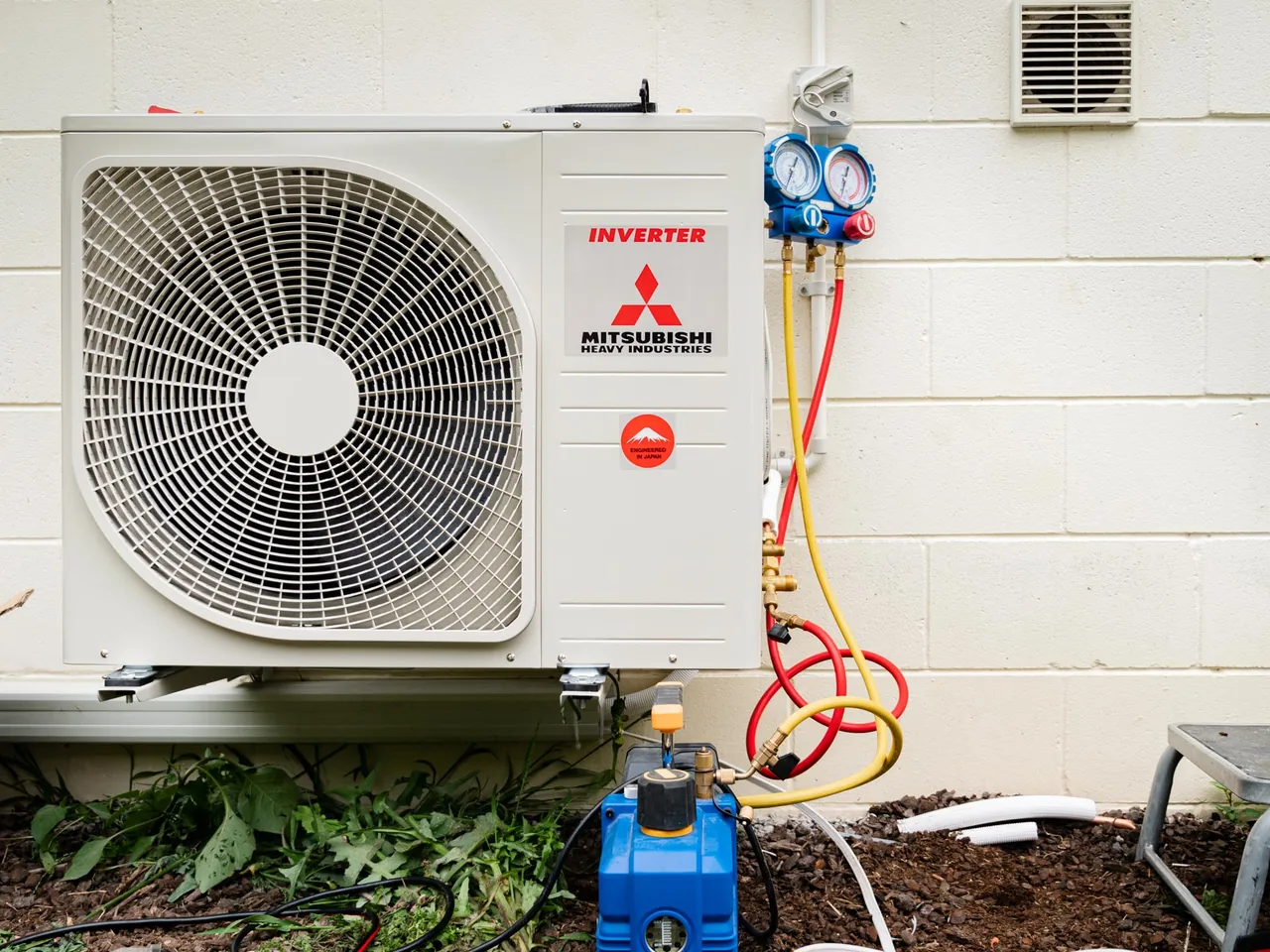
A recent job shows what keeps an install at the low end of those prices. The Conduction Company fitted a bedroom heat pump with 3 kW of heating, on a promotion. It went on an outside wall of the main bedroom, so the drain could run straight outside. The outdoor unit was tucked around the corner, away from the bedroom windows, to keep the noise down. "It was a really clean installation, worked really well and the client's super happy with it," says Jordan Statham.
How does a long pipe run change the price compared with back to back?
A long pipe run costs more in labour and in materials, The Conduction Company finds. Back to back, with the outdoor unit straight through the wall behind the indoor unit, is the shortest run and the lowest-cost layout. Every extra metre needs more pipe, more of the plastic ducting that covers the pipes, more cable and, in most cases, more drain.
Really long runs add refrigerant as well. Each machine leaves the factory charged for a standard length of pipe. In the Gree service manual The Conduction Company works from, that is 5 to 8 metres, and refrigerant is added for every metre beyond it. Past a certain length the machine also starts to lose efficiency, Jordan Statham says.
Where should the outdoor unit of my heat pump be installed?
On the ground, on its own pavers or a concrete pad, is The Conduction Company's first choice. The ground soaks up the noise and vibration. A unit on a wall bracket can be noisier, because the wall can resonate at certain frequencies, and that has caused problems in the past.
The Conduction Company stays away from roof mounting where it can. Roof seals wear over time, so the risk of a leak rises, and a roof can resonate too. The best spot is a quiet side of the house, or an area set aside for it, clear of the paths you walk along.
The outdoor unit can go pretty much anywhere, Jordan Statham says. If you want it somewhere in particular, The Conduction Company adds noise and vibration suppression to suit, and that extra work is part of the quote.
When does a heat pump need a new circuit or switchboard work?
A small bedroom unit can usually run off an existing power circuit, in The Conduction Company's experience. It draws little power, so it will not overload the circuit or cause nuisance tripping, where the breaker cuts the power because the circuit is overloaded.
Above about 6 amps of current, The Conduction Company prefers to run a dedicated circuit from the switchboard to the machine. Larger machines are best on their own circuit in any case. "It just ensures that there's no overloading or nuisance tripping on any of your circuits," says Jordan Statham.
Whether the switchboard can take a new circuit is checked at The Conduction Company's assessment, before a price is set. Where a board does need work, The Conduction Company's page on switchboard replacement in Auckland explains what is involved.
What does a brick, block or concrete wall do to the job and price?
It adds a little to the price, because The Conduction Company has to core drill the hole, cutting a clean round hole with a special drill. Brick is a bit softer than concrete block, so it drills faster. Block takes longer. Where the block is very thick, or the concrete is reinforced, The Conduction Company brings in a core drilling contractor to cut the hole. On a weatherboard or board-and-batten house, it is a simple drill through the wall.
What does installing upstairs or in an apartment add to the job?
Installing upstairs
Upstairs mostly means a longer pipe run down to the outdoor unit, about twice the height of a ground-floor run, The Conduction Company finds. A second floor is no big deal, and an extension ladder does the job. A third floor gets quite a bit trickier, and above that the team may need scaffolding or other specialist access equipment.
On third and fourth storeys, height becomes the limit. Gravity puts more pressure on the refrigerant in a tall pipe run, and the machine has to work much harder to push it around. Each model has a maximum height between its indoor and outdoor units, 10 metres on most house-sized units in the Gree service manual The Conduction Company works from. So on a tall building, the team often mounts the outdoor unit on an outside wall at a suitable height instead of on the ground.
The estimates below are for standard installation of a bedroom heat pump.
The Conduction Company confirms final pricing after a property assessment.
The Conduction Company's Gree Kingfisher bedroom special, which runs until 30 November 2026, shows the step. The Conduction Company installs the 2.7 kW unit for $2,605.91 including GST. An upstairs bedroom starts from $3,157.82 including GST, with the outdoor unit on the ground.
Installing in an apartment
Apartments are trickier, and that adds to the overall cost. In most apartment jobs The Conduction Company needs the body corporate's sign-off first, and the outdoor unit usually goes on the balcony. Some bodies corporate will not allow any drilling through the cladding, to protect the weatherproofing. On some of those jobs, The Conduction Company has had a glazier cut a hole through the fixed glass panel beside a ranch slider to get the pipes through.
A balcony install needs one more thing: a shroud, an angled cover over the top of the outdoor unit, so nobody can climb on it. "It's just a bit of a safety risk if you've got a ledge or a platform being the air conditioner itself," says Jordan Statham. Someone could climb up, slip and go over the rail.
What's involved in replacing an existing heat pump in the same location?
The estimates below are for standard replacement of an existing heat pump.
The Conduction Company confirms final pricing after a property assessment.
The Conduction Company prices a replacement about the same as a new install, usually $50 to $150 less including GST. Some of the work is already done. The power supply is in place and the isolator can usually be reused. If the ducting over the pipes is in good condition, The Conduction Company reuses that too, along with the hole through the wall.
Other things add time. The old machine has to be pumped down to get the refrigerant out of it, then removed. It goes to a recycling centre, and its refrigerant is sent for destruction. Those steps are why a replacement is not much cheaper than a new install.
Why can two heat pump quotes for the same room be so far apart?
Mostly the quality of the machine and the quality of the installation, in The Conduction Company's experience. Some installers quote very low and leave a poor result, both in how it looks and in how it is put in. A poor install shortens the machine's life. "You might be looking at a replacement after seven years as opposed to a proper installation which will last eight to twelve years, we'd expect at a minimum," says Jordan Statham.
The Conduction Company is called out to a lot of badly installed heat pumps, and in Jordan Statham's experience the lowest quotes are always behind them. Some were put in by untrained, unlicensed people who connected them to the power supply themselves. The Conduction Company has written reports for clients trying to claw money back through the Disputes Tribunal.
The machine matters too. The cheapest budget models do not tend to last as long, and they wear out faster. The Conduction Company recommends at least a mid-range system. "They're just going to last so much longer and perform a lot better," says Jordan Statham. "It pays in the long run to get a professional installer with a good reputation."
What should be included in a heat pump installation quote?
The whole job, in The Conduction Company's view: the heat pump itself, all the labour and materials, installation, certification, commissioning and testing. You are paying for a new heat pump fully supplied, installed, commissioned and tested before the technician leaves the site. None of those should be left off a quote. It is how The Conduction Company prices every heat pump installation in Auckland.
On a replacement, check the quote includes removing the old unit and disposing of it properly. The Conduction Company takes the old unit back to its workshop. Jordan Statham holds a refrigerant licence, so the team recovers the gas into recovery bottles itself. The machine goes to a metal scrap yard for recycling, and the refrigerant goes to a destruction or recycling company. The recyclers pay a nominal amount, which does not cover the technicians' time, so disposal roughly breaks even for The Conduction Company.
What are the heat pump installation requirements?
Two sets of rules apply, electrical and building, and The Conduction Company covers the electrical side on every install. Connecting a heat pump to the power, other than by a plug, is prescribed electrical work under the Electricity (Safety) Regulations 2010. On a new install, a certificate of compliance must be issued for that work, and whoever completes the work must issue an electrical safety certificate. The Conduction Company issues both on its heat pump installs.
AS/NZS 3000, the wiring rules, also requires a lockable isolating switch next to the outdoor unit, but not on it.
Does an Auckland heat pump install ever need council consent?
Usually not, for an existing home. Under Schedule 1 of the Building Act 2004, a hole of up to 300 mm for pipes and cables is exempt work. That covers a detached house, or a home in a building of three storeys or fewer. MBIE's guidance on exempt wall penetrations uses a heat pump as its own example. Exempt work must still meet the Building Code, so the hole still has to be sealed against water.
Some installs do involve the council. The Conduction Company's guide to when, from the law and MBIE's guidance:
A house still being built. If the heat pump is not in the consented plans, the change usually goes to the council for approval before the work, as a minor variation, often noted on the consented plans. The council can inspect it, and the work has to match the consent before the code compliance certificate is issued.
A bigger hole. The exemption stops at 300 mm.
A taller apartment building. In a building over three storeys, the hole is exempt only if it does not affect the structure or a specified system, such as a fire separation.
Planning rules. Auckland Council's heat pump guidance says most home installs need no building consent. Its noise rules still apply at the neighbour's boundary, and the night limit of 40 dB is the one that bites. The Conduction Company places outdoor units with that in mind, away from bedroom windows where it can. A scheduled heritage building, or a home in a special character area, is worth checking with the council before a unit goes on the outside.
Apartments and townhouses. Get the body corporate's written OK first. That is separate from the council.
The electrical connection never needs a building consent; it needs the two certificates above. Whether a roof-mounted unit needs consent is a question for the council, and The Conduction Company avoids roof mounting anyway. If any of these apply to your home, talk to The Conduction Company before you book.
Can I install a heat pump myself in NZ?
Technically yes, but The Conduction Company strongly recommends against it. Auckland Council says you do not need a qualified and registered person to install the heat pump itself. The refrigerant work is still a specialised trade that takes a long time to learn. "It's not something that you can just pick up off YouTube," says Jordan Statham.
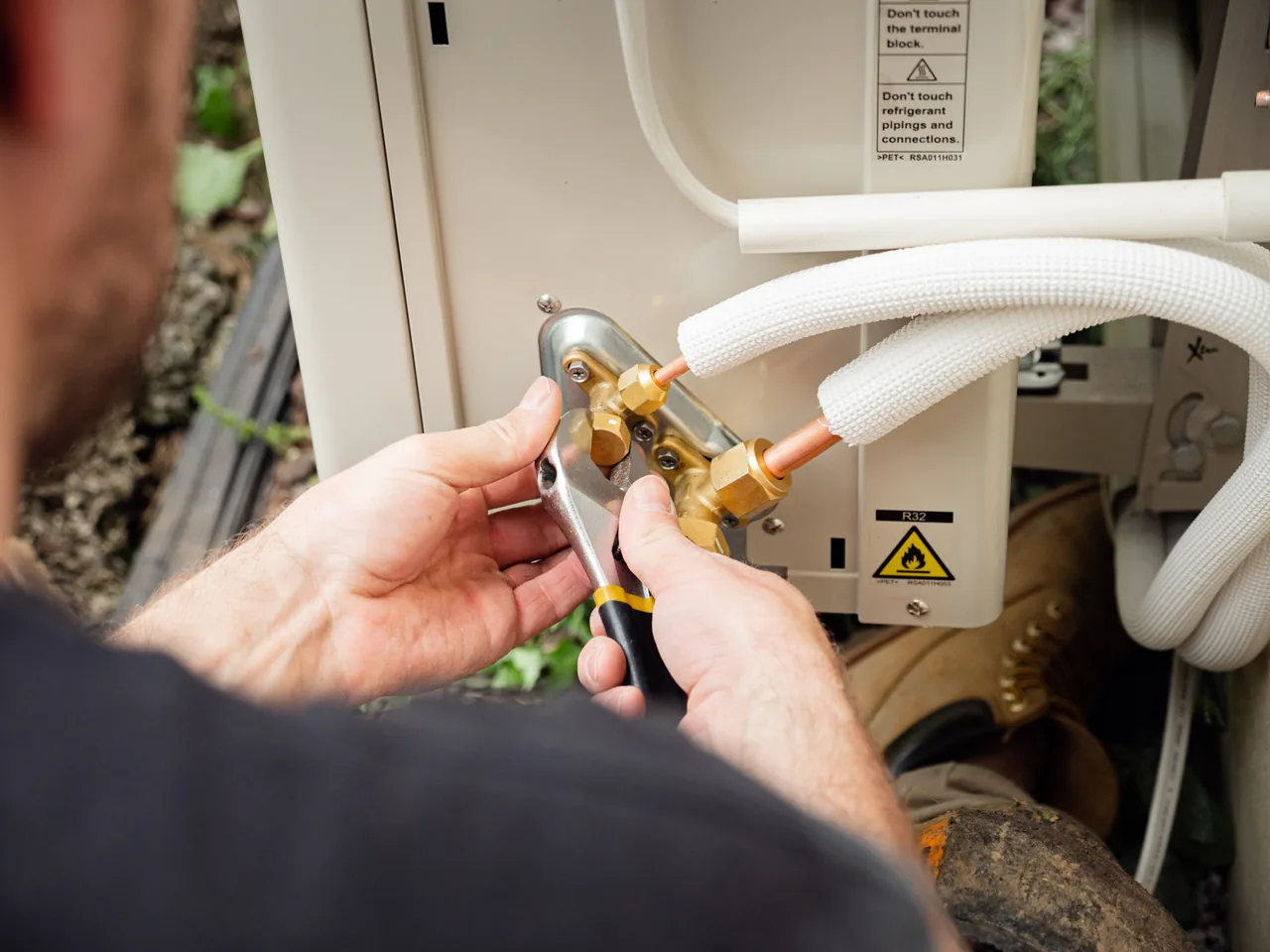
Get it wrong, by letting air into the system, not vacuuming it properly or skipping the nitrogen flush, and you can damage the machine straight away. You may not be covered by the warranty, and you will likely pay for expensive repairs or have it ripped out.
The electrical side has legal limits. Under the homeowner exemption in the Electricity (Safety) Regulations 2010, an owner may, within limits, install a new circuit in the home they live in, but must not work inside the switchboard or anywhere live parts are likely. The circuit must then be tested and certified by an electrical inspector before it is connected, and if it is wrong, the inspector may tell you it needs to be redone.
As a hard rule, The Conduction Company does not test, certify or connect a homeowner's wiring. It may help only where finished work has left a client stuck, and that takes a thorough inspection and often rework. Asked whether a client should try it, Jordan Statham's answer is short: "We'd say absolutely not."
How much does a ducted heat pump cost in NZ?
The estimates below are for standard installation of a ducted heat pump.
The Conduction Company confirms final pricing after a property assessment.
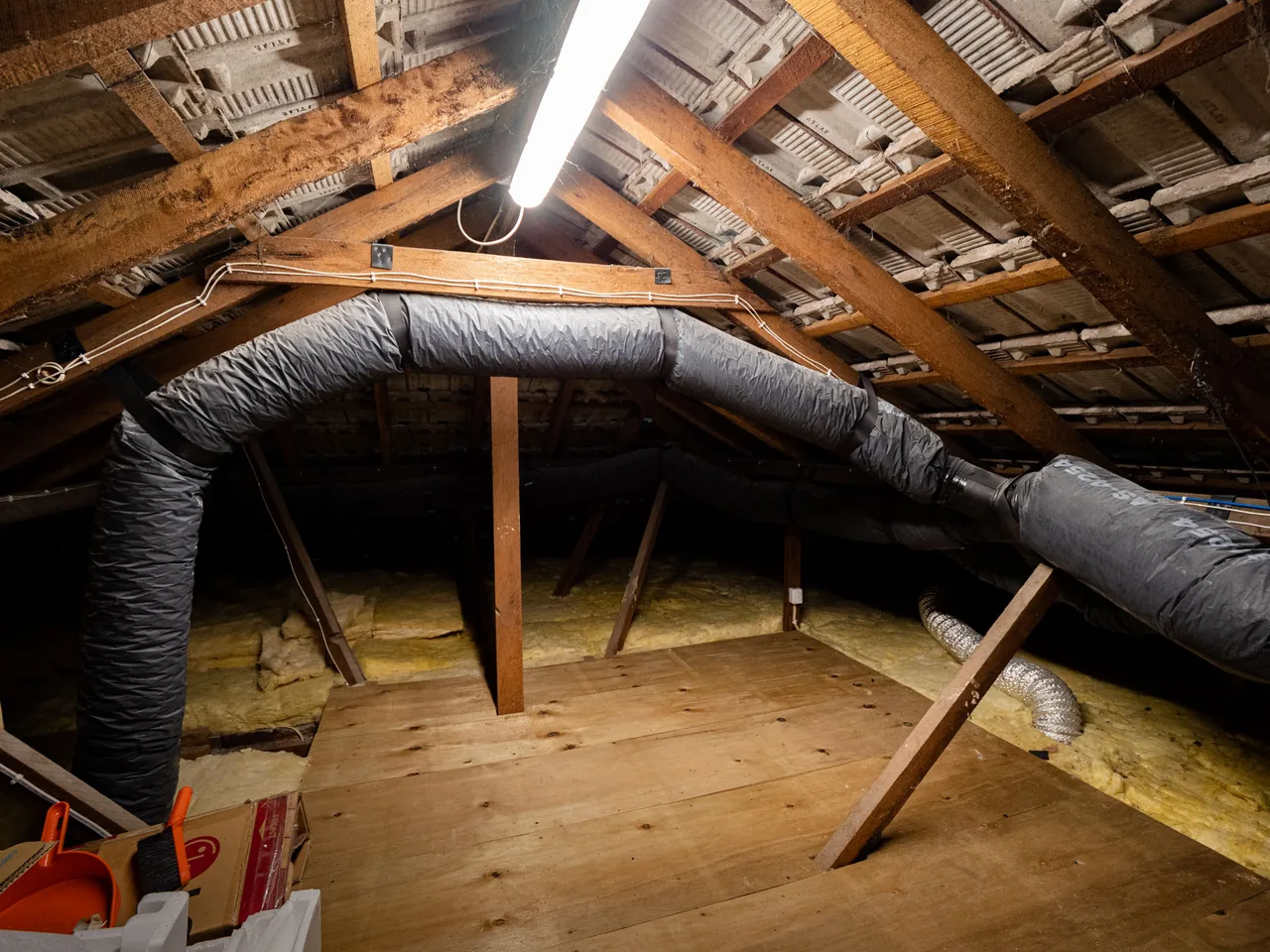
Typical whole-home ducted systems The Conduction Company has quoted and installed are priced at about $10,100 to $12,200 including GST. Zone control costs about $4,100 to $5,500 more, including GST. A ducted system costs more than wall units to install, and The Conduction Company confirms each price after inspecting the ceiling space. The size of the system, the number of rooms it serves, the ducting runs and the roof space all move the price. The Conduction Company's guide to ducted heat pump installation covers the ceiling check, zones and who ducted suits.
How does a multi-split system's price compare with separate wall units?
They usually cost about the same to install, The Conduction Company finds, and a multi-split is sometimes a little cheaper. A multi-split is one outdoor unit running several indoor units. The real saving is in servicing. With single split systems, every indoor unit has its own outdoor unit, and both need cleaning and checking. A multi-split can run four indoor units from one big outdoor unit, which is five units to service instead of eight. Over time, that saves a bit on maintenance.
In short
What you pay to have a heat pump installed in Auckland depends mostly on the house: the pipe run, where the outdoor unit goes, the wall it goes through, the floor it is on and the circuit it needs. Based on The Conduction Company's own Auckland jobs, a back-to-back install through a timber wall, with the outdoor unit on the ground, sits at the low end. Long runs, block walls, upstairs rooms and apartments add work, and so do bigger machines on their own circuit. Most existing homes need no building consent, but every install needs its electrical certificates.
Frequently asked questions
How far can a heat pump's outdoor unit be installed from the indoor unit?
It depends on the model. In the Gree service manual The Conduction Company works from, the longest pipe run is 20 metres on a 3.5 kW unit and up to 30 metres on larger ones. Beyond the standard 5 to 8 metres, refrigerant is added for every extra metre, which adds to the price.
My heat pump was wired by looping off an existing circuit. Is that a problem?
Not usually for a small bedroom unit, in The Conduction Company's experience. It draws little power, so it rarely overloads the circuit, though the breaker can trip if other appliances on that circuit run at the same time. Above about 6 amps, The Conduction Company prefers a dedicated circuit from the switchboard.
What does heat pump installation only cost?
The Conduction Company's prices are for supply and install, the machine and the work together. It will install a heat pump you have bought yourself and price that job individually. It does not cover warranty labour on a client-supplied unit, and it explains that maker's warranty support before you decide.