The Conduction Company sizes and installs heat pumps in Auckland rentals for landlords and property managers. This guide covers what size heat pump a rental needs to meet the Healthy Homes heating standard, from the installer's side of the job.
One that meets the living room's required heating capacity, worked out from the room by the official formula or calculator, with every heater at least 1.5 kW. The Conduction Company sizes a step above that minimum, because a unit working at its limit wears out sooner.
What are the healthy homes heating requirements for a rental in NZ?
The main living room needs fixed heating big enough for that room. The Conduction Company works from the Residential Tenancies (Healthy Homes Standards) Regulations 2019, and the heating rules come down to four things.
Which room. The main living room is the living room, or the largest one if the home has two or more (regulation 8).
What counts as a heater. It must be fixed to the property, not portable. It must sit in the living room or feed heat straight into it, and for a heat pump that means the indoor unit is in the room. It must be at least 1.5 kW, and a heat pump or electric heater must have a thermostat (regulation 9).
What never counts. An open fire, an unflued gas or other unflued combustion heater, and a plain electric heater whenever the room needs more than 2.4 kW. A fixed heat pump is not an "electric heater" under that rule, so it can heat a living room of any size.
How big. Together, the heaters must meet the room's required heating capacity (regulation 8). That figure comes from the formula in Schedule 2, from the government's heating assessment tool, or from a qualified specialist's assessment (regulation 10). The formula works out the heat needed to hold the room at 18 degrees when it is 1 degree outside, the temperature the regulations assume for Auckland.
How do you work out what size heat pump a rental needs for the healthy homes heating standard?
Find the living room's required heating capacity, then choose a heat pump whose rated heating output meets or beats it. The Conduction Company also works out its own figure, and it usually comes out higher than the official one.
The official figure usually comes from a healthy homes assessor's report, or from Tenancy Services' online heating assessment tool, which asks for the room's measurements, its windows, and its insulation. The regulations say a landlord who uses that tool in good faith is entitled to rely on its result (regulation 10).
The Conduction Company's in-house sizing software counts more. It works from the room's full volume, then adds the amount and type of glazing, the glass-to-wall ratio, the floor coverings, the insulation in the ceiling, walls and underfloor, the wall linings, draughty older joinery, and heat that spills out into the rest of the house. It sizes for at least 21 degrees on the coldest winter day, with capacity to spare. The regulations size for 18.
"In most cases our calculator will come up with a higher number than the tenancy calculator, the official one," says Jordan Statham, director of The Conduction Company and a registered electrician and electrical inspector.
Which room features push the size up?
Glass, first, says The Conduction Company. Single glazing loses far more heat than double glazing, and the more of the wall is glass, the bigger the heat pump needs to be.
Then the room's volume, which means ceiling height as well as floor area. A vaulted ceiling gets its volume worked out properly, with Pythagoras' theorem, rather than guessed. Missing insulation under the floor, in the ceiling or in the walls pushes the size up, and so does older joinery that lets draughts through. The floor covering and the wall linings make a difference too.
The last one is spillover. Tenancy Services' tool counts any space that is always open to the living room, but if a door can be closed, the space beyond it is left out. In real life the hallway door is usually open, and some of the heat drifts down the hall towards the bedrooms. The Conduction Company sizes for that spillover, which is one more reason its number comes out higher.
How do you size an open plan living room joined to the kitchen?
As one room, says The Conduction Company. Tenancy Services' guide to its tool says the same: an open-plan kitchen, hallway or stairwell that is always open to the living room goes into the calculation, so the whole space's volume, walls and glazing count.
Where a very large area can be closed off with doors or sliding doors, only the main living area has to be sized. The Conduction Company sees that as a workaround, because people rarely live with those doors shut. For a big open area it recommends either one large heat pump or more than one.
Which Auckland rentals are hardest to heat to the standard?
Older villas and bungalows, says The Conduction Company. They tend to be the draughtiest and the least insulated, so they need a bigger heat pump to reach the standard.
Older coastal homes with a view are the other one. A living room with a wall of single-glazed ranch sliders onto a deck loses heat fast, and it needs a larger heater to get up to temperature.
Is a heater that is "big enough" the same as the heating capacity the calculator gives?
For the law, yes: a heater that meets the calculated required capacity passes. In The Conduction Company's experience, though, the calculated minimum is not always what keeps a room warm, and two assessments of the same room can disagree.
One Auckland rental shows the usual gap. Its healthy homes report called for 4.6 kW. The Conduction Company's own sizing came out at 5.4 kW. The landlord had both options and the reasons, and chose the 4.6 kW unit for a short-term rental on a tight budget. It met the standard, so that is what The Conduction Company installed, and it worked out well.
Another job went the other way. A property manager had commissioned a healthy homes report from a third-party inspection company. The Conduction Company's sizing put the living room at a 6 kW heat pump. The report specified 4.2 kW. We said we did not agree, the landlord wanted to keep the cost down, and we installed the 4.2 kW unit as instructed. Six months later the tenant commissioned her own report, which put the minimum at 5.6 kW, and took the landlord to the Tenancy Tribunal. The landlord paid the tenant, and a second heat pump went in to bring the room up to the standard.
Two reports had produced two numbers for the same room, and the landlord chose the smaller one. The Conduction Company's advice: whoever's figure you rely on, get it in writing from someone who will stand behind it at a hearing. If two professionals disagree, ask why before you choose the smaller number.
Should a landlord buy the smallest heat pump that passes?
That is the landlord's call, and The Conduction Company will install it as long as it is legally compliant. It will also explain why the next size up is usually worth it.
On the coldest days, a unit sized exactly to the room, or under it, runs harder and for longer to bring the room up to temperature. One size up gets there, and the compressor switches off. It starts again only when the room drops a degree or two. That means less work for the compressor motor and the valves, and less wear on the whole system. The government's energy agency puts it simply: choose the right size, because "too small and it'll struggle" (EECA).
The next size up costs more up front, and The Conduction Company finds it makes most sense on a rental the owner plans to hold for years. Its guide to whether heat pumps are worth it in NZ has its Auckland prices by room size. "If they're dead set on it, we'll install whatever they like as long as it's legally compliant," says Jordan Statham.
Does a heat pump or a panel heater meet the heating standard in a rental?
Either can, depending on the room, says The Conduction Company. A fixed heat pump with enough heating capacity meets the standard in a living room of any size. A fixed electric panel heater meets it only where the room's required heating capacity is 2.4 kW or less. A portable heater never counts.
There is one exception for top-ups. If the living room's heating was installed before 1 July 2019, the room needs more than 2.4 kW, and the shortfall is 2.4 kW or less, the regulations let a fixed electric heater make up the difference (Schedule 1, clause 5). In that case The Conduction Company fits a fixed panel heater of up to 2.4 kW rather than a second heat pump. The landlord's compliance statement then has to say the rental relies on that top-up rule.
When is a heat pump the wrong answer for a rental's heating?
When the living room already has enough qualifying heating, says The Conduction Company. A fixed wood burner with the heat output the room needs already counts, so the rental probably does not need a heat pump as well. An open fire never counts.
A heat pump still does two things a fire does not. It heats the room the moment it is switched on, and it cools the room in summer. Where an old fireplace is near the end of its life, The Conduction Company suggests a heat pump instead. In its experience tenants prefer one, and a comfortable home tends to keep them longer.
Where should the indoor unit go in a rental living room?
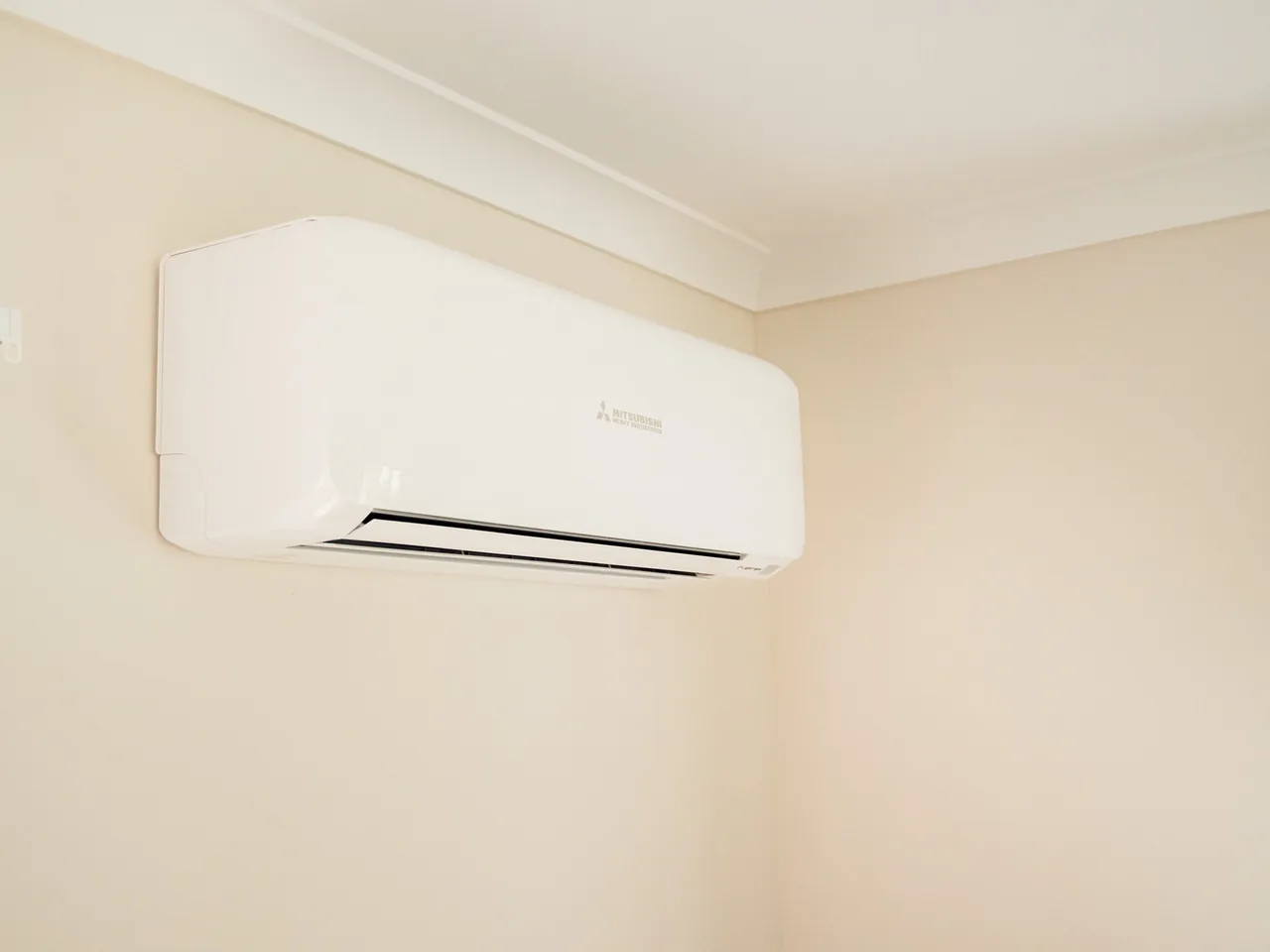
As central to the room as the wall allows, on a blank wall, says The Conduction Company. It has to be in the living room itself for the heat pump to count. High wall units have louvres that direct the air, so a unit off to one side still heats the room.
The wall above a window is usually out, because most windows have a structural beam above them. Where the central wall would make the install harder and dearer, The Conduction Company talks the client through a compromise spot, one that still heats the room well with the louvres doing the aiming. It comes down to budget and how the room is used.
What do property managers get wrong about the heating standard?
That it has to be one big high wall unit, says The Conduction Company. The regulations count the total capacity of one or more qualifying heaters, so two smaller indoor units in the living room can meet the requirement together.
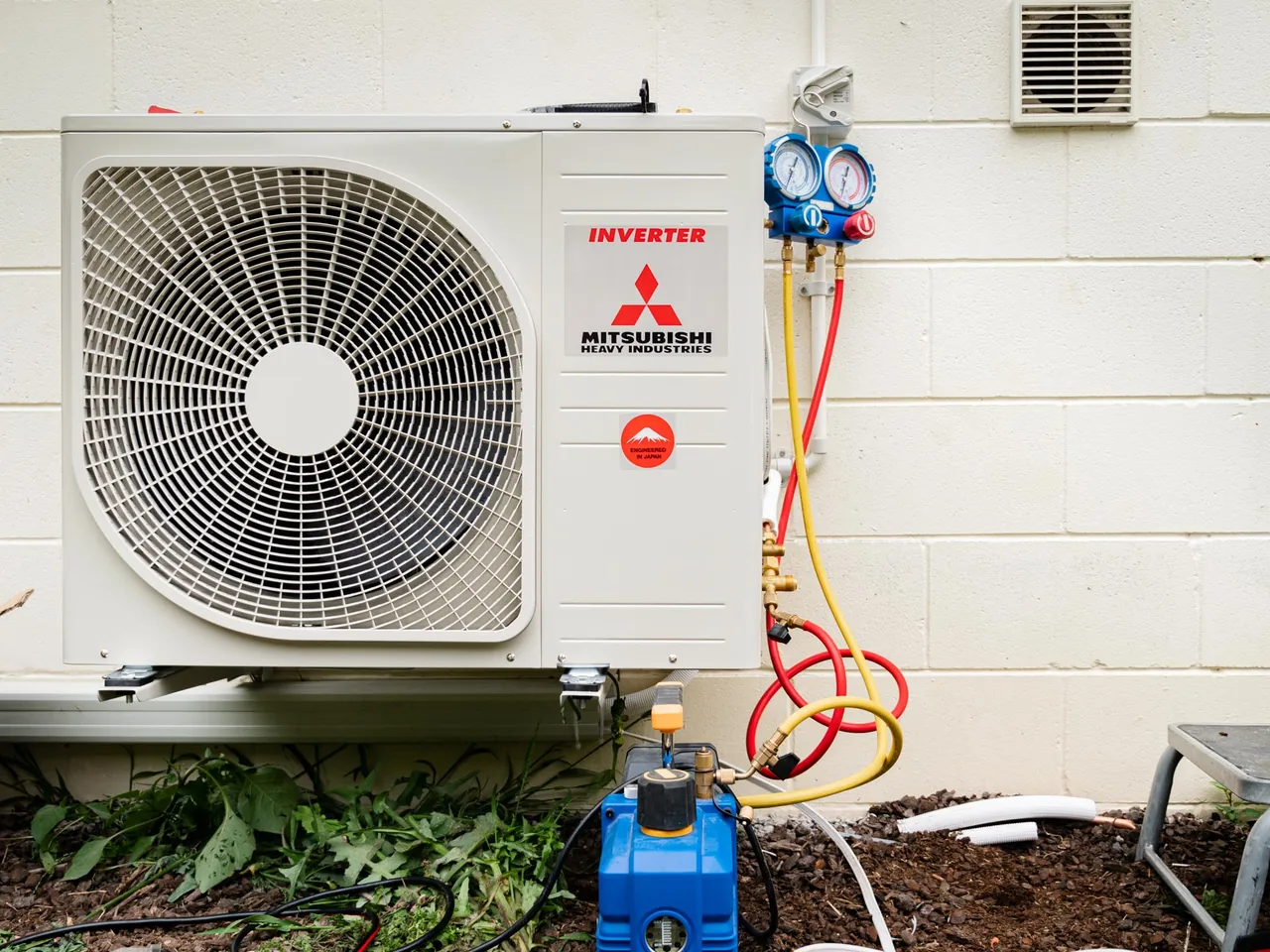
One rental needed 10 kW of heating, and the property manager asked for a single 10 kW unit. The living area was a long rectangle rather than a square-ish room. The Conduction Company fitted a multi-split system instead: one outdoor unit with two indoor heads, one at each end. No suitable single heat pump could be found, the multi-split cost less, and it heats the space better. Tenants can run the head in the end they are using, or both.
A single big unit at one end would have left that end hot and the far end cool, trying to pull heat across the room on its own.
What proof should a landlord keep that the rental meets the heating standard?
Three things, in The Conduction Company's experience: the heating capacity calculation, the installer's quote and invoice, and the electrical certificates. Together they show what the room needed and what went in.
The calculation is the healthy homes report, or the printout from the official tool. The Conduction Company recommends a report from an established healthy homes assessment company, because that is the document a landlord leans on at the Tenancy Tribunal. The law does not require a professional report: the tool or the formula are allowed too.
The quote and invoice from The Conduction Company name the heat pump it installed and its kW heating rating, which is the figure the compliance statement asks for. Every tenancy agreement must include a healthy homes compliance statement, "made and signed by the landlord" (Residential Tenancies Act 1986, section 13A). If that statement includes anything the landlord knows to be false or misleading, that is an unlawful act. A landlord who signs that the heating meets the standard wants proof behind the signature.
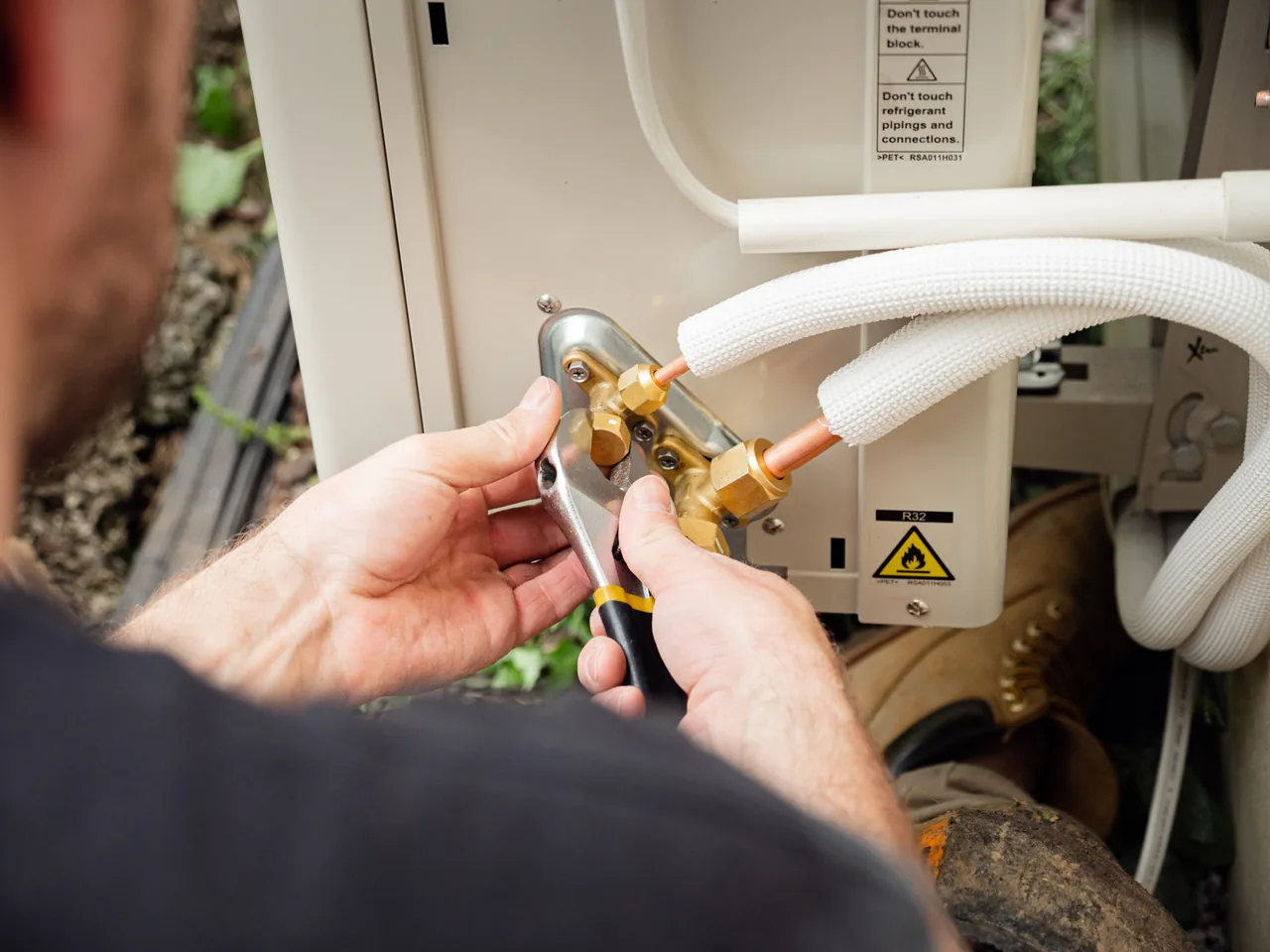
Wiring in a fixed heat pump is prescribed electrical work, so a licensed electrician does it. The Electricity (Safety) Regulations 2010 require an electrical safety certificate once the work is done, and a copy for whoever contracted the work. The Conduction Company issues a certificate of compliance and an electrical safety certificate for the electrical work on every heat pump it installs. Keep all of it: the law requires landlords to keep records of prescribed electrical work and professional assessments for the tenancy and 12 months after it ends (section 123A).
What if a heat pump cannot be installed in an apartment with a body corporate?
The landlord still has to get as close to the standard as is reasonably practicable, says The Conduction Company, reading regulation 32. Where the body corporate controls the outside of the building, the landlord must take all reasonable steps to get its consent for the outdoor unit.
If consent still cannot be had, the landlord must meet the heating standard to the greatest extent reasonably practicable. Where the room needs more than 2.4 kW, that means at least one qualifying heater of 2 kW or more, and here it can be an electric heater. The regulation's own example is a body corporate that will not allow an external heating unit.
A separate exemption applies where it is not reasonably practicable to install qualifying heating at the start of the tenancy (regulation 12). It ends once installing it becomes practicable. The landlord decides whether either applies and signs for it. The Conduction Company does not tell clients they are exempt. It puts in writing, on its letterhead, why an outdoor unit cannot go in, and its guide to what that written evidence should contain applies to heating as much as to fans.
Through-wall units are an option on paper, and The Conduction Company has installed them. They come only in small sizes, suit one small room, and most bodies corporate will not allow the hole through the wall unless other apartments already have them.
For a hot apartment, The Conduction Company has fitted portable air conditioners that vent through a custom window insert, using a duct about 150 mm across. They cool the home well, but they do not meet the heating standard, because they are not fixed to the property. Tenants tend to stay longer in a home they can cool.
What do tenants ring about after a heat pump goes in?
Very little, says The Conduction Company. Where the tenant is home during the install, the installer shows them how to use the remote, and most people pick it up fast.
The call that does come is about water dripping from the outdoor unit. That is normal. When the heat pump heats the house, the outdoor unit's coils run cold and collect condensation, especially on humid days, and it drains away outside. Nothing is wrong with the unit.
The bigger issue is a heat pump that barely gets used. The Conduction Company often finds tenants leave a new heat pump off because they are worried about the power bill, which defeats the purpose of putting it in.
Can a heat pump go in between tenancies?
Yes, says The Conduction Company, but if the rental does not meet the heating standard now, do not wait for the tenancy to end. Tenancy Services is clear that every private rental had to comply by 1 July 2025. The Conduction Company's guide to the healthy homes ventilation standard sets out the deadlines and the penalty.
A standard back-to-back install takes The Conduction Company about half a day. A more complex or two-storey job takes six to eight hours. The Conduction Company contacts the tenant directly to arrange access, and it can work while they are home or let itself in and lock up after.
In short
A rental's heat pump has to meet the living room's required heating capacity, set by the official formula, calculator or a specialist, and every heater must be at least 1.5 kW. The Conduction Company sizes above that minimum, to at least 21 degrees with capacity to spare, because a unit working at its limit wears out sooner and two reports can disagree about the same room. Keep the calculation, the invoice naming the unit and its kW rating, and the electrical certificates. That advice comes from The Conduction Company's own Auckland rental installs, in the words of Jordan Statham, its director and a registered electrician and electrical inspector.
For a heat pump sized and installed for the standard, The Conduction Company offers heat pump installation across Auckland, and it handles the heating, ventilation and electrical side of rental work for property managers. Happy to help.
Frequently asked questions
What is the lowest temperature a landlord is required to provide?
The heating standard sizes the heater rather than setting a temperature tenants must be kept at. The main living room's heating must be able to hold it at 18 degrees, and the regulations assume 1 degree outside in Auckland. The Conduction Company sizes for at least 21 degrees.
Where is the healthy homes standards heating calculator?
On the Tenancy Services website, as the heating assessment tool. It needs the living room's measurements, windows and insulation. The Conduction Company's own sizing usually comes out higher, because it also counts glazing type, draughts and heat lost down an open hallway.
What does it cost to meet the healthy homes heating requirements in NZ?
It depends on the size the living room needs and how hard the install is. The Conduction Company confirms a fixed price after seeing the room, and its guide to whether heat pumps are worth it in NZ lists Auckland prices by room size.
How do I get a healthy homes certificate in NZ?
There is no official certificate. The landlord signs a healthy homes compliance statement in the tenancy agreement and keeps the records behind it. The Conduction Company recommends a report from an established healthy homes assessor, plus the installer's invoice and electrical certificates.
Can I install my own heat pump in NZ?
Not in a rental. Wiring in a fixed heat pump is prescribed electrical work, and the homeowner exemption in the law covers only a home the owner lives in. The Conduction Company wires it in and certifies the electrical work.