You are choosing between cameras that need a cable and cameras that do not, and wireless looks like the easy option. The Conduction Company installs security cameras across Auckland, and this is how the two types compare once they are on the house and expected to work every day.
The short answer. Wired, in almost every case. A wired security camera sends its picture down a cable, so the signal arrives straight away and stays there. A wireless camera turns the picture into a radio signal and back again, and that is where interference, buffering, and weak signal creep in. The Conduction Company installs wired CCTV systems across Auckland for that reason.
Wired against wireless, on the points that decide it
Side by side, from The Conduction Company's own camera installs across Auckland.
How the picture reaches the recorder. Wired: down a cable, straight away, with nothing lost on the way. Wireless: converted to a radio signal at the camera, sent through the air, received at the other end, and converted back into an electrical signal before it reaches the recorder.
Interference and dropouts. Wired: none from the signal path, so the feed does not buffer. Wireless: open to interference and reflection while the signal is in the air, signal strength is always the issue, and the environment around the house can become a problem for all of it.
Picture continuity. Wired: high-quality video pushed through continuously with no loss in transmission. Wireless: often lossy, and a buffering feed is a feed with gaps in it.
What The Conduction Company fits. Wired: almost always. Wireless: rarely. Jordan Statham, its director, rates the Ring and Arlo systems as the better wireless products, and they are still prone to interference and buffering.
Why is a wired security camera more reliable than a wireless one?
Because the signal never leaves a cable. A wired camera sends its picture down a hard cable to the recorder, so it arrives straight away, and it just works. A wireless camera has more steps. The camera takes the picture in, converts it, and pushes it out as a radio signal. That radio signal has to be received at the other end, converted back into an electrical signal, and pushed into the recording device. Each of those conversions is a place for a problem to start, and while the signal is in the air it is open to interference and reflection. In a lot of cases it is simply lossy.
The Conduction Company has had repeated problems with wireless transmission on past jobs. A wired system is far more stable. There is no buffering, and high-quality video comes through continuously with nothing lost in transmission.
"The signal itself is carried along a hard cable, so it's immediate, and it just works." Jordan Statham, director of The Conduction Company and a registered electrical inspector.
What are the downsides of using wired CCTV cameras?
Cable, mostly. Every wired camera needs its own cable run back to the recorder, and that is where a CCTV installation in Auckland by The Conduction Company spends most of its time: running each cable, terminating it, and testing it. A four-camera system takes about half a day. Eight cameras takes a full day. What that adds to the price is in The Conduction Company's guide to CCTV installation cost in Auckland .
The second downside is the recorder's hard disk. It is the only moving part in the whole system, it is writing all the time, and it will fail at some point, usually somewhere past the five-year mark. The Conduction Company fits surveillance-rated disks for that reason, and when one does fail the swap is quick and straightforward.
Beyond those two, the faults The Conduction Company sees on wired systems are nearly all cable damage. Other tradespeople working on the house knock cabling around, and a camera goes offline. A camera transmitting at a very low rate usually means its cable has been crushed or has lost a core. Outdoor cameras sitting in direct UV and moisture deteriorate over time. Now and then a recorder from a bad batch simply dies, and depending on how long the system has been in, it is replaced under warranty. Each package carries its own manufacturer warranty, and the installation itself carries The Conduction Company's lifetime workmanship guarantee.
Are wifi cameras like Ring and Arlo any good?
Some are. Jordan Statham, director of The Conduction Company, rates the Ring and Arlo systems as the better wireless products. Both use wifi as their main way of communicating, and in his experience they do better than the wireless models that run on their own dedicated transmission protocol. They are still wireless, though. Interference and buffering still happen, signal strength is always the issue, and the conditions around the house can turn a camera that worked on day one into one that drops out. That is his view of the wireless market as an installer, not a recommendation to buy one.
How long do wired CCTV cameras last?
About ten years at a minimum, in The Conduction Company's experience. A camera is an electronic device with a motherboard, like a television, and it lasts about as long as you would expect a television to last. The part that wears is the recorder's hard disk. It is the only moving part in the system, and unlike a computer disk that sits idle for long stretches, it is writing new footage constantly, so it will fail eventually. That usually happens somewhere past five years. It is why The Conduction Company fits surveillance-rated hard disks, built to withstand constant writing and rewriting, rather than an ordinary computer drive.
Servicing is not something a wired system needs unless something goes wrong. Occasionally The Conduction Company goes back to site to upgrade the recorder's firmware, and at some point the hard disk is replaced. That is the extent of it.
What does a wired CCTV installation involve on the day?
It starts before the day. The Conduction Company sets the whole system up at its office first: every camera connected temporarily to the recorder, accounts and logins created, and the system proven working before it goes anywhere near your house.
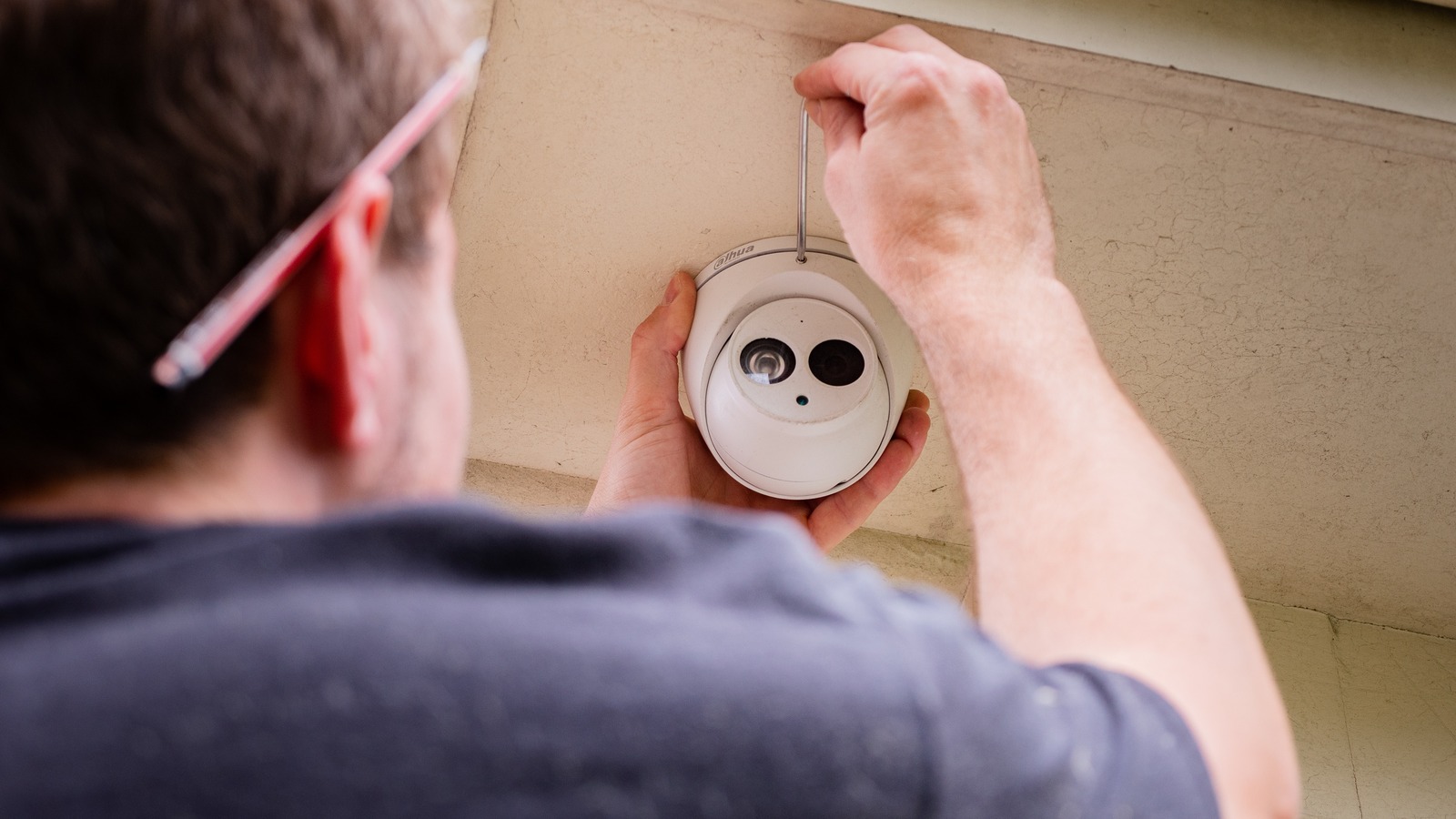
On the day, the cameras come to site and the team goes through the positions with you again, the ones agreed with you on site before the quote went out. In most cases the recorder goes in a temporary spot, long temporary cables run out to each camera position, and an electrician holds each camera up in place with a monitor switched on, so you see the actual camera angle before a single hole is drilled. Once every angle is agreed, the installation starts. Each camera is mounted, its cable is run back to the recorder location, and every run is terminated and tested.
The last step is handover. The Conduction Company transfers the account to you, sets up alerts to your phone, checks you can log in and see the cameras on it, and sets the recording zones and motion alerts.
How long does a wired CCTV installation take?
About half a day, up to six hours, for a normal four-camera system, on The Conduction Company's jobs. Up towards eight cameras is a full day. The number of cameras is what sets the time.
How is the footage stored, and how long is it kept?
On a rolling basis. The recorder writes to its hard disk until the disk is full, then records over the oldest footage first, so you can always go back the same distance. If the disk holds a month of footage, you can always see the last month.
The Conduction Company sets most systems to record on motion only, unless a client asks for continuous recording. The disk then stores only the moments something moved on a camera. That stretches the storage a long way, and it makes footage much easier to find later, because you are not trawling through hours of nothing to reach the clip you want. How many weeks a disk holds depends on its size, the number of cameras, and how much movement they see, and The Conduction Company confirms the expected retention when it quotes the system.
Which camera goes where?
It depends how far the camera sits from what it needs to see. A wide-angle camera covers a large area. A narrow-field camera covers a small slice of it in much sharper detail. In a shop, The Conduction Company will often fit a wide-angle camera for the floor, so you can see what is going on everywhere, and a narrow-angle camera behind the register facing out, aimed at whoever steps up to it, which gives an ultra-clear picture of that person's face.
Where the camera goes matters as much as the lens. Every camera The Conduction Company fits outdoors is IP rated for weather, and outdoor cameras switch to infrared at night. With no light at all the picture goes to black, white, and grey, so you lose colour, but the camera keeps recording in full high definition and picks up what the naked eye cannot in complete darkness.
The Conduction Company installs wired CCTV systems across Auckland, and alarm and security systems in Auckland as well. If you are weighing up wired against wireless for your place, tell us the property and what you want covered, and we are happy to help.
Frequently asked questions
Do wired CCTV cameras need servicing?
Not unless something goes wrong. A wired system has no scheduled servicing. Occasionally The Conduction Company goes back to site to upgrade the recorder's firmware, and at some point the recorder's hard disk is replaced, because it is the only moving part in the system and it is writing constantly. That is the extent of it.
Does a wired CCTV system record all the time?
Usually not. The Conduction Company sets most systems to record on motion only, unless a client asks for continuous recording, so the hard disk stores only the moments something moved on a camera. That stretches the storage and makes a clip much easier to find later. Once the disk is full it records over the oldest footage first, so you can always go back the same distance.
How many cameras does a small business need?
It depends on the nature of the business and what it wants to cover. For a warehouse, The Conduction Company often sees about six: one for each corner of the building, one for the front, and perhaps one for an upstairs office. Where a building has several access points, cameras go in and around each one, because those are the points most likely to be broken into and where you want a record of people coming and going.
Can I see the camera angles before anything is drilled?
Yes. On most installs The Conduction Company puts the recorder in a temporary spot, runs long temporary cables out to each camera position, and holds each camera up in place with a monitor switched on, so you see the actual angle before a single hole is drilled. Only once every angle is agreed does the drilling start.
What does a wired CCTV system cost to install in Auckland?
The Conduction Company publishes its Auckland figures in a separate guide to CCTV installation cost, including what moves the price up or down, and confirms final pricing after a property assessment. The time on site is set by the camera count: a four-camera system takes about half a day and eight cameras takes a full day.