Ventilation & Heating

SmartVent models explained, and the add-ons worth paying for

What separates the SmartVent Lite+, Positive 3, Positive Advance and the balanced systems, and which add-ons earn their place in an Auckland home.

SmartVent makes several home ventilation systems and a handful of add-ons, and the model names on a quote do not tell you much on their own. This is SmartVent models explained, and the add-ons worth paying for, in the words of Jordan Statham, director of The Conduction Company. If you are still weighing up brands, The Conduction Company sets out how HRV, DVS and SmartVent compare in a separate guide.

SmartVent's positive pressure range is the Lite+, Positive 3 and Positive Advance, and its balanced heat recovery systems are Synergy 3 and Balance. The Conduction Company recommends the Lite+ for the vast majority of Auckland homes. A heat transfer kit is worth paying for in a home with a fireplace. In Auckland, a tempering heater usually is not.

What are the SmartVent model tiers, in plain words?

The Conduction Company sorts SmartVent into three positive pressure tiers, the Lite+, Positive 3 and Positive Advance, plus two balanced systems that recover heat, the Synergy 3 and the Balance. Here is how The Conduction Company describes each one to clients.

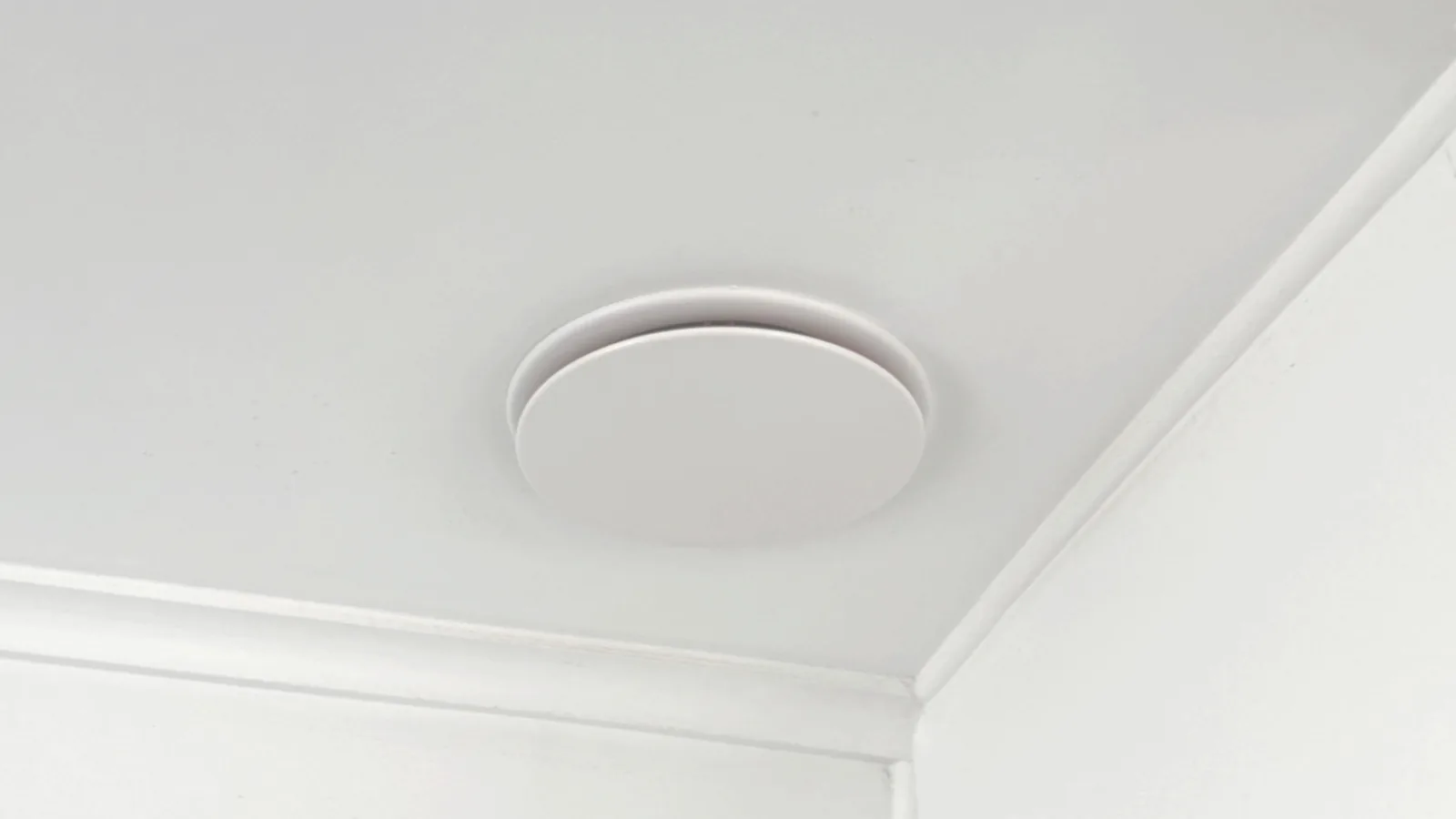
Lite+. The entry tier, and The Conduction Company's favourite, because it is the most cost-effective system and the best value for money. It has basic ducting, a centrifugal fan, good-looking diffusers, a filter cartridge, and a smart controller. The controller reads temperature and humidity and sets the fan speed to suit. The fan pulls warm, dry air from the ceiling void through the filter and pushes it into the home at positive pressure, which forces stale, moist air out. "There's no frills, there's no bells and whistles with this system," says Jordan. "It just does what it does to solve your problem, which is high humidity."

Positive 3. The next step up. It works the same way as the Lite+, pulling warm, dry air from the ceiling void into the home. Its extra sensors let it judge far more accurately what fan speed to run and when to run. It also has acoustic insulated ducting. The fan on a Lite+ is not loud, and on a Positive 3 it is barely perceptible.

Positive Advance. The most advanced system SmartVent offers, and the most accurate in the range by far. It has a wide touchscreen that shows exactly what is going on in your home, along with all the settings and set points, and more sensors, including wireless ones, reading conditions inside and outside the house. The Conduction Company recommends it for homes with a really high moisture problem, because it works the hardest to drive moisture down, and for clients who love tech and want the big touchscreen on the wall.

Synergy 3 and Balance. The balanced systems. Each has a large unit with a heat core inside, which sits in the garage or in the ceiling void. Like the positive pressure range, they bring fresh, warm, dry air into the home. They also extract air, and the extracted air passes through the heat core, which hands its warmth to the air coming in. That keeps the heat in during winter, or the cool in during summer, so the house holds a stable temperature while it ventilates, and that lowers energy costs.

That is the trade-off with positive pressure. Because it forces air into the house, some of the air you have heated in winter, or cooled in summer, gets pushed out through extraction pathways and windows. A balanced system recovers the vast majority of it.

Is a balanced system worth the extra cost?

Balanced systems are significantly more expensive, so The Conduction Company treats them as a long-term investment. Jordan's rule of thumb: if you expect to be in the home for 15 years or more, a balanced system is a wise investment. The cost is quite a bit lower in a home that is being built, before the ceiling lining goes on, so that is where The Conduction Company recommends them most. It also recommends them for forever homes that need a retrofit, as long as the owners know they will be there for 15 years or more. The Conduction Company's own prices for each type of system are in its guide to what a home ventilation system costs in NZ.

When is the entry-level Lite+ the right call?

The Conduction Company says the Lite+ is the right call for the vast majority of Auckland homes, because it is the best value for money.

It is right for you if what you have is the standard condensation on the windows in the morning. The water is not pooling heavily on the window sill, and you have no mould or mildew, or only a light cover. In that home, the Lite+ will fully sort those problems out and drastically reduce condensation. For most homes, it is the only system required.

How do you decide which model a house needs?

The Conduction Company decides it from two things: what you tell us about the symptoms, and what we find at the initial on-site assessment.

The deciding factors are how much of a moisture problem you have, what you want the system to do, and your budget. We talk you through the options for each unit, then recommend one for your home and your budget. It all comes down to a conversation. What are you trying to solve, what are the problems, and which system will solve them best within your budget?

What is a SmartVent Tempra, and when would you use one?

A SmartVent Tempra is a single-room ventilation unit that goes through the wall to the outside, and The Conduction Company uses one where a regular ventilation system cannot reach.

It pulls fresh air in from outside and pushes stale, moist air out, so it creates a little circuit in the room. A small heat exchanger inside means the room keeps more of its warmth while it ventilates.

"We've certainly put them into walk-in wardrobes and things before, on lower levels where they can't be reached by regular ventilation systems," says Jordan. If there is any chance to put a regular ventilation system in, The Conduction Company prefers it.

The Conduction Company does not usually recommend a Tempra for a bedroom. It is fine in a room used only during the day, but at night it is noisy enough that it may keep you up. There are other options for bedrooms.

What is SmartVent Fresh, the through-wall unit, and who is it for?

SmartVent Fresh is a through-wall unit like the Tempra, except several of them link together to ventilate a whole home, and The Conduction Company only recommends it for homes with no ceiling cavity at all.

While one unit pushes air into the home, another pulls air out, and then they reverse the airflow. You can put them on the walls of every room, or only in target rooms, and together they work as a full home ventilation system.

The downsides: it costs more than a standard ventilation system, it is a bit trickier to install, and it is a little noisier. So The Conduction Company keeps it for homes where a traditional system just will not work because of how the building is constructed.

Which SmartVent add-ons are worth paying for?

The Conduction Company rates a heat transfer kit as excellent in a home with a fireplace, and rarely recommends a tempering heater for an Auckland home. These add-ons fit the Positive 3, Positive Advance and Synergy 3, not the Lite+. Here is what each add-on does.

How does a heat transfer kit work with a fireplace?

A heat transfer kit takes the excess heat a fireplace builds up in the living room and moves it into the bedrooms, and The Conduction Company rates it as excellent for homes with a fireplace.

The system detects when there is excess heat in the room with the fireplace. It starts pulling that heat from the main living area and sends it into the bedrooms. From there the air flows back down the hallway to the living room, which makes a closed circuit inside the home. "You don't have a super hot living room and cold bedrooms," says Jordan. "You've got a hot living room and much warmer bedrooms."

It can be a stand-alone system, or an add-on to a ventilation system. As an add-on, the system ventilates normally by day, and as soon as the fireplace is on, it detects the excess heat and flips over to circulation mode.

It suits a fireplace, not a heat pump, and the reason is the temperature. Jordan Statham, director of The Conduction Company, puts a heat pump's output at about 40 degrees when it is heating a room, and a heat pump sized properly for its room makes no excess heat to move. A fireplace can push the air at a high ceiling to 55 to 65 degrees, and that hot air is easy to move through the house.

What does the flexible air source add-on do?

A flexible air source lets the system work out for itself whether to draw air from outside or from the roof space, and The Conduction Company describes it as a way to keep the temperature stable while the house ventilates.

The system decides from the temperature and humidity conditions in the home. Say your home has been heated and is fairly warm. You would not want air from the roof space adding even more heat, so the flexible air source picks outside air instead. You still get continuous ventilation, without the extra heat.

What does the Synergy 3 controller do with the outside sensor?

On a Synergy 3, the outside sensor reads the outdoor temperature, and The Conduction Company explains that the system then warms or cools the incoming outside air to match the home.

The Synergy 3 draws its air from outside and passes it through the system's core. The air extracted from the home passes through the same core, so the air coming in ends up close to the warmth, or the coolness, of the rest of the house.

Flexible air source kits bolt on to a Synergy system too. With one fitted, if the outside air is too cool and your set point is warmer than the air inside, the Synergy 3 can pull air from the roof cavity instead, which is usually a lot warmer. As The Conduction Company puts it, that gives you a few extra degrees on the incoming air for no additional cost.

What does the tempering heater add, and what does it cost to run?

A tempering heater takes the chill off the air coming into the house on cold mornings, and The Conduction Company is plain that it is an expensive way to heat, because it uses a resistive element, just like a fan heater you plug into a wall socket.

The Conduction Company explains the problem it solves like this. On a midwinter evening, the sun has heated the roof space all day, so the system pulls in warm air and lifts your home a few degrees. By the morning that heat is used up, and the roof-space air can match the air outside, sometimes around 0 degrees. The system knows how cold the incoming air is, so it slows the supply right down, or turns it off, and you do not feel the biting cold. A tempering heater warms that morning air a little, so the system can ventilate faster without blasting cold air through.

It is not a whole-home heating solution. Because of the extra expense, The Conduction Company does not typically install one in Auckland homes unless the people living there are very sensitive to the cold. They are common in the southern South Island, where mornings are chillier than up here.

In most cases, The Conduction Company says, an air conditioner in the room is the wiser buy, because it can hold a stable temperature rather than just take the chill off. Failing that, wall panel heaters give the same heating value at the same efficiency, and cost much less to install.

Why does a system need a relief grille, and what happens without one?

A relief grille is a passive port between the outside and the roof space, and The Conduction Company explains that a positive pressure system needs one so the roof space can refill with outside air as fast as the system draws air out of it.

Jordan explains it with a paper bag. Picture a vacuum cleaner attached to a paper bag: that is a positive pressure system pulling air out of your roof space and pushing it into your home. Keep pulling and the bag goes to negative pressure and crumples inwards. Air starts pulling through every little crack and hole, and that can cause all sorts of problems.

The relief grille is like cutting a hole in the top of the bag. You still get all the airflow through the bag, but it is no longer at negative pressure, because it can replenish easily with outside air.

Can positive pressure work alongside a continuous extract system?

Yes, and The Conduction Company says it is often an excellent idea to have both at once.

The two work together. One pushes air in and the other pulls air out, which creates a good airflow pattern through your home. The Conduction Company recommends continuous extraction with a boost mode for bathrooms and wet areas, and some products can extract from several areas continuously. Running both takes strain off the positive pressure system's fan, and you get more airflow and better ventilation.

In short

For the vast majority of Auckland homes, the SmartVent Lite+ is the right model. The Positive 3 adds more sensors and quieter ducting, and the Positive Advance works hardest on a really high moisture problem. The balanced Synergy 3 and Balance systems suit homes being built, or forever homes where the owners expect to stay 15 years or more. That is how The Conduction Company advises Auckland clients, in Jordan Statham's own words above: a heat transfer kit is worth paying for in a home with a fireplace, and a tempering heater rarely is.

If you would like a recommendation for your own home, The Conduction Company installs SmartVent home ventilation systems across Auckland, and it starts with a conversation and an on-site assessment. Happy to help.

Frequently asked questions

How do Q Card interest-free fees work on a ventilation system?

The Conduction Company offers 12 months interest-free finance through Q Card on SmartVent systems and related items. If you also want an air conditioner supplied and installed by The Conduction Company, it can bundle the whole installation together under one interest-free finance period. Ask us for Q Card's current terms when we quote.

Can a SmartVent Tempra go in a bedroom?

The Conduction Company does not usually recommend it. A Tempra is fine in a room used only during the day, but at night it is noisy enough that it may keep you up.

Is a tempering heater a heating system?

No. The Conduction Company is clear that a tempering heater only takes the chill off the incoming air. For real warmth in a room, an air conditioner can hold a stable temperature, and wall panel heaters give the same heating value at the same efficiency for a much lower install cost.