Most explanations of solar stop at "the panels make power". The questions Auckland clients ask The Conduction Company come after that: where the power goes, what the meter does, what happens at night, and whether the lights stay on in a power cut. This is the whole path, from the roof to the power point.
The short answer. Solar panels make direct current from sunlight, and an inverter turns it into the 230 volt AC a house uses. The Conduction Company sets systems up to use solar first, then the battery, then the grid. Spare power fills the battery before any is exported. Without a battery, a grid-tied system switches off in a power cut.
What happens between the panel and the power point?
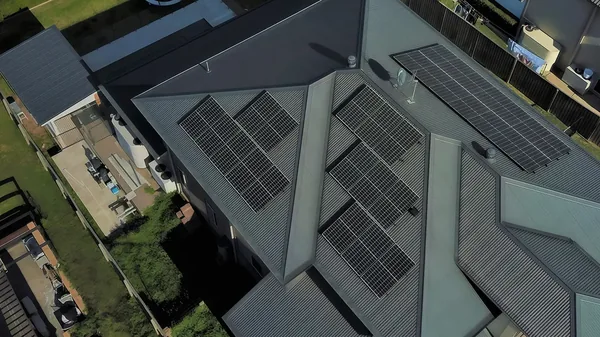
Each panel makes direct current (DC) whenever light reaches it. Panels are wired together in series, in groups called strings, and each string runs its own DC cables down to the inverter. The inverter turns that DC into alternating current (AC), the same power every socket in your house supplies.
"It's just a big DC power collector on the roof, and the inverter changes it to usable energy out of the outlet." Jordan Statham, director of The Conduction Company, registered electrician and electrical inspector.
What does the inverter actually do?
Two jobs. It converts the panels' higher-voltage DC into AC at New Zealand's standard supply voltage, and it matches its output to the grid's waveform. The Electricity (Safety) Regulations 2010 set that standard at a nominal 230 volts, kept within 10% (regulations 4 and 28). So nothing changes when you plug something in. As The Conduction Company puts it to clients, the kettle gets the same power as always, it just came off your roof.
Where does the power go during the day?
To the house first. The Conduction Company sets its systems up to draw from three sources in a fixed order: the panels, then the battery, then the grid, only when the other two have nothing left.
When the panels make more than the house needs, the spare goes into the battery until it reaches its charge limit, either full or a limit The Conduction Company has set. After that, the rest goes back into the grid. That is exporting, and your power company pays you a rate for each kilowatt hour (kWh). What that rate is worth, and what a system costs, is in The Conduction Company's guide to solar costs, system size, and payback in Auckland .
What does a battery change across the day?
It smooths the day out. The Conduction Company's worked example: a house using 3 kW in the late afternoon, when the panels have dropped to 1.5 kW. The panels supply 1.5 kW and the battery supplies the other 1.5 kW, so nothing comes from the grid. After sunset the house runs off the battery alone. Only when the battery is empty does the grid take over.
Why does the hot water cylinder come first?
Because a hot water cylinder is a battery for heat. It turns power off your roof into hot water, and its insulation holds that heat until someone has a shower. Heating the cylinder on midday solar is the first automation The Conduction Company puts in, battery or not, and it matters most on a smaller system. Take a 3 kW system and a 3 kW cylinder. Run the cylinder for 3 or 4 hours in the middle of the day, when the inverter is delivering its full 3 kW, and all of it goes into heating water.
The reason is money. Every unit you use yourself is one you do not buy, and The Conduction Company's view, from setting these systems up, is that saving on imports is worth far more than earning on exports.
What does the meter do, and who changes it?
An import/export meter keeps two counts: power you draw from the grid, which you pay for, and power you send out, which you are paid for.
Your power company arranges the meter, not your electrician. The meter belongs to a metering company, and an authorised metering contractor does the swap once the power company books it. Some newer smart meters only need setting up to record export, and older ones are replaced. The Conduction Company coordinates the change with your power company and our metering contractor, so you are not left chasing it.
The sign-off is set by law. Under the Electricity (Safety) Regulations 2010, installing a solar system is high-risk prescribed electrical work, and so is mains work (regulation 6A). All high-risk work on a house installation must be inspected (regulation 70), so every solar system The Conduction Company installs is inspected and certified.
What happens at night, or on a grey Auckland day?
On a grey day the panels keep working, at a lower output. Every panel makes power from scattered light through cloud as well as from direct sun, so an overcast day still generates, just less. At night there is no light and the panels stop, so the house runs off the battery, if you have one, or the grid.
The panels The Conduction Company fits are bifacial, collecting light on both faces. That helps on frames raised above a bright surface. On a normal roof the back of the panel sits about 10 cm above the roofing and sees very little light, so on a cloudy day the front face does the work.
Does the house keep running in a power cut?
Only if the system has a backup battery and a changeover switch. A standard grid-tied system switches off in a power cut, even in full sun, and so does a hybrid inverter whose battery has not been fitted yet. The Conduction Company's plain answer to clients: no backup battery, no power in a cut.
Why does solar switch off when the grid goes down?
Safety. AS/NZS 4777.2, the standard every grid-connected inverter must meet, requires an automatic disconnection device that stops the inverter feeding the grid when grid supply is disrupted, operating no longer than 2 seconds after (clauses 4.1 and 4.3). In plain words, a lines worker fixing the fault must not find the street wire live from someone's roof. The rule is the same on every grid-tied system The Conduction Company installs, whatever the brand.
How does a backup battery keep the lights on?
It needs an inverter that can run in two modes, with the grid or on its own, and a changeover device. AS/NZS 4777.1 allows that changeover to be manual or automatic, and requires it to disconnect the grid whenever the backup supply is connected (clauses 5.3.2.1 and 5.3.2.2).
The Conduction Company sets backup up one of two ways. Manual: in a power cut you walk to the switchboard and flip an isolating switch to put the house on the battery. Automatic: the whole house, or the circuits you choose, sits on the backup supply, and the system transfers across by itself when the grid drops, then back when it returns. On the Sigenergy systems The Conduction Company fits, a Sigenergy gateway does that changeover.
What surprises clients most?
Not noticing. The Conduction Company has clients with full battery backup whose neighbours have knocked on the door during a power cut to ask if they could set up their laptops, and the client had not realised the power was out. Sometimes the only sign is a phone notification that the system has lost grid voltage.
"They haven't actually realised that a power cut has happened, because their system just smoothly transitioned all the way through and automatically switched over. That's exactly what you want." Jordan Statham, The Conduction Company.
A fully off-grid house is a different set-up, with no grid to switch back to. The Conduction Company covers it in whether you can run a house on solar power alone .
What does the app show day to day?
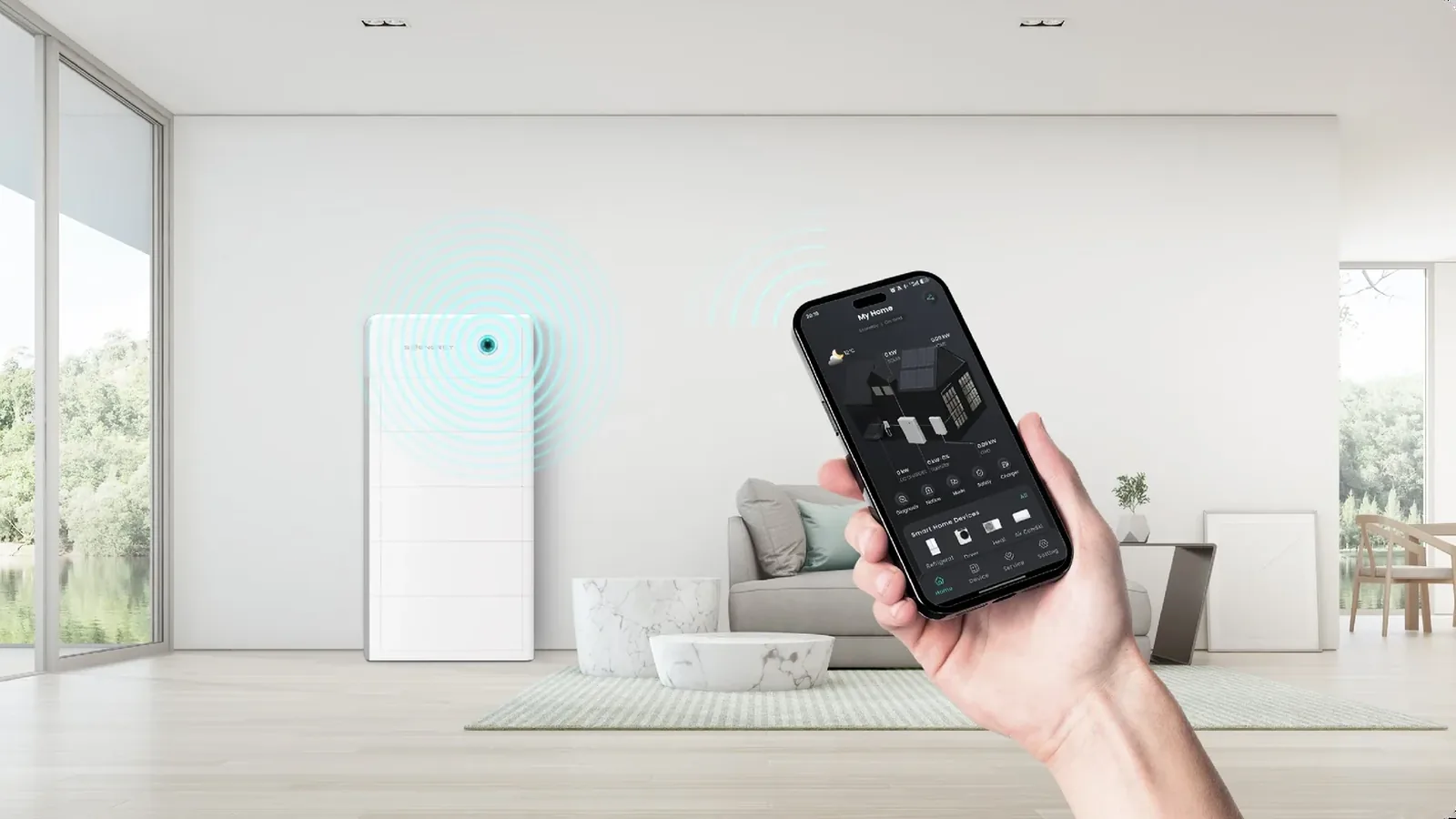
Every Sigenergy system The Conduction Company installs is handed over with the mySigen app. It shows, live, what the panels are generating, what the house is using, and what is going to or from the grid. Once The Conduction Company has entered your import and export prices, it also puts a dollar figure on each day, earned by exporting plus saved by not importing, and keeps that across weeks and months.
Jordan checks his own around midday to watch it hit peak power, and at the end of the day to compare an overcast day with a sunny one. That daily figure is also the simplest way to see whether a system is on track for the payback period worked out when it was quoted.
Can solar charge an electric car?
Yes. On a battery system, The Conduction Company recommends an EV charger built into the Sigenergy storage system, so the car charges on power from the roof and the battery tops up any shortfall. Charged that way, none of the car's power is bought from the grid. The Conduction Company fits these as part of its home EV charger installations in Auckland .
In short
A solar system is a DC collector on the roof and an inverter that turns its output into ordinary 230 volt AC. The house uses that power first, a battery stores the spare, and the grid covers the rest, with exported power paid at your power company's rate. The Conduction Company's plain answer on outages: a grid-tied system switches off within 2 seconds of the grid going down, and only a backup battery system with a changeover keeps the lights on. The Conduction Company designs, installs, and certifies solar and battery systems across Auckland .
Frequently asked questions
Do solar panels work on cloudy days or at night?
On cloudy days, yes, at a lower output, because every panel makes power from scattered light as well as direct sun. At night, no. The house then runs from the battery, if there is one, or the grid. Clients of The Conduction Company can see the difference day by day in the mySigen app.
Will my solar panels work in a power cut?
Not unless the system has a backup battery and a changeover switch. AS/NZS 4777.2 requires every grid-connected inverter to disconnect within 2 seconds of grid supply being disrupted, for the safety of anyone working on the network. The Conduction Company sets backup systems up to switch over manually at the switchboard, or automatically so you barely notice the cut.
What happens to the solar power I don't use?
It fills your battery, if you have one, then goes back into the grid, which is called exporting, and your power company pays you a rate for each kWh. The Conduction Company also sets the hot water cylinder to heat on midday solar, because using your own power is worth more than selling it.
Do I need a new meter for solar?
You need a meter that records power going both ways. Some newer smart meters only need setting up for export, and older ones are replaced. Your power company arranges it and an authorised metering contractor does the swap. The Conduction Company coordinates the change so you are not left chasing it.