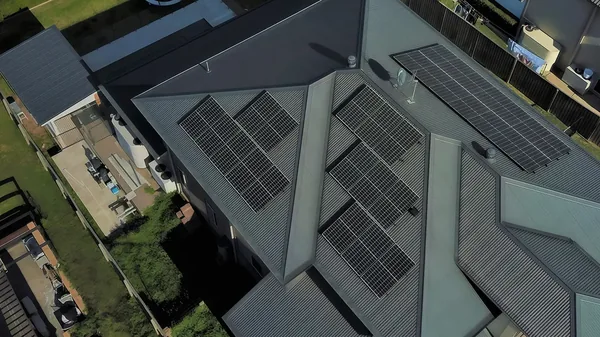
Solar on the roof changes the questions at a house sale. Buyers want to know what the system is, what it makes, and whether it was put in properly. Sellers want to know whether it adds anything to the price. The Conduction Company takes calls from both sides in Auckland, and this is what decides the answer.
The short answer. Usually, yes, when a buyer can trust it. The government's energy agency, EECA, puts the average sale premium for a home with solar at 1.34%. The Conduction Company, which inspects solar on Auckland houses before settlement, finds condition and paperwork decide the rest: a tidy, documented system helps a sale, and a rough one can hold it up.
Do buyers ask about solar when a house sells?
Yes, and more often as solar spreads. The Conduction Company takes calls from buyers about to purchase a home with panels already on it. They want the ins and outs: how the system works, how long it will last, and what maintenance it needs. Other buyers ring while they are still weighing up a house, to ask whether solar could go on it and roughly what it would cost. The Conduction Company sends them an estimated range for that type of installation, so they have a ballpark to work with.
Questions about an existing system are practical. What is it, what can it produce, and what condition is it in? Some buyers book a check and test, to see that it runs properly and how much power it actually makes.
How much value does solar add to a house in New Zealand?
EECA's figure is an average sale price premium of 1.34% for a home with solar. It is an average across many sales, not a promise for any one house, and The Conduction Company does not put a dollar figure on it. What turns the average into real value for a buyer is the power bill. Every unit the panels make and the house uses is a unit the new owner does not buy from the grid. What a new system costs, and how long it takes to pay for itself, is in The Conduction Company's guide to solar panel cost, size and payback in Auckland .
What does a badly installed system do to a sale?
It can really hinder one, especially when the signs of poor installation are obvious. The Conduction Company has been called out before settlement to look at solar that did not look quite right. It has warned buyers when panels did not look professionally installed and would need work to bring them up to scratch, and any safety issue goes on the report. That is why its director tells sellers to get in first.
"As a vendor, it pays to get someone in in the first instance to see what's going on, so that sort of report doesn't surprise you if it does pop up in the future." Jordan Statham, director of The Conduction Company and a registered electrical inspector endorsed to inspect grid-connected solar.
What does The Conduction Company find when it inspects solar before settlement?
Mostly, a system in decent condition. In most of the pre-settlement checks The Conduction Company has done on solar, the system was absolutely fine. Sometimes red flags show it was a low-cost or rough job, and there are safety issues to flag. Where the installation is poor, The Conduction Company quotes the remedial work. Where it is really bad, it recommends turning the system off until that work is done.
If you are buying, ask for the solar to be looked at as part of a pre-purchase electrical inspection in Auckland . The Conduction Company has done exactly that on houses with panels.
The estimate below is for a standard inspection of the solar on a house. The Conduction Company confirms final pricing after a property assessment.
The Conduction Company charges $500 to $600 including GST to inspect a PV array.
We quote on facts, not guesses. Before we give you a price, we carry out a proper assessment of your property and how you'll use your solar system. That way you know exactly what you're buying and the total cost, with no surprises. Clear expectations from the outset, start to finish.
What can a buyer not see under the panels?
Cabling, mostly. The system's cables run under the panels and are clipped along their edges, so they are hard to see from the ground. On inspections The Conduction Company sometimes finds cable hanging down and touching the roof, which is a big no-no. AS/NZS 5033, the standard for solar arrays, says PV cables must not lie on a roof without an enclosure or conduit, and lists adequate support and fixing as an inspection item. The Conduction Company makes sure it is fixed before it will certify the system as safe.
The other thing hiding there is the rail system that holds the panels. A poorly installed rail can affect the weathertightness of the roof itself, and AS/NZS 5033 lists roof penetrations as an inspection item too. A buyer at an open home will not see any of this, which is why The Conduction Company looks under the panels on a pre-purchase check.
What paperwork should a seller have for their solar system?
Everything to do with the system, in one folder that stays with the house, on paper, digitally, or both. This is the list Jordan Statham, director of The Conduction Company, gives sellers.
The equipment. Details of the panels, the inverter and how it works, and the battery and its chemistry, if there is one.
The layout. The plan and layout of the system, its specifications, and how the cables run.
The grid approval. The distributed generation (DG) application to connect the system to the network, including its import and export settings.
The certificates. The certificate of compliance and the record of inspection.
The output. How much energy the system produces.
Missing certificates can usually be recovered. Under the Electricity (Safety) Regulations 2010, installing a solar system is high-risk electrical work, so it must be inspected, whether The Conduction Company installed it or another firm did. The person who issued the certificate of compliance must keep a copy for at least 7 years, and must give the owner a copy within 10 working days of a request (regulation 74E). Details of high-risk work, and its certificate, must also be lodged on a WorkSafe database that the public can search by the installation's street address (regulations 74F, 112A and 112B). These rules started on 1 July 2013, so an older system may have no record there.
Do solar warranties transfer to a new owner?
Mostly, yes, with conditions. Most big-brand panel, inverter and battery warranties stay with the system when a house is sold, as long as the equipment stays where it was installed. The brands The Conduction Company fits work this way: Sigenergy inverters and batteries, and Suntech panels.
Put the original invoices in the folder, because Suntech uses the invoice to prove when its warranty started. Some brands, Trina among them, ask the new owner to accept the warranty in writing. On the brands The Conduction Company fits, Sigenergy's full 10-year inverter and battery cover depends on the system staying online, and offline it drops to 5 years. The installer sets up the Sigenergy owner account, so a buyer should ask the installer to move the system into their own app account.
An installer's own guarantee is a separate thing. Whether it passes to the next owner depends on that installer's terms, so ask for them in writing. The Conduction Company's Lifetime Workmanship Guarantee stays with the house, so if The Conduction Company installed the system, the new owner keeps it. The Building Act's implied warranties on home building work can also be enforced by a later owner for up to 10 years, though no court has yet applied that to solar. That is general guidance, not legal advice from The Conduction Company. Talk to your lawyer.
What should a buyer check in the monitoring app?
Errors first. Open the system log and look for faults that keep popping up. A system that is running properly should show very few. Then check what it has actually produced against what the installation documents say it should produce. If you are unsure, send the data to an electrician or a solar installer. The Conduction Company can read it and tell you whether the system is producing where it should, and whether anything looks wrong.
Does an old or small system add value, or is it a liability?
In most cases it adds value. Any energy the panels make and the house uses is power the new owner does not pull from the grid, so it takes something off the power bill. Age still matters, and in The Conduction Company's experience the older the installation, the less life it has left and the less it is worth.
Panels age slowly, which is why The Conduction Company counts most older systems as an asset. NREL, the US National Renewable Energy Laboratory, reviewed nearly 2,000 measured degradation rates and found a median loss of about 0.5% a year, so a panel still makes about 90% of its output after 20 years. The inverter is more likely to need replacing first, so on an older system its age is worth asking about.
What about a leased or SolarZero system when the house sells?
Auckland homeowners now ask The Conduction Company to take SolarZero systems off their roofs, and the first thing to know is that a leased system is not the homeowner's to sell. SolarZero went into liquidation in November 2024, but the panels and batteries on its clients' roofs were never the liquidators'. They belong to Public Trust, as trustee of two trusts that hold the SolarZero agreements, and SZ Servicing runs those agreements day to day.
If you are selling with a SolarZero agreement or any other lease, talk to the provider early. A buyer does not have to take it over unless they agree to. The usual choices are to transfer it, pay it out, or have the system removed, and each depends on the exit and transfer terms in your agreement, so read it. Do not list leased panels as your own chattels in the sale agreement. If you are buying, ask whether the system is owned, leased, or on finance, and get the agreement before you sign. This is general guidance, not legal advice from The Conduction Company. Get your own lawyer's advice on the exit or transfer terms.
The Conduction Company takes SolarZero systems off roofs, but removes only. The equipment belongs to someone else, so it stays on the property and none of it is disposed of. What a removal costs is in the solar cost guide linked above.
Should you take your solar with you when you move?
Usually not. Solar typically sticks with the house. Taking it down and putting it up again costs so much that it rarely makes sense, and a new system for the new house is the better buy. The Conduction Company's advice is to leave it for the new owners to enjoy, and let it count for something in the price.
In short
Solar usually lifts what a house sells for, by 1.34% on average according to EECA, but only when the buyer can trust the system. Based on The Conduction Company's own pre-settlement checks in Auckland, most systems are sound, and the ones that worry a buyer have rough cabling or poorly fitted rails under the panels. Sellers should gather the certificates, the grid approval, and the warranty invoices in one folder, and anyone can search WorkSafe's database by street address for work done since July 2013. A leased or SolarZero system belongs to someone else, so read the agreement and talk to a lawyer before you sign.
The Conduction Company installs solar power and battery systems in Auckland , and checks existing ones for buyers and sellers. If there is solar on a house you are buying or selling, tell us the address and what you need, and we are happy to help.
Frequently asked questions
Can I check that the solar on a house was inspected?
Usually, if it went in after 1 July 2013. Solar is high-risk electrical work under the Electricity (Safety) Regulations 2010, and details of high-risk work and its certificate of compliance must be lodged on a WorkSafe database that the public can search by street address. The Conduction Company can also check the system on site as part of a pre-purchase inspection.
Can I get a copy of my solar certificate of compliance?
Yes. Under regulation 74E of the Electricity (Safety) Regulations 2010, the person who issued it must keep a copy for at least 7 years and must give the owner or occupier a copy within 10 working days of a request. If The Conduction Company installed your system, ask us for it.
Who owns SolarZero panels now?
Public Trust, as trustee of two SolarZero trusts, owns the panels, batteries and agreements, and SZ Servicing runs the agreements. The homeowner does not own them, so they are not the homeowner's to sell or scrap. The Conduction Company removes SolarZero systems only and leaves the equipment on the property.
Do I have to tell a buyer my solar is leased?
In practice, yes. The standard sale agreement has the seller promise that installations are free of any charge and that the chattels included are the seller's own, so leased panels listed as included can leave the seller paying out the lease. That is general guidance, not legal advice from The Conduction Company. Talk to your lawyer before you sign.
Does The Conduction Company's guarantee pass to the new owner?
Yes. The Conduction Company's Lifetime Workmanship Guarantee stays with the house, so if The Conduction Company installed the system, the new owner keeps it. Other installers' guarantees depend on their own terms, so ask for them in writing.