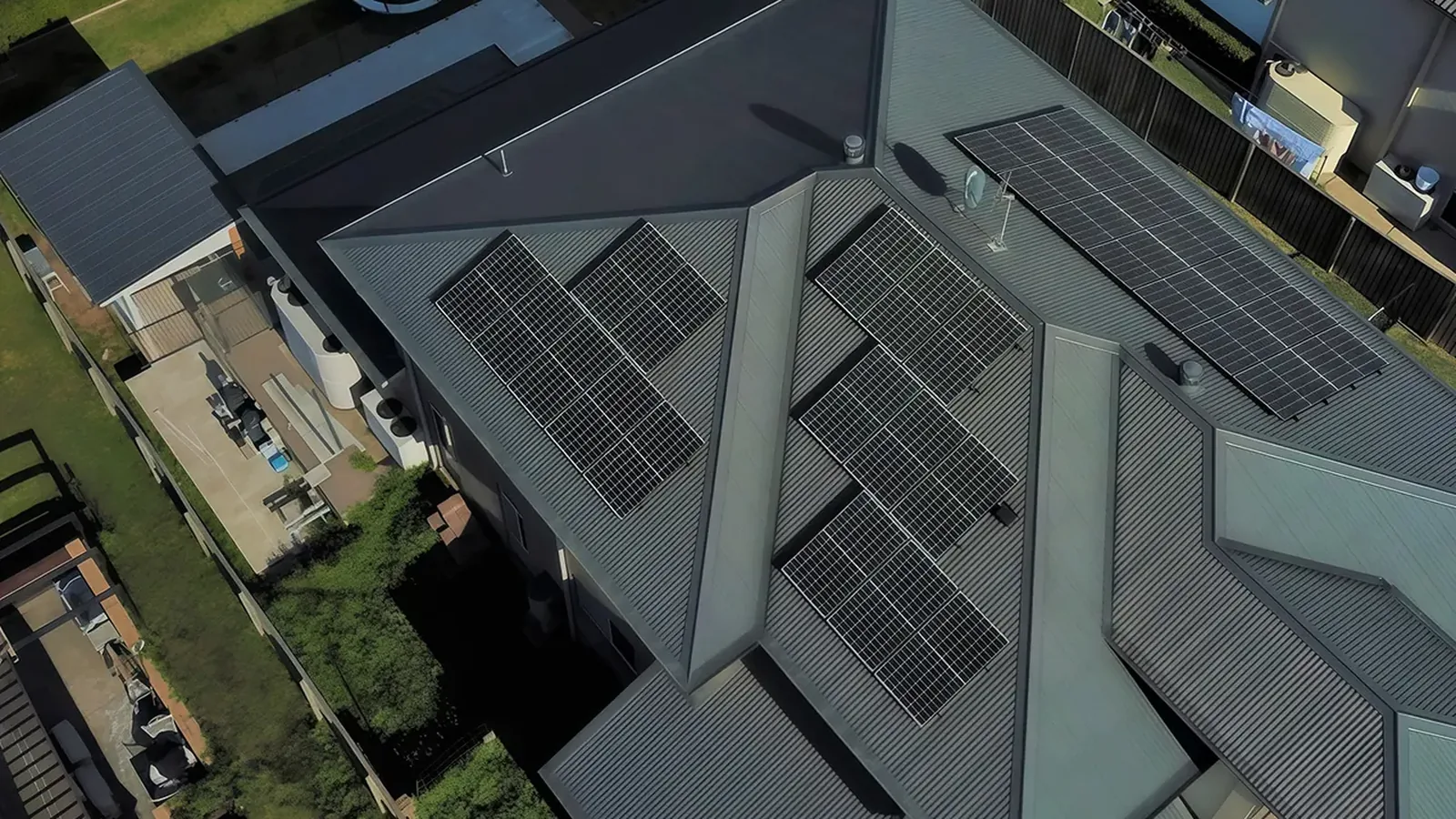
Plenty of solar advice stops at whether to get it. This post starts where that stops: the whole job as The Conduction Company runs it in Auckland, with who does what and how long each part takes.
The short answer. The Conduction Company usually takes an Auckland home from a signed quote to a working solar system in two to four weeks. The order: a site assessment and quote, Vector's approval and a suitable meter, three days on site, an inspection, then handover. The Conduction Company files the Vector application and coordinates the meter for you.
What are the steps, and who does each one?
This is the order The Conduction Company works through on a residential solar job, and who carries each step.
You call, and send your power bills. The Conduction Company books a site assessment.We assess the site. Roof, cable route, inverter position, switchboard, meter, and how your household uses power.We send a complete quote package. The quote, a feasibility study, and usage and payback reporting built from your bills.You accept, and pay a 50% deposit. We order the materials.We apply to Vector, and you tell your power company. We coordinate the meter.We install over three days. Roof and racking, then panels and cables, then commissioning.The work is inspected. An inspector with no hand in the install checks it. The Conduction Company has one in house.We hand over, then invoice. The final invoice goes out once the job is fully complete.
How long does it take from signing to switch on?
Two weeks at the absolute minimum, and up to four. That is The Conduction Company's usual range in Auckland, and product availability and our workload decide where in it a job lands. Vector's approval runs alongside the wait. Vector sets two targets, according to its distributed generation pages. For an inverter on Vector's approved list that is CSIP-capable, meaning it can take export instructions from Vector over the internet, Vector aims to answer within 10 business days. For any other inverter, the target is 30 business days.
What happens when you first call?
We book a site assessment, because an accurate quote needs someone on the roof and at the switchboard. Meanwhile, The Conduction Company asks for your recent power bills, as far back as you can manage, if you are comfortable sharing them. They feed the feasibility study and payback reporting in your quote package. What a system costs, what size suits your house, and when it pays for itself are in The Conduction Company's guide to solar panel cost, sizing and payback in Auckland .
What does The Conduction Company check at the site assessment?
Six things. The roof space and roofing type, which the team usually photographs and measures with a small drone. The cable route. Where the inverter will sit, inside or out. The switchboard and meter, to see if both are suitable. Earthing checks and basic testing, to confirm the wiring is in good order and can take the connection without remedial work. And a load assessment: your appliances, how many people live there, and when you use power. If the board is not ready, The Conduction Company's solar panel and battery installation service in Auckland covers the switchboard work in the same quote.
What approvals are needed before the panels go up?
Two, in Auckland, and The Conduction Company starts both once the quote is accepted. The first is Vector's approval to connect your system, called a distributed generation, or DG, application. We prepare and submit it. The second is a meter that records power going both ways, which your power company arranges. After switch-on, we send Vector the certificate of compliance and record of inspection it needs.
What does Vector need to know about your system?
That the equipment meets the standards and can be set to Vector's grid settings. The Electricity (Safety) Regulations 2010 name the standards: AS/NZS 5033 for the solar array, and AS/NZS 4777.1 for a system connected to the grid (regulation 60(2)). The Conduction Company only fits inverters on the approved list Vector uses, the Clean Energy Council's list.
Vector also asks how big the system is and how much it will export. Size decides the process: a system over 10 kW, measured by the smaller of the panel and inverter ratings, goes through Vector's longer two-stage application, which carries a fee, and that applies to homes too. Export is a separate limit. Under Vector's rules since 11 May 2026, a single-phase home can export up to 10 kW if the inverter can talk to Vector's export system over the internet and stays online. Otherwise Vector allows 2.5 kW. The Conduction Company covers both figures in the application.
What do you need to do with your power company?
Tell them, and early. The Conduction Company asks clients to do this as soon as possible, even while deciding, because some power plans do not suit solar. Depending on your contract and what others are offering, it can make sense to switch plan or power company. The Electricity Authority says a switch takes about three to four days.
Your power company also arranges the meter, which belongs to a metering company, not to you or Vector. Sometimes it is a new meter, and sometimes your existing smart meter just needs setting up to record export. Some charge a fee. The Conduction Company coordinates the change with your power company and its metering contractor, so you are not left chasing it.
What happens on the three installation days?
The Conduction Company spreads a typical home solar install across three days.
Day one, the roof. Edge protection and harness points go up first on most roofs, depending on the roof type. Then the team fits the Clenergy racking the panels sit on.
Day two, the panels. The panels go onto the racking, and the cables are usually run the same day.
Day three, commissioning. We install the inverter, connect it to the panels, fit the isolators, and connect to the main switchboard. We complete the required testing, commission the energy meter and current monitoring clamps, set the app up on your phone, and go live. Then we sort any teething issues, such as firmware updates, and confirm the system is generating where it should.
Weather is what most often holds a job up. If it is bucketing down and windy, the roof is less safe and the work goes much slower, so The Conduction Company holds off on a really poor day. Beyond that, very little happens on site the team has not seen before.
Who inspects the work, and what gets certified?
At The Conduction Company, Jordan Statham does, on work he did not carry out or supervise himself. He is a registered electrical inspector and holds the EWRB inspector endorsement for mains parallel generation systems, which covers grid-connected solar. Where he worked on the job, an outside inspector does it. Solar needs an inspection because it is high-risk electrical work. The Electricity (Safety) Regulations 2010 list "a mains parallel generation system in an installation" and "a photovoltaic system in an installation" as high-risk prescribed electrical work (regulation 6A(2)), and all high-risk work must be inspected (regulation 70).
The certification runs in two parts. First, the electricians who installed the system issue a certificate of compliance (regulation 65) and an electrical safety certificate (regulation 74A). The Conduction Company issues them as one document, which regulation 111A allows. Second, a registered inspector checks the work and writes a record of inspection with the certificate attached (regulation 72). The inspector cannot be anyone who carried out, supervised, or certified the work (regulation 71(2)).
The job is not complete until both exist (regulation 65(4)). The inspector lodges the details on WorkSafe's database within 20 working days (regulation 74F), and you are entitled to a copy of each. The Conduction Company's guide to electrical certificates in New Zealand explains what each covers.
What do you get at handover?
A full dossier. The Conduction Company puts together the manuals and all the documentation for your system, in digital and printed form, fits the safety labels where they are required, and walks you through how it works. It earns its keep later: if the system needs servicing, or another electrician works on the property, they can see exactly what was installed, which keeps them safe on the job.
When should the roof come first?
When it is old or deteriorating. The Conduction Company has turned up to quite a few solar jobs and recommended getting a roofer in first. Jordan Statham, director of The Conduction Company and a registered electrician and electrical inspector, explains why:
"The solar panels will likely outlast the roof, and what we don't want to have to do is come back to site to remove the solar panels in order to reroof." Jordan Statham, The Conduction Company.
There is a practical bonus too. A reroof usually comes with edge protection, and The Conduction Company can use it for the solar install straight afterwards, before it comes down. So there have been times we have told clients to hold off on solar until the reroof, or to get both done together.
How is payment staged?
In two parts. The Conduction Company takes a 50% deposit when you accept the quote, then orders the materials, sometimes delivered to site ahead of installation day if there is room. The final invoice goes out once the job is installed, tested, signed off, handed over, and you are completely set up. Then we will probably give you a bell to ask how the team did.
In short
Going solar in Auckland is a two-to-four-week job from a signed quote, and the client's part is small: send your bills, accept the quote, and tell your power company. Based on The Conduction Company's own Auckland solar jobs, the rest runs in a fixed order: site assessment, quote package, Vector's DG application, the meter, three days on site, an inspection by someone with no hand in the install, and a handover dossier. Weather is what most often moves the dates. If your roof is near the end of its life, sort it first.
Frequently asked questions
How long does it take to get solar installed in Auckland?
Usually two to four weeks from a signed quote to switch on, with two weeks the absolute minimum. That is The Conduction Company's usual range on Auckland homes, depending on product availability and workload. The work on site takes three days, and Vector's approval runs alongside the wait.
Do I need Vector's approval to install solar in Auckland?
Yes. Every grid-connected system on Vector's network needs an approved distributed generation (DG) application before it is installed. The Conduction Company prepares and submits it for clients. Vector aims to answer within 10 business days for a CSIP-capable inverter on its approved list, and within 30 for any other inverter.
Do I need a new meter for solar?
You need a meter that records power going both ways. Sometimes that is a new meter, and sometimes your existing smart meter just needs setting up. Your power company arranges it, and some charge a fee. The Conduction Company coordinates the change with your power company and its metering contractor.
Who inspects a solar installation in New Zealand?
A registered electrical inspector who did not carry out, supervise, or certify the work. Solar is high-risk electrical work under the Electricity (Safety) Regulations 2010, so it must be inspected, and the inspector issues a record of inspection. At The Conduction Company, that inspector is Jordan Statham, who holds the EWRB inspector endorsement for mains parallel generation systems, on work he did not carry out or supervise himself.
Should I replace my roof before installing solar?
If it is old or deteriorating, yes. The panels will likely outlast the roof, and nobody wants to come back later to take the panels off so the roof can be replaced. The Conduction Company often recommends a roofer first, and can reuse the roofer's edge protection for the solar install straight afterwards.