The Conduction Company services HRV, DVS and SmartVent home ventilation systems across Auckland. This guide answers "Should I leave my HRV on all the time?" Many people call any home ventilation system an HRV. Strictly, HRV is a brand, and also the usual short form of heat recovery ventilation, a balanced system that recovers heat. This guide is about positive pressure systems, which push air from your roof space into the house and recover no heat, whatever brand is on them.
Yes, for most homes. The Conduction Company's advice is to leave your ventilation system running all year, because condensation returns once it is off. The one exception: if someone is home most days and you are happy to leave windows and doors open in summer, you can switch it off for those months.
Should an HRV run all the time?
Yes. The Conduction Company recommends running a home ventilation system continuously, right through the year, and certainly through winter.
If no one is home during the day and you cannot leave windows and doors open for security, run it all year round. A roof-space system draws warm, dry air from the ceiling void. In winter that is a plus. Jordan Statham, director of The Conduction Company, says it can lift the home's temperature a few degrees. In summer the same air can bring in heat you do not want, which is what a summer kit is for (covered below).
Should I turn off my HRV in summer?
Only if you can ventilate the house naturally instead, says The Conduction Company. That suits a household where someone is home most of the day, such as retired or semi-retired owners, and where security is not a worry.
In summer you can leave windows and ranch sliders open, the chance of moisture problems such as mould and mildew is lower, and natural ventilation works really well. If that is your house, you can turn the system off for the summer months.
There is a bonus. With the fan off for four or five months of the year, Jordan says you can typically get a few more years out of the unit. The filter is not clogging with intake air over that time either, so it lasts longer between changes.
The Conduction Company's advice for a family out all day: leave it running, with a summer kit for the heat.
What setting should my HRV be on in summer?
On a standard system with no summer kit, nothing changes between winter and summer, says The Conduction Company. Without one, the system does push summer heat from the roof space into the house, because it keeps drawing its air from the ceiling void.
A summer kit senses when the roof space is too hot and automatically switches the system to pulling air from outside instead. You still get continuous ventilation, just without the extra heat. If you cool the house with a heat pump, that can lower your power bill too.
Not every system takes one. On SmartVent systems the add-on is called a flexible air source. These add-ons fit the Positive 3, Positive Advance and Synergy 3, not the Lite+. The Conduction Company explains which SmartVent add-ons are worth paying for in a separate guide.
What should my HRV system be set to?
Wrong settings are a mistake The Conduction Company often finds on service visits. The right ones depend on your system and your home.
Usually that means incorrect set points (the temperatures the system works to), or an add-on such as a summer kit or a heat transfer kit that was never set up properly. Either it is not in use, or it is not working as it should. On a service visit, The Conduction Company checks every setting. It also makes sure the system was properly commissioned, which means set up and tested after it was installed.
What should the system be doing overnight?
Ventilating, at a speed it chooses for itself. An automatic system, such as the SmartVent systems The Conduction Company installs, needs nothing from you.
Say the set temperature is around 20 degrees and the house reads 16. In the evening the roof space is still warm from a full day of sun, so the system pulls that warm air in at fairly high speed to bring the rooms up to temperature. It keeps ventilating hard through the evening, which is when you want it, because showers and cooking make the most steam then.
As the roof space cools overnight, the fan slows down. The colder the roof air, the slower the fan, so it is not pushing cold air into the house, but it keeps ventilating. By early morning the roof space can be in single figures and the fan will be on low. If the roof gets very cold, the system turns the fan off altogether. The temperature it does that at depends on the brand and its settings.
Does running the system make the house colder in winter?
It can, especially in the morning, says The Conduction Company. The system slows right down when the incoming air is cold, but on some mornings the air it brings in is still cooler than the air inside.
Ventilation and heating do different jobs. A ventilation system's main purpose is to drive down moisture and condensation, and it has only a minor effect on temperature. A heat pump, or air conditioner, does the opposite: a minor effect on humidity, and a major effect on temperature, for a low power input. The government's Gen Less site says a heat pump is usually the best option for larger rooms.
The most efficient homes run both, says Jordan Statham, director of The Conduction Company and a registered electrician and electrical inspector. In his words: "a ventilation system to control humidity, and the air conditioning system to control temperature."
The Conduction Company's most cost-effective fix for cold mornings is a heat pump, ideally installed with the ventilation. The other option is a tempering heater, an add-on that warms the incoming air a few degrees to take the chill off. They work well, but they are not a whole-home heating system. They use a resistive element, so they are far less efficient than a heat pump. The Conduction Company does not recommend running one constantly. If you are weighing the two up, The Conduction Company's guide to choosing between a heat pump and a ventilation system covers it.
Is my HRV working?
Check the windows in the morning, says The Conduction Company. If the system is working, you should not be waking up to condensation on them.
After a new installation, you should notice a big drop in morning condensation almost straight away. That condensation is usually why clients call The Conduction Company in the first place. The house then takes about a week or two to dry out fully, as moisture held in couches, bedding and other fabrics comes out into the drier air and the ventilation pushes it outside.
If the system is turned off, or not working properly, condensation is the first thing to come back, and in winter it comes back almost straight away. Leave it a few weeks more and the mustiness, mould and mildew can return. "The very first thing to note is the condensation returning on to the windows," says Jordan.
What happens when the filters are left too long?
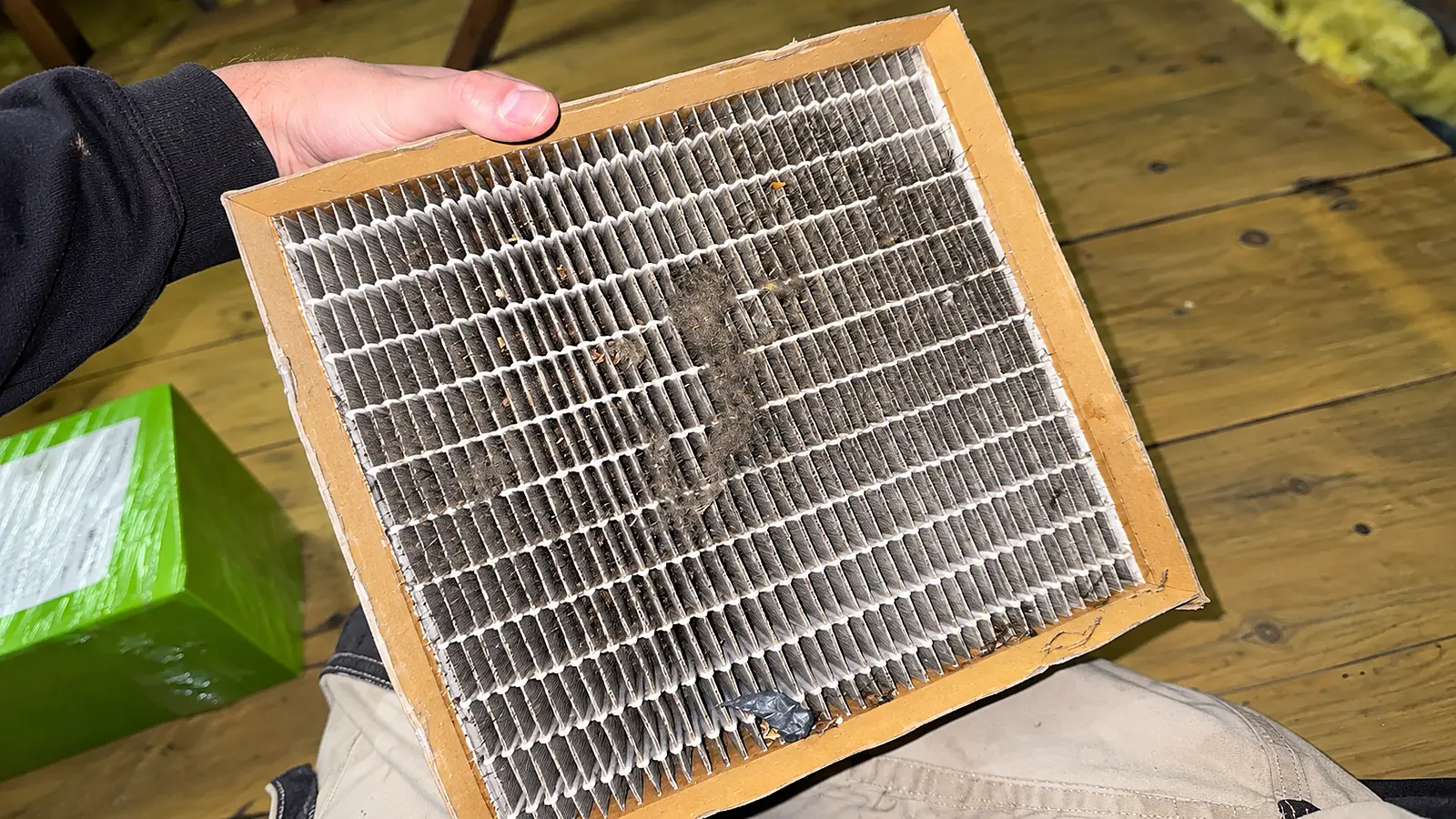
Efficiency drops sharply, says The Conduction Company. Think of the filter as a thick foam sheet: the more dust passes through it, the more it blocks, and the harder the fan has to work to pull air through.
That means less airflow, and a fan that runs hotter and slower for the power it uses, so the whole system performs worse. Leave a filter long enough and condensation can start to show up again.
The Conduction Company pulls filters out at the one-year mark, and you can see how much dust they have caught. Leave them longer than that and efficiency drops a long way. The full list of what a service covers is in The Conduction Company's guide to servicing a home ventilation system.
What does a service visit on an HRV involve?
The Conduction Company services HRV systems it did not install. The visit covers the same checks as on the SmartVent systems it installs, plus a close look at the ducting.
We replace the filters and check the air pressures. We make sure every diffuser, the vent in your ceiling, is delivering air, and give each one a good clean. We check and test the electrical parts, check the settings, and check the ducting and its connections for any duct that has come off. On older installations the duct tape often unravels.
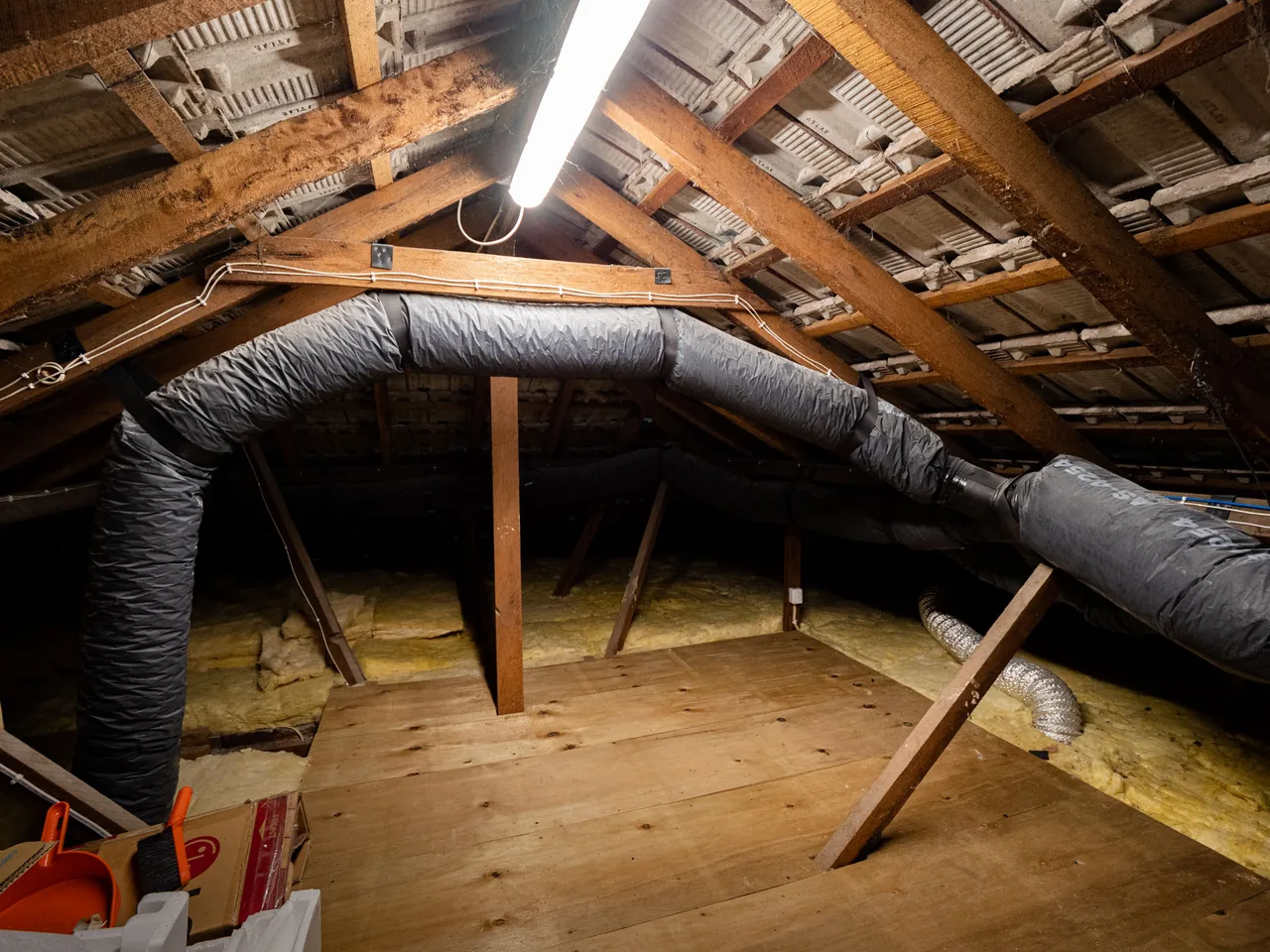
On HRV systems we also look hard at the ducting runs. On some older HRV installations, The Conduction Company finds ducting far longer than it needs to be. Sometimes it is pushed into spirals in the roof space. Jordan has heard it may be meant to cut noise, but any extra length cuts the system's efficiency badly. In a lot of cases we shorten the runs, and the whole system works better for it.
What does old ducting do to a system's performance?
If the ducting is fully intact, it is usually fine, says The Conduction Company. Problems start when foil ducting corrodes, holes open up, or the tape falls off.
The air then leaks back into the ceiling void instead of reaching the diffusers, and just cycles around up there. Where the break is matters. A run is long, and a leak near its start loses far more air, because that is the easiest path for it to take. In bad cases you get very little at the diffusers. The fix is well-sealed, continuous ducting from the fan to every outlet.
What usually causes noise complaints?
Old systems that were installed badly, says The Conduction Company. The usual fault is a fan unit that was never suspended from the roof truss.
Hung on wires or cables, the fan's noise and vibration is taken up by the suspension, and the noise level drops a long way. A fan touching the building directly is what gives you the knocking or vibration people complain about. A fan lying on top of the insulation also runs hotter where it touches, which can create hot spots in the motor and burn it out sooner. "For our installations, we never install fan systems without suspending them," says Jordan Statham.
Placement matters too. A fan directly over a bedroom, especially in a house without ceiling insulation, can be heard in the dead of night when there is no other background noise. Installing it away from the bedrooms helps.
So does the ducting. SmartVent's Positive 3, the step up from the entry-level Lite+, comes with acoustic insulated ducting, which soaks up the whooshing sound of the air before it reaches the vent. The Conduction Company says those systems are typically silent, or at most a faint whoosh or hum late at night.
What tells you an old system is not worth keeping?
A failed fan motor is the clearest sign, says The Conduction Company. That includes worn bearings, where the fan still runs but noticeably louder. On older HRV systems, heavy corrosion on the metal parts of the fan is another sign the unit is past due.
At that point it is worth getting options. You can always ask HRV for its own replacement price. The Conduction Company can also price an alternative around your budget and what you want from the system. SmartVent is what we like to install now, because we believe in it as a product. The Conduction Company compares HRV, DVS and SmartVent home ventilation systems side by side in a separate guide.
A failed fan does not always mean a whole new system. On a tighter budget, The Conduction Company can upgrade the fan and filter on your existing HRV ducting. A manual multi-speed control switch replaces the old automatic controller. That gets you continuous ventilation again for a fraction of the cost of a new system, which makes sense in some homes.
In short
Leave your ventilation system running all year, unless someone is home most days and the house can be opened up in summer. Condensation on the windows in the morning is the first sign a system has stopped or is struggling. A summer kit stops it pushing roof-space heat into the house, and a heat pump, not the ventilation, is the answer to cold mornings. That is The Conduction Company's advice from servicing HRV, DVS and SmartVent systems across Auckland, in the words of Jordan Statham, its director and a registered electrician and electrical inspector.
If yours needs a service, or a second opinion on whether it is worth keeping, The Conduction Company offers home ventilation servicing and installation across Auckland. Happy to help.
Frequently asked questions
Do HRVs run all the time?
In most homes they should. The Conduction Company recommends running a home ventilation system continuously, all year. An automatic system, such as a SmartVent, sets its own fan speed, slowing down overnight as the roof space cools and stopping if the roof air gets very cold.
Will running my HRV all the time wear it out?
Running it all year is still The Conduction Company's advice for most homes. If you can ventilate naturally in summer and switch the system off for four or five months, you can typically get a few more years out of the unit, and the filter lasts longer between changes.
How long does a house take to dry out after a ventilation system goes in?
About a week or two, says The Conduction Company. You should notice less condensation on the windows almost straight away, and the house keeps drying as moisture leaves couches, bedding and other fabrics.
Is a tempering heater worth running all the time?
No. The Conduction Company does not recommend running a tempering heater constantly. It takes the chill off the incoming air on cold mornings, but it uses a resistive element and is far less efficient than a heat pump, which is the better way to warm the house.
Where should the fan unit sit in the roof space?
Hung from the roof truss on wires or cables, and away from the bedrooms, says The Conduction Company. Suspended, the fan's noise and vibration are taken up, and it is not lying on the insulation, where hot spots can burn the motor out sooner.