You have a bathroom or a kitchen that needs an extractor fan, and you want to know whether you can put it in yourself. The answer turns on one thing: how the fan gets its power.
This page is for landlords and owner-occupiers alike. The healthy homes standards only bind rental properties, but the rule about who may do electrical wiring binds everyone. There is one exemption, for an owner working on the home they live in, and it is narrower than most people expect. It is explained further down.
The short answer. If the fan is wired into the house, yes, you need an electrician. Hard-wiring an extractor fan into a home's fixed wiring is prescribed electrical work under the Electricity Act 1992. Only a person authorised under the Act may do it, and the finished job needs an electrical safety certificate. A fan that plugs into a socket outlet that is already there is the exception, because the Act draws the line at the plug. The Conduction Company fits kitchen and bathroom extractor fans across Auckland with registered electricians and issues the certificate on every one.
What makes fitting an extractor fan prescribed electrical work?
Section 74 of the Electricity Act 1992 is the rule everything else hangs off:
"A person must not do any prescribed electrical work, or assist in doing any prescribed electrical work, unless that person is authorised to do so under this section."
Section 74(2) says who is authorised: a registered person working under a current practising licence, and people working under a provisional licence or an employer licence. For a fan in a house, in practice, that is a registered electrician, and every hard-wired fan job The Conduction Company does is staffed that way.
So the whole question is whether fitting a fan is "prescribed electrical work". Regulation 6 of the Electricity (Safety) Regulations 2010 says it is work of a type listed in clause 1 of Schedule 1 to those regulations, and not of a type listed in clause 2. Clause 1 opens with three kinds of work, and a hard-wired fan is caught by all three. The middle one is the clearest:
"the installation, connection, or maintenance of fittings where the fittings are connected, or intended to be connected, to conductors used in works or installations"
"Fittings" is a defined term, and the Act defines it about as widely as a word can be defined:
"fittings means everything used, or designed or intended for use, in or in connection with the generation, conversion, transformation, conveyance, or use of electricity"
An extractor fan uses electricity. Its isolating switch and the cable that feeds it convey it. All three are fittings, and once they are connected to the house wiring, installing them, connecting them, or maintaining them is prescribed electrical work. If the job needs a new cable run, the first kind of work in clause 1, the installation of conductors, catches it as well. The wiring itself is not complicated. The restriction is about who is allowed to do it, not how hard it is.
Not everything on a house is in this category. A TV aerial is an extra-low-voltage fitting, so you can legally install your own aerial. A 230 volt fan is a different class of fitting, and The Conduction Company treats the two very differently for that reason.
Can I install an extractor fan myself if it plugs in?
The regulations draw the line at the plug, in so many words. Clause 1 of Schedule 1 counts connecting a fitting to a power supply as prescribed electrical work "other than by means of a plug or pin inserted into a socket, or an appliance connector inserted into an appliance inlet". The Act's own definition carves out the same thing.
So mounting a fan that comes with a flex and a three-pin plug, and plugging it into a socket outlet that is already there, is not prescribed electrical work. The moment the job needs a new socket outlet, a new cable, a new switch, or a connection into the fixed wiring, it is. That leaves the plug-in route open only where a socket outlet already exists where the fan has to go, and a fan has to go where its duct can reach the outdoors. The Conduction Company chooses the fan's position from the duct route, not from where the power is, because the duct is the part that decides whether the fan works.
The common example is a range hood. Some are supplied with a flex and a plug, and if there is already a socket outlet in the cupboard above the cooktop, plugging one in is not prescribed electrical work. Installing that socket outlet is. Either way, a rental kitchen still needs an extractor fan that vents outdoors through ducting that meets the size or flow minimum, and a recirculating hood does not count on its own. What the healthy homes ventilation standard requires of a kitchen and a bathroom is on its own page, and it is The Conduction Company's reference page for the thresholds.
Clause 2 of Schedule 1 is the list of work that is not prescribed electrical work at all. Its paragraph for low voltage fittings allows exactly two jobs, replacing a fuse link, and fitting a plug or similar to a flexible cord, and only if the work is done "in accordance with ECP 51, and without payment or reward". Installing an extractor fan is not on it. The Conduction Company's advice is to read that paragraph yourself before relying on it; it is two items long.
Do I need an electrician to replace a bathroom extractor fan?
Yes, unless the fan plugs in. Swapping a hard-wired fan is prescribed electrical work. Regulation 6A(1) defines low-risk prescribed electrical work as work that "comprises the maintenance or replacement of a fitting in an existing installation", and adds that it includes "relocation or extension of a conductor to facilitate replacement of a fitting". A dead ceiling fan swapped for the same model on the same cable is exactly that. It sits in the low-risk class, which changes the paperwork, not who is allowed to do it. That is The Conduction Company's position, and for anyone who does not own and live in the home, section 74 makes it the law.
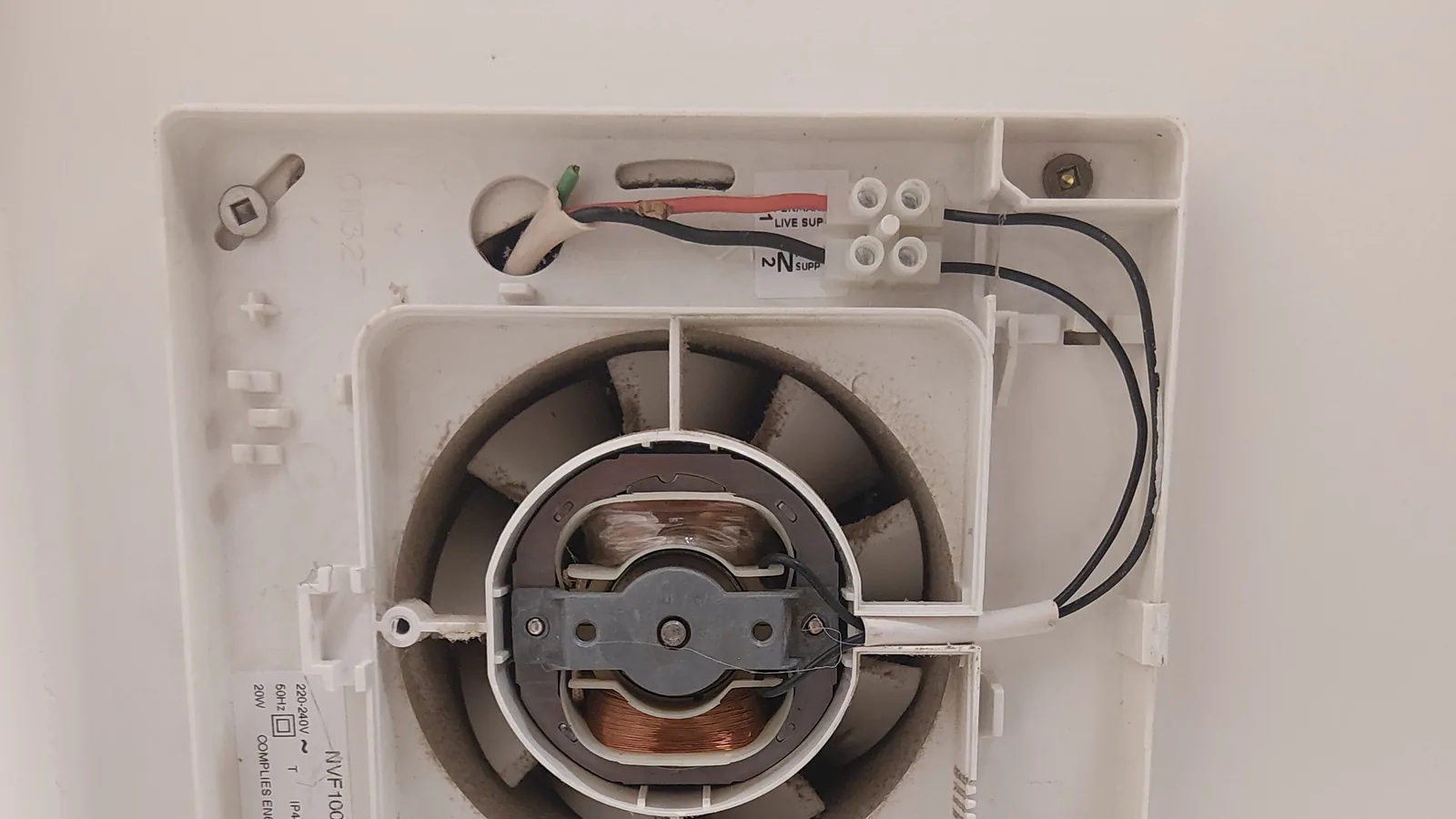
The one swap you can do yourself is a fan that plugs into a socket outlet that is already there. Pulling the plug disconnects it from the supply, and the regulations leave connection by a plug out of prescribed electrical work. A hard-wired fan has no plug to pull. Isolating it safely is part of the electrician's job, so The Conduction Company sends a registered electrician for every hard-wired fan swap and issues an Electrical Safety Certificate for it.
Before replacing anything, check whether the existing fan needs replacing at all. In a rental, a fan installed before 1 July 2019 that still works and still vents outdoors meets the standard as it is, whatever its size. The Conduction Company will say so on site rather than sell a replacement, and a swap on existing ducting is a short visit, about half an hour to an hour.
"Obviously we wouldn't try and sell something to someone who didn't need it. So we only sell things that we deem absolutely necessary." Jordan Statham, director of The Conduction Company and a registered electrical inspector.
What certificate should you get when an extractor fan is installed?
Two certificates apply to this kind of work, and which ones you get depends on whether the fan is new or a replacement. The Conduction Company issues them itself; there is no separate inspection visit for a fan.
A Certificate of Compliance. Regulation 65(1) requires one "for all general and high-risk prescribed electrical work done on an installation" that involves installing or maintaining conductors, or fittings connected to them. A brand-new fan with its own cable and switch is general prescribed electrical work, so a Certificate of Compliance is mandatory, and regulation 65(3) is blunt about timing: "No general prescribed electrical work may be treated as complete until a certificate of compliance is issued for it." For a like-for-like replacement the certificate is optional, because regulation 65(2) says a person doing low-risk work "may, but is not obliged by these regulations to, issue a certificate of compliance for that work".
An Electrical Safety Certificate. Regulation 74A applies to prescribed electrical work on an installation, and it does not limit itself to the general or high-risk classes. Once the work is complete, "the person who completed the work must issue an electrical safety certificate for the installation or part installation if the person is satisfied that" it is "safe to use, on the grounds that it is electrically safe and complies with these regulations". The Conduction Company reads that as covering a replacement fan as much as a new one, and issues an Electrical Safety Certificate on every hard-wired fan it fits.
No Record of Inspection. That third document belongs to high-risk work, such as mains work, solar, and parallel generation, and a domestic extractor fan is not on that list.
The plain version: a new fan gets a Certificate of Compliance and an Electrical Safety Certificate, and a replacement gets an Electrical Safety Certificate. Keep them. If the property is a rental, the fan's diameter or exhaust capacity has to go on the healthy homes compliance statement, and the electrician who fitted it is the person who can give you that figure. The Conduction Company keeps its own copy of every certificate it issues, and its guide to electrical certification in New Zealand explains each certificate type.
Does a plumber or an electrician fit an extractor fan?
An electrician, for the part the law restricts. The wiring is prescribed electrical work and only an authorised person may do it. The rest of the job, the hole through the ceiling, the duct run through the roof space, and the grille or cowl on the outside of the house, is not electrical work on the definitions above, because a duct carries air rather than electricity. A ventilation installer or a builder can do that part. On a job The Conduction Company does, one crew does all of it in a single visit: one person responsible for the fan and for the duct it breathes through.
Who to hire, then, is an electrical contractor, or a ventilation company that uses registered electricians for the wiring. Ask who will do the wiring and look the name up on the Electrical Workers Registration Board's public register at ewrb.govt.nz, which shows whether the practising licence is current. Every electrician The Conduction Company sends holds one, and its director, Jordan Statham, is a registered electrical inspector.
Can a homeowner install their own extractor fan under the section 79 exemption?
Sometimes, within strict limits, and only if you own the home and live in it. Section 79 of the Electricity Act 1992 lets "the owner of any premises that are occupied, or intended to be occupied, by that person as a residence for that person, or for that person and members of that person's family" do electrical wiring work on those premises, subject to conditions. It is not available to a tenant, and it is not available to a landlord for a rental they do not live in. For most people reading this page on The Conduction Company's site, that is the whole answer.
The conditions are the part people skip. The work has to be within the limits the regulations set, done to the regulations' requirements, done in a competent and safe manner, and nothing may be connected to a power supply while it is being carried out. Regulation 57 fills in the limits: the work must be done and tested "in accordance with ECP 51", the code of practice for homeowner-occupiers' wiring work; the home's maximum demand must be at or below 80 amperes per phase for a single-phase home, or 50 for a multi-phase one; and the work must be one of the types listed in regulation 57(3). For a brand-new fan with a new cable, the type that fits is "installing, extending, and altering subcircuits", and that one carries its own condition: the work must be "tested and certified in accordance with Part 2 of AS/NZS 3000, before being connected to a power supply, by a person authorised to inspect mains work". NZECP 51 says the same in its own words: "Any new electrical wiring work must be checked and tested by a licensed electrical inspector".
So a homeowner installing a new fan is not avoiding the electrician. They are doing the wiring themselves and then paying an electrical inspector to test it and certify it before it is connected, and not every electrician is an inspector.
Section 79 makes that legal. The Conduction Company still strongly recommends against it, for four reasons. Electrical wiring is dangerous work. In The Conduction Company's experience, most inspectors will not sign off a homeowner's wiring at all. One who will has to inspect and test it thoroughly, and that costs a good deal. And if the work is not right, or runs through walls nobody can see into, the fix can mean opening the wall or redoing the installation. It is cheaper and safer to have an electrician do it in the first place.
One thing to know before you plan on this route. As a hard rule, The Conduction Company does not test, certify or connect electrical work a homeowner has done. The only exception is work that is already done, where the client is stuck because no one will help them. Then The Conduction Company may be able to help, but it takes a deep and thorough inspection and, in a lot of cases, rework by a qualified professional. It will not inspect work a homeowner has done knowingly against its advice. If you rely on section 79, the inspector who will sign the work off needs to be part of the plan before you start, because the testing has to happen before the fan is ever connected to the supply.
What does the job involve when The Conduction Company does it?
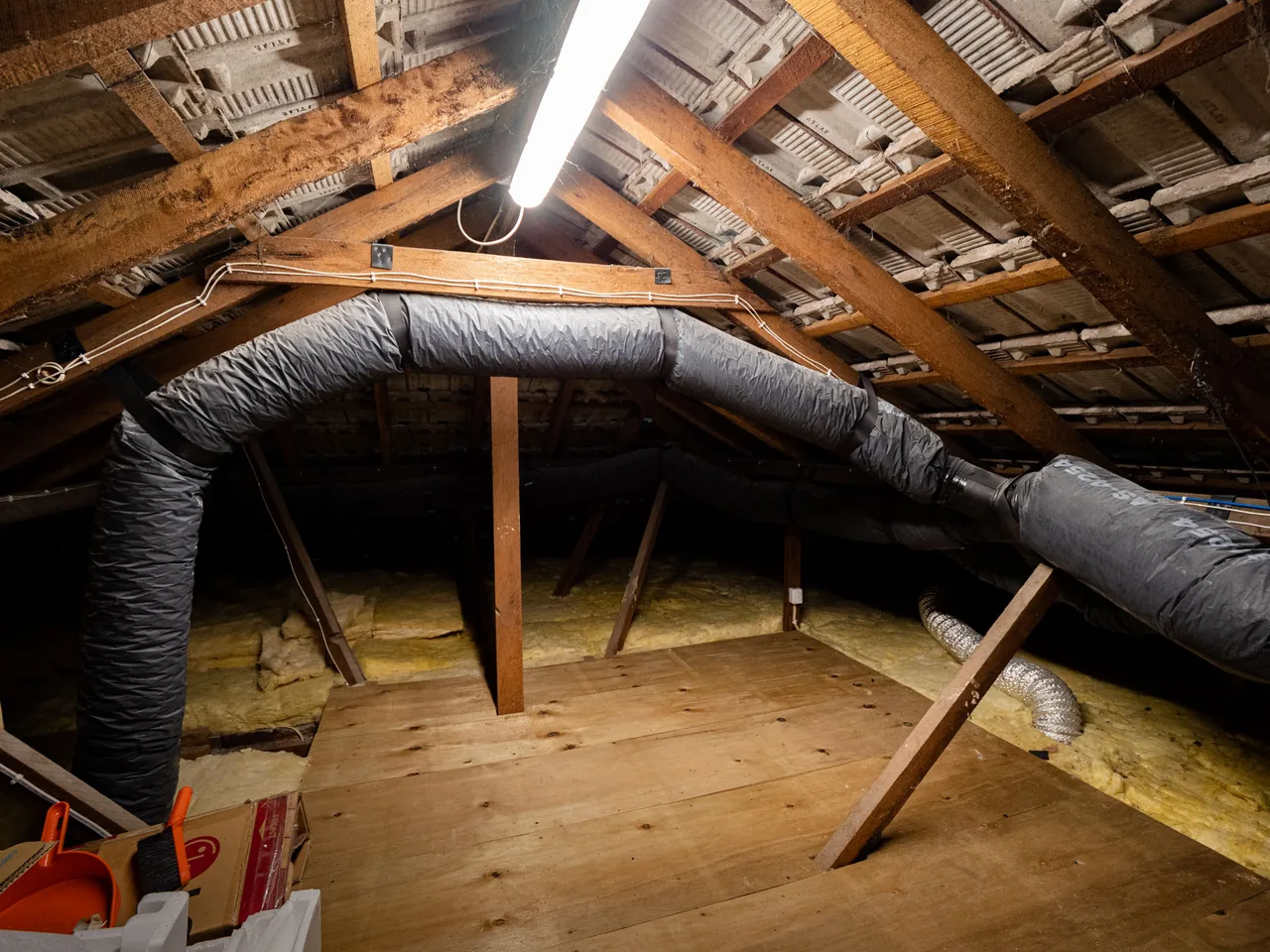
First, a route. An extractor fan has to vent to the outdoors, so before anything is drilled The Conduction Company finds a duct path from the wet room to the outside of the building. Where there is a ceiling void, the preferred method is an in-line fan: an easy-clean intake grille in the ceiling close to the steam source, ducting through the void to a fan hung from the timber so it runs cool and quiet, and ducting on to a grille in the soffit or a cowl on the gable wall, with the outside penetration sealed against the weather. Where ceiling space is tight, a ceiling-mounted fan with the fan built into the intake does the job. Where there is no cavity at all, a through-wall fan goes straight through the wall from inside to out.
A typical new install takes two to four hours, depending on how hard the route is. There is some noise and dust while the holes are drilled, and that is about the extent of the disruption. On a rental, the tenant does not need to move out or even be home: The Conduction Company's staff are happy to lock up and leave the key where you ask. The certificate is issued when the work is done.
Every job gets a formal quote before it starts, so you know the price before anyone arrives. What an extractor fan costs to install, from The Conduction Company's own completed Auckland jobs, is on its own page, and so is what happens when there is no obvious route outside. The Conduction Company also photographs finished installations and keeps them, so if you want to see what a soffit grille or a bulkhead looks like on a house like yours, ask.
The Conduction Company installs kitchen and bathroom extractor fans across Auckland with registered electricians, and issues the certificate on every one. Tell us the room and what is there now, and we will tell you whether it is a swap or a new install, what that involves, and what it is likely to cost.
Frequently asked questions
Do I need an electrician to install an extractor fan in NZ?
Yes, if the fan is wired into the house. Hard-wiring an extractor fan is prescribed electrical work under the Electricity Act 1992, because the fan, its switch and its cable are fittings connected to the fixed wiring, and section 74 of the Act says only an authorised person may do prescribed electrical work. In practice that is a registered electrician with a current practising licence. The Conduction Company fits kitchen and bathroom extractor fans across Auckland with registered electricians and issues the certificate on every one.
Can I install an extractor fan myself?
Only if it plugs in. The Electricity (Safety) Regulations 2010 exclude connection by a plug inserted into a socket from prescribed electrical work, so mounting a fan that comes with a flex and plug and plugging it into an existing socket outlet is not restricted. The moment the job needs a new socket, a new cable, a new switch or a connection into the fixed wiring, it is prescribed electrical work and needs an authorised person. The Conduction Company positions a fan by its duct route, not by where the nearest socket is, because the duct is what decides whether the fan works.
Do I need an electrician to replace a bathroom extractor fan?
Yes, unless it plugs in. Swapping a hard-wired fan is prescribed electrical work, because regulation 6A(1) of the Electricity (Safety) Regulations 2010 describes the replacement of a fitting in an existing installation as low-risk prescribed electrical work. The low-risk class changes the paperwork, not who may do it. A fan that plugs into an existing socket outlet can be swapped without an electrician, because connection by a plug is not prescribed electrical work. The Conduction Company sends a registered electrician for every hard-wired fan swap and issues an Electrical Safety Certificate for it. If the existing fan in a rental was installed before 1 July 2019, still works and vents outdoors, it does not need replacing under the healthy homes standards at all.
Does a plumber or an electrician fit an extractor fan?
An electrician, for the wiring, which is the part the law restricts. The ducting, the ceiling hole and the outside grille or cowl are not electrical work, so a ventilation installer or builder can do that part. On a job The Conduction Company does, one crew does the whole thing in a single visit of two to four hours for a typical new install, so one person is responsible for both the fan and the duct run it depends on.
What certificate do you get when an extractor fan is installed?
A brand-new hard-wired fan is general prescribed electrical work, so regulation 65 of the Electricity (Safety) Regulations 2010 requires a Certificate of Compliance and the work is not complete until it is issued. Regulation 74A requires an Electrical Safety Certificate once the work is complete and the person who did it is satisfied the installation is electrically safe. For a like-for-like replacement the Certificate of Compliance is optional. No Record of Inspection is needed, because that belongs to high-risk work. The Conduction Company issues an Electrical Safety Certificate on every hard-wired fan it fits and keeps its own copy.
Can a homeowner do their own extractor fan wiring in New Zealand?
Only under section 79 of the Electricity Act 1992, which applies to the owner of a home they live in, never to a tenant and never to a landlord on a rental they do not live in. The work must stay within the limits in regulation 57 of the Electricity (Safety) Regulations 2010, be done and tested to NZECP 51, and no part of the work may be connected to a power supply while it is done. A new fan with a new cable is subcircuit work, which must be tested and certified by a person authorised to inspect mains work before it is connected. The Conduction Company strongly recommends against doing it yourself. As a hard rule, The Conduction Company does not test, certify or connect a homeowner's wiring. It may help only where finished work has left a client stuck, and that takes a thorough inspection and often rework.