


People ask this because the two trades look adjacent and nobody is quite sure where the line sits. It is a reasonable question, and the answer has a twist in it that most homeowners find surprising.
Yes. Electricians can and do install data cabling, and The Conduction Company runs ethernet and fibre in Auckland homes and businesses with its own people. The twist is that no licence is required for it at all. Data cabling is extra-low voltage, so legally anyone may do it. What you are paying an electrician for is the building work and the layout, not permission.
Is data cabling prescribed electrical work?
No, and this catches people out.
Data cabling runs at extra-low voltage. Schedule 1, clause 2(b) of the Electricity (Safety) Regulations 2010 says work on fittings that "are intended solely for connection to, or are associated solely with, electricity supplies not exceeding extra-low voltage", and are not in a hazardous area, is not prescribed electrical work.
So there is no licence to hold, no certificate to issue, and no legal requirement to call anybody. The Conduction Company will not tell you otherwise to win the job.
The exemption is not unconditional. It excludes hazardous areas, and a separate clause excludes medical locations. A normal home or office is neither, which is why the everyday answer is simply that it is not restricted work.
So why use an electrician?
Three reasons, and none of them is a licence.
1. The holes, not the wire
The cable is the easy part. Getting it from your router to where you want it means going through walls, floors, ceilings, and sometimes the outside of the building. Drilling through a building envelope badly is how you end up with water in a wall cavity or a structural member weakened, and either one costs far more to put right than the cabling ever saved. That is the part worth handing to someone who does it every week.
2. The layout, not the parts
Where the cables go, how the network is laid out, and what equipment to buy is where most of the value sits. The Conduction Company has been called to homes where a client spent heavily on a mesh system and a faster internet plan for a problem neither one addresses, and the actual fix was a handful of cables to the right places. Knowing which problem you have is the expensive knowledge, not the cable.
3. One trade, one visit
Data cabling shares its routes with electrical work. Same wall cavities, same ceiling space, same underfloor. An electrician already in the building can run a data cable alongside a power circuit while the access is open, and The Conduction Company runs aerial cable at the same time as data on most new builds, so a room ends up with a data jack and an aerial jack on one plate.
What The Conduction Company does in-house
- Ethernet and fibre optic cabling
- Installing and relocating ONTs, the box where the fibre arrives
- Running fibre between server racks and comms rooms
- Installing server racks, patch panels, and racking spaces
- Installing network switches
- Setting up wifi access points and mesh systems
- Basic networking setup
One thing is subcontracted, and The Conduction Company arranges it: fibre splicing, where an existing fibre run needs extending, goes to the specialist contractors it works with.
Where an electrician stops and an IT provider starts
This is the genuinely useful boundary, and it is not about the size of your company.
What The Conduction Company does, depending on whether you already have an IT provider.
Home or small business with no IT provider. The full job. Cabling, access points, mesh, switches, and the basic network setup.
Larger premises with a dedicated IT provider and your own network server. The cabling reticulation to every position, plus the patch panel and labelling. Your IT provider supplies the hardware, patches the runs in, and configures the network.
The Conduction Company deliberately stays out of complex network configuration on larger sites. That is a different discipline, and your IT provider already knows your systems. What an electrician owns is the physical layer.
What cable will an electrician put in?
Cat 6 in a home, and there is rarely a reason to go above it. It carries gigabit speeds, which is more than enough for several devices streaming heavily off one cable.
Cat 6A gets pushed hard online as future proofing. The Conduction Company's honest view is that in a normal home it is a waste of money. It costs substantially more per metre, and clients who have insisted on it, against The Conduction Company's advice, were not running anything that needed ten gigabits per second.
If you genuinely move very large amounts of data, the answer is fibre optic rather than heavier copper. Fibre is faster than Cat 6A and carries more, and The Conduction Company has installed a number of fibre runs for clients who need that.
Can you just do it yourself?
Legally, yes, as above. Practically, if you are moderately handy and you understand houses, it is not a particularly hard task.
The Conduction Company does get called back to DIY cabling fairly often though, and the faults repeat:
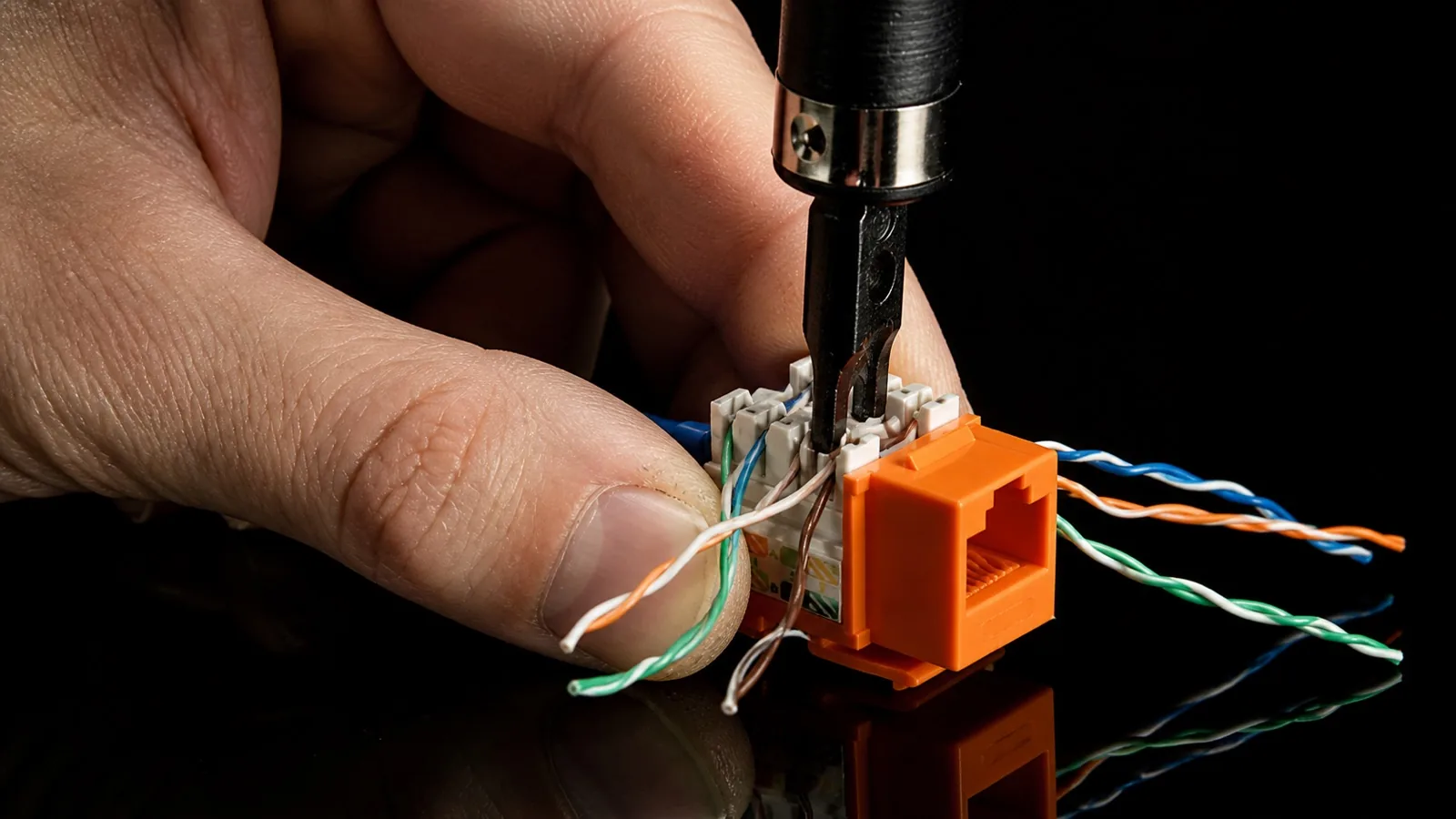
- Connections and terminations. Easily the most common fault
- Cheap parts. Low-quality jacks and cable
- Not quite right. The cable works, but at a fraction of the speed it should, which is why nobody suspects the cabling
The fix is usually small. A re-termination, or a better part. What is not small is a badly made hole through the building envelope, which is the reason to think twice rather than any legal one.
How much does it cost to install data cabling?
It depends almost entirely on access, so The Conduction Company prices the job after looking at the property rather than publishing a rate. On its own completed Auckland work, the same single cable run has cost three times as much in one house as in another, purely because of the route the cable had to take. The full breakdown, including the real job figures, what a new build costs, and what a fault visit costs, is on The Conduction Company's page about what a data cable costs to install.
If you are still deciding whether the job is worth doing, The Conduction Company has also written up whether it is worth running ethernet cable through a house, which covers the case for cabling and the real Auckland job behind it.
The Conduction Company handles data cabling and WiFi installation across Auckland, from working out the layout through to the jack in the wall.
Frequently asked questions
Do electricians install ethernet cables?
Yes. The Conduction Company installs ethernet and fibre in Auckland homes and businesses with its own people. Data cabling shares its routes with electrical work, so an electrician already has the access, the tools, and the experience of getting a cable through a building safely.
Do you need a licence to install data cabling in New Zealand?
No. Data cabling is extra-low voltage, and under Schedule 1, clause 2(b) of the Electricity (Safety) Regulations 2010 it is not prescribed electrical work. There is no licence to hold and no certificate to issue. The exemption excludes hazardous areas and medical locations, but a normal home or office is neither.
If no licence is needed, why pay an electrician?
For the building work and the layout rather than permission. Drilling through a building envelope badly lets water in or weakens the structure, and working out where the cables should go is where most of the value sits. The Conduction Company has fixed homes where the client spent heavily on the wrong solution first.
Does an electrician or an IT provider do the network?
The Conduction Company installs the cabling, the patch panel, and the labelling. Where a business has a dedicated IT provider, that provider usually supplies the hardware, patches the runs in, and configures the network. The Conduction Company deliberately stays out of complex network configuration on larger sites.
Can electricians install fibre?
Yes. The Conduction Company runs fibre optic cabling, installs and relocates ONTs, and runs fibre between server racks. The one part that is subcontracted is fibre splicing, where an existing fibre run needs extending, which goes to specialist contractors.
What goes wrong with DIY data cabling?
Almost always the connections and terminations, cheap parts, or a run that works but at a fraction of the speed it should. The Conduction Company usually fixes these with a re-termination or a better part. The expensive mistake is a poorly made penetration through the building envelope.

